KYC at Crypto Casinos: What Actually Triggers Verification in 2026

the author
ProvablySmart Research Desk
date post
Aug 28, 2026

Share


KYC at a crypto casino is rarely requested in 2026 for a single deposit of a few hundred dollars. It is triggered by a combination of transaction size, cumulative volume, behavioral outliers, and jurisdictional pressure on the operator. This article separates the observable mechanics from the marketing noise, and explains exactly which signals a player can inspect before committing funds.
The Baseline: Anonymous Play Exists but Has Limits

BTC

ETH

SOL

XRP

USDT

LTC
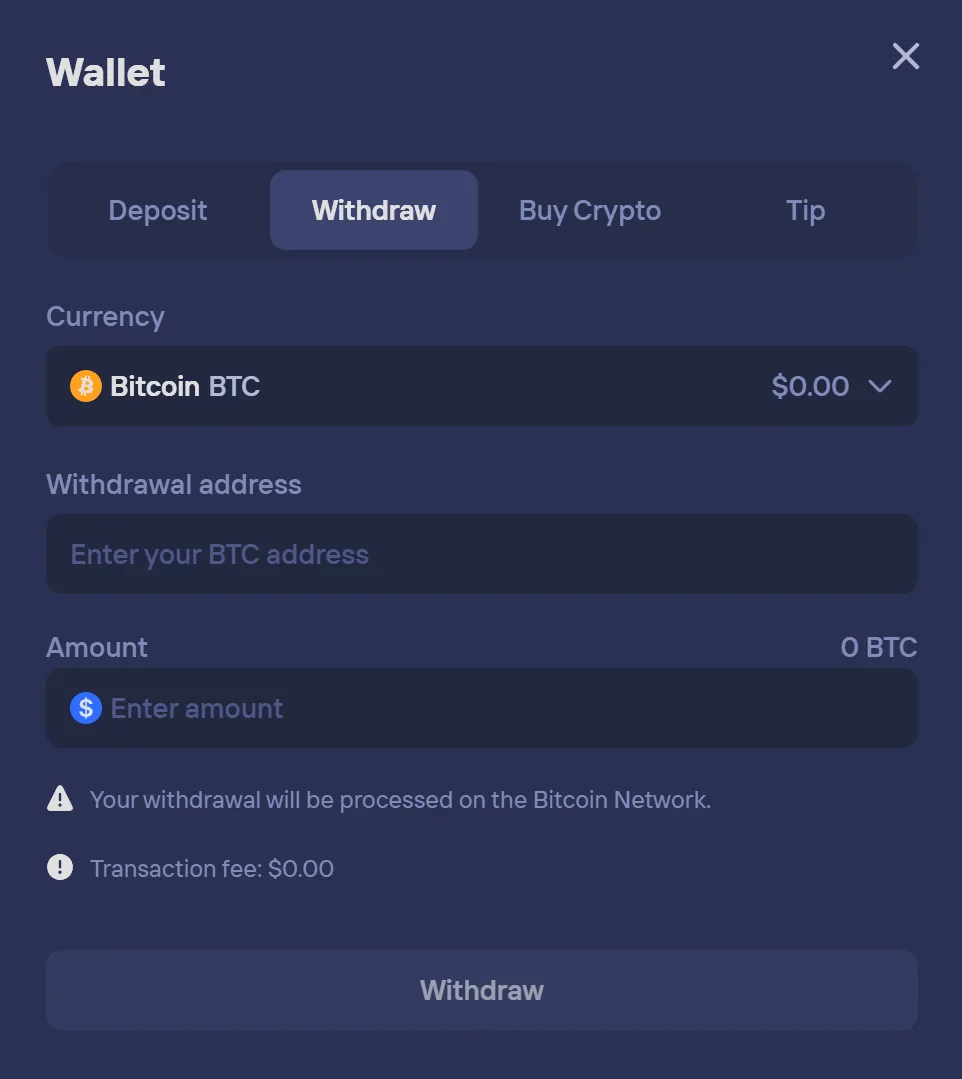
Most crypto casinos in 2026 operate a tiered account system. At the bottom tier, you deposit, play, and withdraw without submitting identity documents. That tier is not unlimited. Operators define hard caps for both single-transaction and cumulative lifetime withdrawals. Common values in the industry are between 1 BTC and 5 BTC in lifetime withdrawals before a verification request appears, but the exact numbers vary by operator and by license jurisdiction. You can usually find these figures in the terms of service or the casino reviews that publish withdrawal-limit tables. If a casino quotes a withdrawal cap without a stated KYC threshold, the cap itself is the trigger.
Do not assume that a “no KYC” label in the homepage footer means no verification exists. In 2026, most operators run a risk-based compliance system that leaves the anonymous tier intact for the majority of casual players, then escalates specific accounts. The trigger is not the act of playing; it is the account’s movement across a pre-set risk score.
Known Trigger Points in 2026
How Does This Compare to 0% House Edge Protocols?
Audited 100% RTP
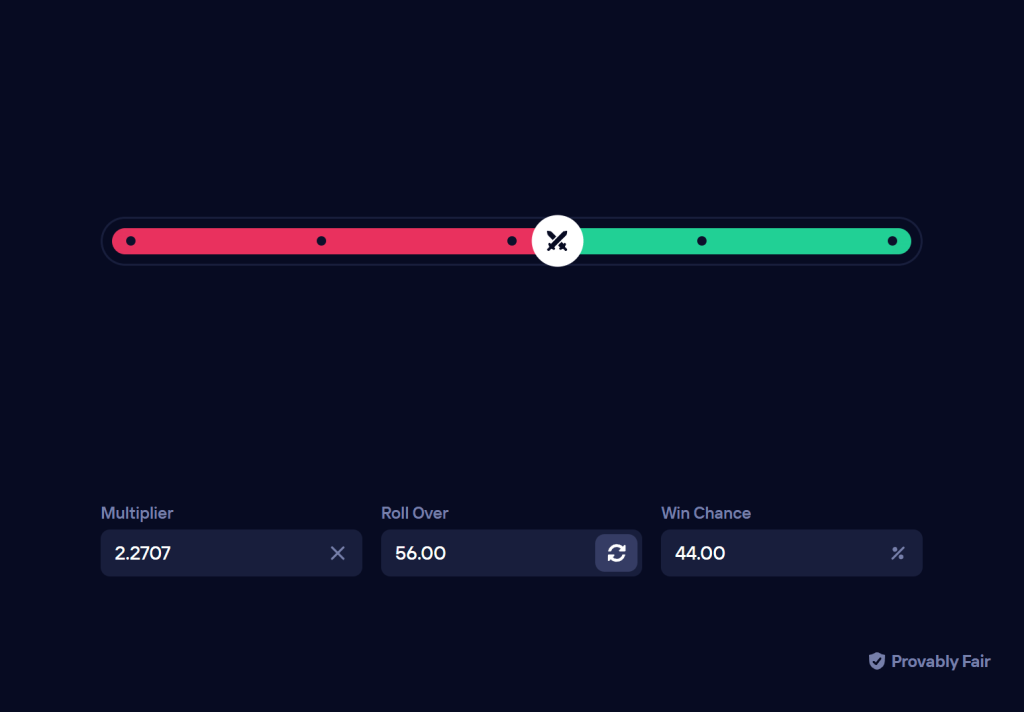
Instead of standard 1.00% to 4.00% casino house margins, compare with mathematically verified 100% RTP Originals (0.00% House Edge) on Duel Casino:

Based on published terms, public compliance documentation, and leaked data from operator breaches in earlier years, the following triggers are the most common. Treat each one as a testable hypothesis: read the operator’s privacy policy and terms, then compare against your planned play pattern.
1. Withdrawal Size and Frequency
The single strongest trigger in 2026 remains a withdrawal that approaches or exceeds the operator’s stated threshold. A first-time withdrawal of 2,000 USDT is often passed through a faster automated check. A third withdrawal of 2,000 USDT within the same week is not. The system looks at cumulative withdrawal velocity, not just the individual amount. If your playing pattern generates frequent mid-sized withdrawals, the risk engine may file a manual review request even if each individual withdrawal is below the published limit.
2. Deposit Amount and Source Consistency
Deposits from a personal wallet funded on the same exchange you use for your identity are low-risk. Deposits that arrive from a mixer, from a freshly created wallet with no transaction history, or from multiple addresses within a short window are high-risk. In 2026, the typical trigger is not the amount alone but the gap between the claimed source of funds and the actual on-chain fingerprint. A 10,000 USDT deposit from a single, well-aged wallet is less likely to trigger KYC than a 2,000 USDT deposit from a wallet that has interacted with a sanctioned mixer.
3. Bonus Abuse and Multi-Accounting Signals
Bonus abuse detection is the most under-reported KYC trigger. When you claim a deposit bonus, you hand the operator a reason to verify your identity. They need to confirm you are not the same person as another account that previously claimed the same bonus. Device fingerprinting, IP history, and wallet reuse are cross-referenced. If the system finds a single device or browser fingerprint linked to two accounts that both claimed a bonus, KYC is triggered on both. If you play with zero bonus, this category disappears entirely.
4. Geolocation and VPN Patterns
Players connecting from jurisdictions where online gambling is explicitly licensed or restricted face a different verification path. An operator licensed in Curacao may not require KYC for anonymous players, but if your connection IP resolves to a country whose regulations demand geolocation checks, the compliance system may trigger a lighter form of verification: a proof of residence rather than a full ID document. This is often mislabeled as KYC, but it is a distinct action. A persistent VPN connection from a restricted country is a known risk event that raises the account’s score even if no immediate verification is requested.
5. Cumulative Lifetime Volume
The longest fuse is cumulative volume. Some operators know that the average anonymous player churns after four to six weeks. If your account survives beyond that period and your total handled volume exceeds a certain multiple of the average, the compliance team will likely request verification proactively to keep your account in a lower-risk category. This is not a punishment; it is a cost-saving measure for the operator to avoid having to freeze funds later during an audit.
What You Can Verify Yourself
You cannot verify a casino’s internal risk engine from the outside, but you can verify its external commitments. Check whether the site publishes a clear KYC policy. Check the terms for a section named “Withdrawal and Verification” with numeric thresholds. Check whether the provably fair implementation actually validates each bet hash chain; an operator that is sloppy with the math is likely just as sloppy with its compliance boundaries. Our provably fair guides cover the exact commands you can run to confirm that the server seed and client seed match the displayed result.
On-chain data is also public. If you care about whether a casino runs clean, inspect its hot wallets. If the wallet receives hundreds of deposits under 1,000 USDT and immediately sweeps them to a cold address, that behaviour pattern tells you a lot about how the operator categorises small players.
The Regulatory Push Behind the Scenes
In 2026, the largest single driver of KYC adoption is not a specific national law but the FATF Travel Rule being enforced through local licensing regimes. Operators with a licence in any major European or Asian jurisdiction are required to collect beneficiary information for transactions above a threshold, typically 1,000 to 3,000 euros depending on the country. If a casino holds a licence in a jurisdiction where that rule applies, the KYC trigger may be baked into the licence itself rather than a business choice. Always inspect the licence and the associated legal documents. The recent regulatory news in this sector shows a clear pattern in enforcement priority: identity over amounts.
The practical consequence is that “no KYC” in 2026 has a shorter half-life. An operator that advertises full anonymity today may be forced to add identity checks after its next licensing renewal. If you are playing a long-term bankroll strategy, another operator’s verification policy is not a static fact; it is a moving part.
Practical Checks Before You Play
- Read the KYC section of the terms before depositing, not after you have a balance.
- Send a test withdrawal of a small amount within 24 hours of your first deposit to confirm that withdrawals work without manual review.
- Keep your deposits and withdrawals on the same wallet address pattern to avoid a source-of-funds mismatch.
- Claim a bonus only if you accept that bonus play accelerates the KYC risk score.
- If you plan to withdraw more than 1 BTC lifetime, treat KYC as an eventual event and have documents ready.
None of these checks guarantee a specific outcome because the operator’s risk engine is opaque. They only reduce the probability of an unwelcome identity request. For the financial side of that decision, the bankroll management guide covers how to size sessions so that a forced KYC freeze does not leave a meaningful portion of your capital locked.
FAQ
Does a small deposit ever trigger KYC by itself?
A single small deposit rarely triggers KYC on its own. A deposit under 1,000 USDT is typically processed automatically. However, the same deposit from a wallet with a high-risk on-chain history can raise your account score, which then makes a later withdrawal review more likely. The amount is less important than the provenance of the funds.
Can I create a new account after being flagged to reset the KYC counter?
No. Device fingerprints, IP addresses, and wallet addresses are linked. If a bonus was claimed on the flagged account, the operator has an economic reason to block duplicate accounts. If no bonus was claimed, the operator may still trace the new wallet address back to the same cluster. Attempting to evade a flag is itself a trigger in most automated systems.
What is the single most common withdrawal threshold that triggers KYC?
Across published terms in 2026, the most common lifetime withdrawal threshold is 1,000 to 1,500 USDT. Above that, operators begin requesting ID or proof of address. The second-most common trigger is a single withdrawal above 5,000 USDT. There is no universal standard, so checking the specific operator’s terms is the only reliable method.