The Insurance Bet: Why the Math Never Works in Your Favor
the author
ProvablySmart Research Desk
date post
Aug 28, 2026
Share


In blackjack, the insurance wager is the most persistent invitation to lose money without a corresponding stake in the game’s result. The bet appears harmless: the dealer shows an Ace, you place half your original wager on the line, and you are paid 2:1 if the dealer’s hole card is a ten-value card. The math, however, shows insurance is a negative-expectation proposition under every standard full-deck composition. This article quantifies the edge, explains why the bet gets worse with more decks, and outlines the only condition under which it becomes viable — precise card counting, which is itself out of reach for most players.
Defining the insurance wager
Insurance is a side bet offered only when the dealer’s upcard is an Ace. The player stakes up to half the original wager. If the dealer’s hole card is a ten-value card (10, J, Q, K), the insurance bet pays 2:1. The player receives the payout on the side bet regardless of the outcome of the main hand; if the dealer does not have blackjack, the insurance stake is lost.
One common misunderstanding is that insurance protects a good hand. It does not. The side bet is settled independently, and its outcome is determined by the dealer’s hole card before the hand plays out. The player’s hand is irrelevant to the insurance payoff (although, as we show below, the player’s cards change the composition probabilities).
The unpacked math: single deck
How Does This Compare to 0% House Edge Protocols?
Audited 100% RTP
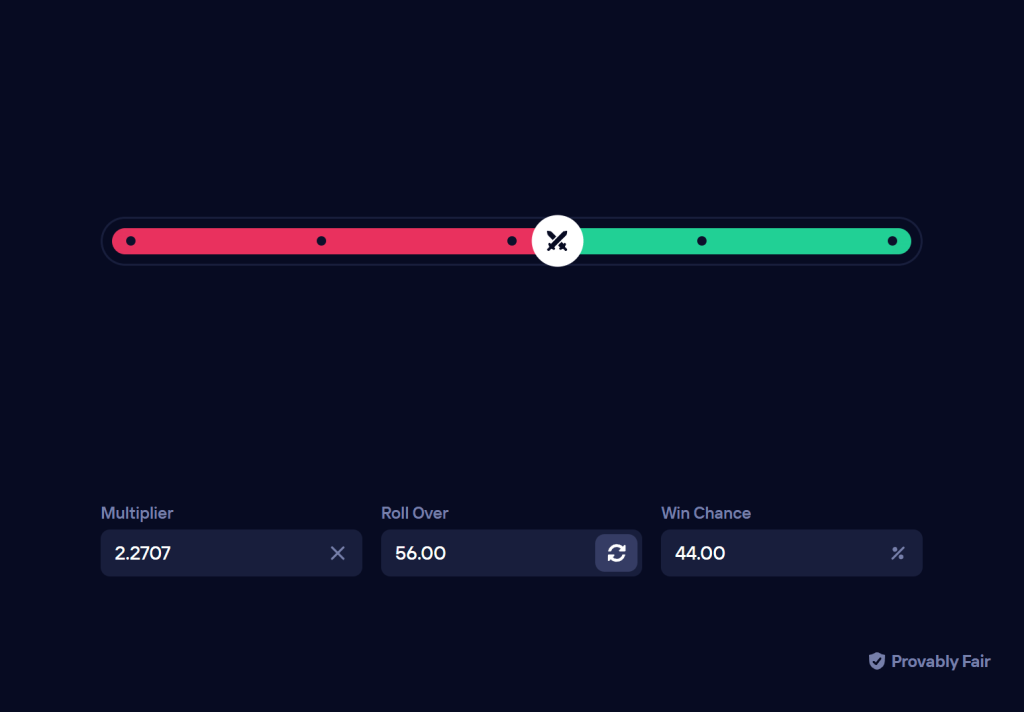
Instead of standard 1.00% to 4.00% casino house margins, compare with mathematically verified 100% RTP Originals (0.00% House Edge) on Duel Casino:
Consider a freshly shuffled single deck of 52 cards. The dealer displays an Ace. There are 51 cards remaining in the shoe, of which exactly 16 are ten-valued cards. The probability that the hole card is a ten is therefore:
P(Blackjack) = 16 / 51 ≈ 0.3137.
Insurance pays 2:1 on a successful bet, so the expected value per 1 unit wagered is:
EV = (2 × 16/51) – (1 × 35/51) = (32 – 35) / 51 = -3/51 = -0.0588.
The house edge is 5.88%. For every $10 placed on insurance, the player loses an average of $0.59 per wager, in a full single-deck shoe with no other information. This is worse than any common blackjack side bet and several times the house edge of the main game.
Composition dependence: your hand changes the odds
The probabilities shift if you consider the player’s two cards, which are known to the player but excluded from the pool of unknowns. The table below shows the edges for insurance in a single-deck game, conditional on the player’s hand, assuming the dealer’s upcard is an Ace.
| Player’s hand (two cards) | Remaining tens / remaining cards | P(blackjack) | House edge on insurance |
|---|---|---|---|
| Unknown (no info) | 16 / 51 | 0.3137 | 5.88% |
| Two non-tens | 16 / 49 | 0.3265 | 2.04% |
| Two tens | 14 / 49 | 0.2857 | 14.29% |
Holding two tens makes insurance a catastrophic bet: the edge jumps to 14.29%. Holding two non-tens reduces the edge to 2.04%, but it is still negative. The unconditional edge of 5.88% only applies before you look at your cards; after you see your hand, you have better information, and in no common case does that information turn the bet into a positive-expectation wager.
The “even money” trap
When the player holds a blackjack and the dealer shows an Ace, the dealer will offer “even money.” Taking it pays the player 1:1 immediately, no matter what the dealer has. This is identical to taking insurance: you place a side bet half your stake, and if the dealer has blackjack, the insurance pays 2:1, covering the lost main bet, and the hand pushes — netting you exactly 1:1 on the original stake.
The math is clear. With two non-tens removed from a single deck (your blackjack), the probability the dealer has a ten underneath is 16/49 ≈ 0.3265. If you decline even money and the dealer does not have blackjack, a 3:2 payout returns $15 on a $10 bet. If the dealer does have blackjack, you push and receive $0. The expected value of declining is:
EV_decline = (16/49 × $0) + (33/49 × $15) = $10.10.
Taking even money guarantees $10. Declining is mathematically better by $0.10 per $10 wager. Neither outcome is a windfall, but the choice is not neutral: the casino offers it because the house keeps the difference. In a multi-deck game, the gap widens.
Multi-deck games make the bet worse
Crypto and online casinos overwhelmingly deal blackjack from six or eight decks. The rising shoe size reduces the density of tens after the dealer’s Ace is exposed, and the insurance edge rises accordingly. For a full shoe with no removed cards other than the dealer’s Ace:
- Single deck: 16/51, house edge 5.88%
- Double deck: 32/103, house edge 6.80%
- Six decks: 96/311, house edge 7.40%
- Eight decks: 128/415, house edge 7.47%
The pattern is consistent: more decks, larger house edge. Players betting on insurance in a standard shoe casino are voluntarily accepting a wager with a house edge between 6% and 7.5% — several times higher than the house edge of the underlying blackjack game. The betting decision does not require complex game theory; it requires reading the table and declining every time, unless the player is exploiting a profitable counting situation.
The counting exception
Insurance is a positive-expectation bet whenever the true count indicates that the remaining shoe contains tens in a sufficient proportion. The break-even point occurs at P(blackjack) = 1/3, because with a 2:1 payout, EV = (2 × P) – (1 – P) = 3P – 1, which is positive when P > 1/3. In a six-deck game, the insurance count threshold is commonly reached at a Hi-Lo true count of +3 or higher, depending on the penetration and rules.
Reaching that condition requires a mathematically disciplined counting method, a reliable deck-penetration estimate, and a discipline that survives long losing streaks. Even then, the expected gain is modest and carries high variance. For the anonymous-player sector — including most crypto casinos, where counting is either detected or the game is continuously shuffled — insurance remains a pure drag on bankroll. The practical conclusion is the same as the theoretical one: don’t take it.
Players who want to evaluate insurance rules and RTP claims should read the game-specific pay tables before wagering rather than relying on a copywriter’s description. Our guide on reading casino RTP tables explains how to identify the house edge of side bets from the published payouts. And when choosing a venue, note that verifiable casino reviews based on provable fairness data matter far more than a site’s promotional copy.
What you can verify yourself
In 2026, the honest answer to “should I ever take insurance?” is “only when you are counting cards, and even then cautiously.” What you can inspect directly is the long-run result of any side bet’s RTP. On a provably fair blackjack game, the house publishes the seed and hash of the shuffled deck before the round; after the round, the player can verify that the shuffle seed generated the exact cards dealt. Over thousands of rounds, the frequency of dealer blackjacks after an Ace will converge to the theoretical probability, and your insurance losses will converge to the expected negative value.
Track your own insurance wagers for a single session if you doubt the math. Record the bet amount, whether the dealer had a ten underneath, and the net result. For every $10 of insurance wagered at a 6-deck shoe, expect to lose about $0.74 on average per bet. A short run will deviate; a longer run will not. Losing money on insurance at the rate the math predicts is not a string of bad luck; it is the payout structure doing its work.
The other practical tool is re-reading the bankroll consequences. Negative-expectation side bets are not commensurate with their surface utility. Insurance does not protect the main bet; it exchanges a known negative EV for the illusion of safety. If protecting bankroll is the actual goal, the correct tool is stake sizing, not side bets. Our bankroll management framework treats insurance-type wagers as an avoidable cost — and recommends removing them from the game tree entirely.
Finally, check the regulatory or operator disclosures when you play. The RTP of side bets is often disclosed in the game’s help file or the casino’s fairness page. If a casino publishes an RTP of 92–94% for the insurance bet, that aligns with the mathematical edge above. If a site does not disclose RTP for side bets, that itself is information worth acting on. Either way, the numbers from the table hold: from 5.9% to 7.5% against you on a fresh shoe, and even steeper on unfavorable compositions.
FAQ
When should I take insurance in blackjack?
Only when you are counting cards and the true count indicates the remaining deck is sufficiently rich in ten-valued cards. In a six-deck game, this typically requires a Hi-Lo true count of +3 or higher. Without a reliable counting system, taking insurance is mathematically losing on every wager.
Does insurance protect my blackjack hand?
No. The insurance bet is resolved independently of your hand. The “even money” offer for a blackjack is the same bet in disguise: it exchanges a guaranteed 1:1 payout for a slightly better expected value of approximately 1.01:1 at the cost of added variance. The dealer does not profit from your blackjack; the insurance side bet is just another negative-EV wager in a separate envelope.
Is the house edge on insurance the same in all online casinos?
No. The edge depends on deck count and rule variations. In a single-deck game, the edge is 5.88% on a full deck; in an eight-deck shoe, it rises to approximately 7.47%. Some casinos use continuous shuffling machines, which remove the possibility of card counting and keep the edge firmly negative. Check the published RTP for the specific bet before playing.