House Edge by Game Type: The 2026 Reference Table

the author
ProvablySmart Research Desk
date post
Aug 28, 2026
Share


The house edge is the mathematical advantage built into every casino game. It is expressed as a percentage of each bet the casino expects to keep over the long run. For a skeptical player, knowing the exact house edge of a given game is the single most important factor in determining expected loss. This 2026 reference table collates standard house edge values for major game types, based on widely accepted rules and published RTP data. All figures are verifiable in principle: you can check the game’s return-to-player (RTP) statement, examine its provably fair seeds, or compare against the mathematical derivations available in the original game patents. The values below assume optimal play (where applicable) and standard rule sets. Actual house edge may vary by casino; always verify the specific game you are playing.
Why the House Edge Matters
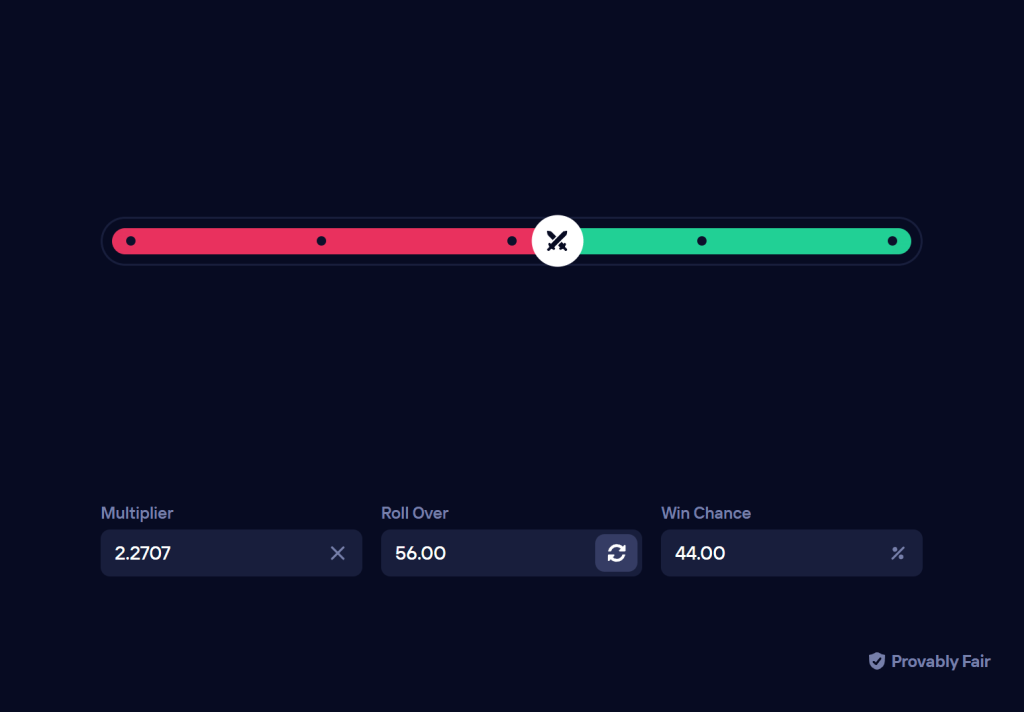
The house edge directly determines your expected loss per bet. For example, a game with a 1% house edge means that over a large number of plays, you can expect to lose 1% of the total amount wagered. This is a statistical certainty, not a guarantee for any single session. The edge is derived from the game’s rules, payout structure, and, in skill-based games, the player’s strategy. Understanding how house edge is calculated allows you to compare games objectively and avoid bets with disproportionately high margins. For a deeper dive into the mathematics, see our comprehensive guide to house edge and RTP calculations.
The 2026 House Edge Reference Table
How Does This Compare to 0% House Edge Protocols?
Audited 100% RTP
Instead of standard 1.00% to 4.00% casino house margins, compare with mathematically verified 100% RTP Originals (0.00% House Edge) on Duel Casino:
The following table lists the typical house edge for common casino game types. Values are based on standard rules as of 2026. ‘Optimal play’ for blackjack means basic strategy; for video poker, it means holding the mathematically best cards. Variations in rules, paytables, or side bets can shift these numbers significantly. Always check the specific game’s RTP — most reputable casinos publish it in the game info panel.
| Game Type | House Edge (Range) | Notes |
|---|---|---|
| Blackjack | 0.5% – 2.0% | Depends on number of decks, dealer stands/soft 17, doubling rules, and payout for blackjack (3:2 vs 6:5). Basic strategy assumed. |
| Baccarat – Player bet | 1.06% | Standard 8-deck shoe. Commission on Banker bet is 5%. |
| Baccarat – Banker bet | 1.24% | After 5% commission on winning banker bets. |
| Baccarat – Tie bet | 14.36% | High house edge; payout 8:1 or 9:1 depending on rules. |
| Craps – Pass Line | 1.41% | Standard odds bet allowed reduces combined edge to near zero if full odds taken. |
| Craps – Any 7 | 16.67% | One-roll sucker bet; avoid. |
| Roulette – European (single zero) | 2.70% | 37 pockets. En prison rule can reduce edge to 1.35% on even-money bets. |
| Roulette – American (double zero) | 5.26% | 38 pockets. Additional 00 increases house edge significantly. |
| Slots – Classic / Video | 2% – 15% | Wide range depending on game design and jurisdiction. Check RTP listed in game info (often 92%–98%). |
| Video Poker – Jacks or Better (9/6) | 0.46% | Full pay table (9 coins for full house, 6 for flush) with optimal strategy. |
| Video Poker – Deuces Wild (full pay) | 0.55% | Varies by paytable; use strategy charts. |
| Keno | 20% – 35% | Traditional keno in land-based casinos; online versions may have lower edge but still very high. |
| Bingo | 5% – 30% | Depends on game structure and number of players. |
How to Verify House Edge Yourself
For any provably fair casino game, the house edge is not a mysterious number — it is embedded in the game’s rules and can be recomputed. Most crypto casinos that prioritize transparency publish the RTP for each game, often in the game’s information screen or in a dedicated casino reviews section where you can compare operators. To verify:
- Check the game’s RTP percentage. For slots, this is the theoretical return over infinite spins. For table games, the house edge is typically listed directly.
- For provably fair games, you can examine the server seed, client seed, and nonce to confirm that the random number generation is consistent with the published odds. The house edge is derived from the payout table, not the randomness — fairness ensures the RNG is unbiased.
- For blackjack and video poker, use a strategy calculator that computes the exact house edge based on the rule set. Many free online tools exist.
- Be wary of games that advertise “99% RTP” but do not disclose the return percentage for specific bets. The house edge can differ dramatically between bet types (e.g., inside vs. outside bets in roulette, or side bets in blackjack).
Always confirm the RTP independently. If a casino does not provide verifiable RTP for a game, treat the house edge as unknown. For a list of casinos that publish transparent RTP data, visit our news section for updates on industry standards.
House Edge and Bankroll Management
The house edge directly informs bankroll management. A lower house edge means you can expect to play longer before depleting your funds. For example, with a 0.5% edge on blackjack, your expected loss per $100 wagered is $0.50; with a 5.26% edge on American roulette, it is $5.26. Over 1,000 bets, the difference is substantial. Skilled players should focus on games where the house edge is below 1% and where they can apply optimal strategy. For those who prefer minimal risk, games with a fixed, low house edge like baccarat (banker bet) or European roulette (with en prison) are viable. For detailed strategies on extending your session longevity, see our bankroll management guide.
FAQ
What is the difference between house edge and RTP?
RTP (Return to Player) is the inverse of the house edge. If a game has a 97% RTP, the house edge is 3%. Both are calculated the same way: expected return per bet. Casinos often publish RTP because it sounds more positive, but the house edge is the metric that directly quantifies your expected loss.
Can the house edge change during a game?
For fixed-odds games like slots, roulette, and craps, the house edge is constant because the payout structure does not change. For games with player decisions, such as blackjack or video poker, the house edge can vary based on the player’s choices. Optimal play minimizes the edge; poor play increases it. The table values assume perfect play.
How can I verify that a casino’s RTP is accurate?
Use provably fair systems. For slots, check the server seed hash before playing and verify the results afterward. For table games, examine the game’s random number generation algorithm. Many casinos also have their RTP audited by third-party firms (e.g., eCOGRA, iTech Labs). Look for the audit certificate on the casino’s website. For a curated list of verified casinos, refer to our casino reviews.