
Dispute Resolution at Crypto Casinos: Your Actual Options

the author
ProvablySmart Research Desk
date post
Aug 28, 2026

Share


Disputes between players and crypto casinos are inevitable. Unlike traditional online casinos, crypto operators often lack a clear regulatory framework, which limits the recourse available to players. This article examines the actual options you have when a dispute arises—ranging from technical verification of fairness to third-party mediation and legal action. The focus is on what can be verified independently, using seeds, hashes, and on-chain data. As of 2026, the landscape remains fragmented, but certain tools and services provide partial remedies.
Understanding the Landscape of Crypto Casino Disputes
Crypto casinos operate under varying jurisdictions, if any. Some are licensed in Curacao, others in Malta, and many operate without a license at all. The first step in any dispute is to identify the operator’s legal status and terms of service. Most crypto casinos include a clause that limits liability and often mandates arbitration in a specific location. However, the enforceability of these clauses is questionable when the operator is anonymous or based in a jurisdiction with weak consumer protection.
The most common types of disputes include:
- Unpaid winnings or delayed withdrawals
- Disagreements over game outcomes (fairness)
- Account closure or confiscation of funds
- Bonus terms misinterpretation
- Technical errors (e.g., failed bets, double charges)
Your ability to resolve these depends heavily on the evidence you can produce. This is where provably fair mechanisms and blockchain transaction records become critical.
Provably Fair as Your Primary Tool
How Does This Compare to 0% House Edge Protocols?
Audited 100% RTP
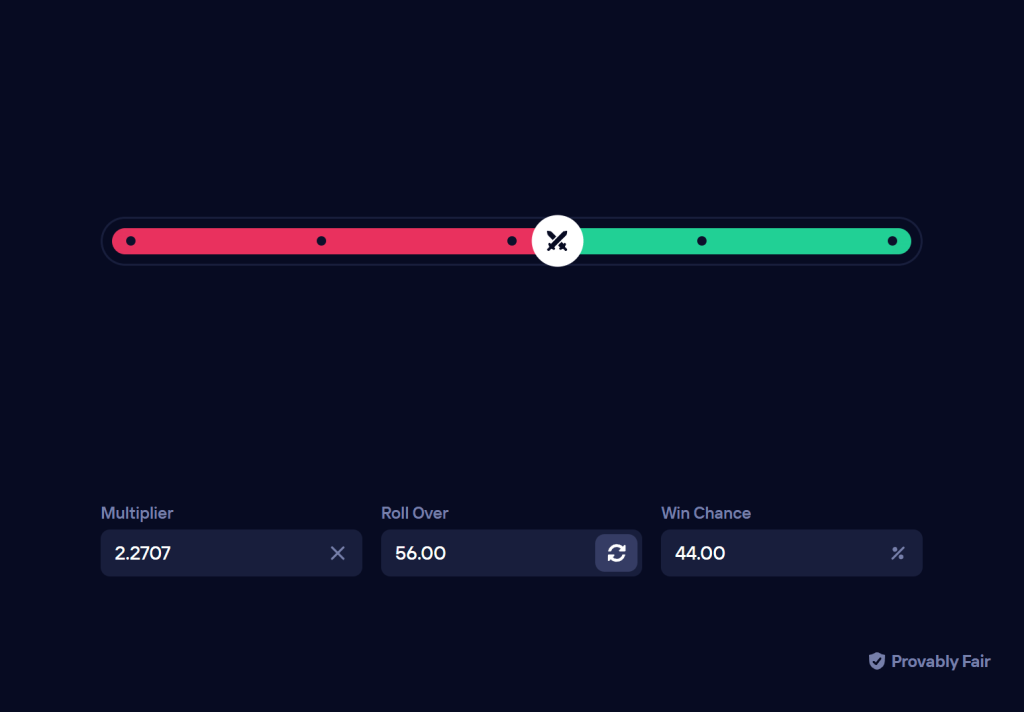
Instead of standard 1.00% to 4.00% casino house margins, compare with mathematically verified 100% RTP Originals (0.00% House Edge) on Duel Casino:

The provably fair algorithm is the most powerful tool a player has to verify that a game result was not manipulated after the fact. The mechanism works by allowing the player to combine a server seed, a client seed, and a nonce to generate the outcome. The server seed is typically revealed after the round ends, and the player can hash it with the original client seed to confirm the result.
If the casino refuses to provide the server seed or if the revealed seed does not match the one used during the game, you have immediate, verifiable evidence of a breach. This is a technical dispute, not a he-said-she-said. To use this effectively, you must:
- Save your client seed (or the original seed pair) before starting a session.
- Record the nonce and the revealed server seed for each disputed round.
- Verify the hash locally using open-source tools or scripts.
Many casinos provide a provably fair verification guide on their site—check if it matches the actual implementation. If the casino’s algorithm is not transparent, consider that a red flag. For games that are not provably fair (e.g., live dealer or sports betting), you have less technical recourse; you rely on the casino’s own logs and your screenshots.
On-Chain Audit Trail: What You Can Verify
Every transaction you make at a crypto casino (deposit, withdrawal, sometimes even bet) is recorded on the blockchain. This provides an immutable record of the flow of funds. In a dispute over missing payouts, you can present the transaction hash to prove that a withdrawal request was sent. The casino’s response should be verifiable on-chain: if they claim they paid, but no transaction exists, the claim is false.
However, the on-chain trail does not reveal the internal logic of the casino’s backend. You cannot see whether a bet was placed correctly or whether the casino’s internal ledger matches your balance. Still, it is a strong tool for proving that you sent funds and that the casino did not send the agreed amount back. Always save transaction IDs and timestamps.
Some casinos now offer on-chain settlement for certain games, where the smart contract itself handles payouts. In such cases, disputes are resolved by the code, not by the operator. This is the closest you get to trustless gambling, but it is still rare and limited to specific platforms.
Third-Party Mediation and Arbitration Services
When direct communication with the casino fails, the next option is third-party mediation. Several organizations exist that accept complaints against crypto casinos. The most prominent are:
- AskGamblers Casino Guru – A well-known player protection service that mediates disputes. They have a database of casino reviews and a complaint resolution system. They do not have legal authority but can apply pressure by publishing the dispute.
- BitcoinTalk Reputation – For crypto-focused casinos, the BitcoinTalk forum has a “Reputation” board where players can post disputes. The collective community pressure can be effective, especially for operators that care about their image.
- ICO or token-based arbitration – Some casinos with native tokens have built-in arbitration mechanisms, often through a DAO. These are rare and usually only cover disputes related to the token itself.
- Licensing authorities – If the casino holds a license (e.g., Curacao eGaming), you can file a complaint with the regulator. However, enforcement is slow and often ineffective for crypto casinos.
None of these services guarantee a resolution. Their effectiveness depends on the casino’s willingness to cooperate. The latest news often covers cases where mediators fail to enforce decisions. You should treat them as a pressure tool, not a court.
Legal Recourse: The Reality
Taking legal action against a crypto casino is exceedingly difficult. The operator may be registered in a jurisdiction with no mutual legal assistance treaty with your country. Even if you win a judgment in your local court, enforcing it against a foreign entity that holds no assets in your jurisdiction is nearly impossible. The cost of hiring a lawyer and filing a case often exceeds the amount in dispute.
However, there are exceptions. If the casino has a physical office in a country with strong consumer protection laws (e.g., the UK, Germany, or Malta), you may have a path. Some licensed casinos are required to hold a local bank account or maintain a minimum balance, which can be seized. But this is rare for crypto casinos, which typically operate with minimal physical presence.
For small disputes (under $10,000), legal action is usually not worth it. A better approach is to use the technical and mediation tools described above. For larger disputes (e.g., $100,000+), you might consider consulting a lawyer who specializes in international gambling disputes. The bankroll management principle applies here: only risk what you can afford to lose, because legal recovery is uncertain.
Practical Steps for Dispute Resolution
To maximize your chances of a favorable outcome, follow these steps when a dispute arises:
- Gather all evidence – Screenshots, transaction hashes, client/server seeds, nonces, chat logs, and email correspondence. Timestamp everything.
- Contact the casino directly – Use the official support channels (live chat, email). Be polite and present your evidence clearly. Many disputes are resolved at this stage.
- Escalate internally – Ask for a supervisor or a dedicated dispute team. If the casino has a VIP manager, contact them.
- Go public on a mediator’s platform – File a complaint on AskGamblers or a similar site. Include the casino’s response and your evidence. This often triggers a faster response.
- Consider posting on BitcoinTalk – Create a thread in the Reputation section. Be factual and include links to verification.
- Research the casino’s history – Check casino reviews for similar complaints. If the casino has a pattern of unpaid disputes, you may choose to walk away.
- Learn from the experience – Adjust your bankroll management strategy to avoid over-reliance on a single operator. Diversify your deposits across multiple casinos.
Remember that the crypto casino industry is still young. The lack of robust regulation means that the player bears most of the risk. The best protection is to choose casinos with transparent provably fair systems, a proven track record, and responsive support. No method guarantees a full recovery, but the tools described here give you a fighting chance.
FAQ
What is the most effective way to prove a casino cheated?
The most effective method is to use the provably fair verification process. By saving your client seed, nonce, and the revealed server seed, you can independently compute the expected outcome. If the casino’s result differs, you have irrefutable technical proof. This is only possible for games that implement a transparent provably fair algorithm.
Can I take a crypto casino to court if they refuse to pay?
In theory, yes, but it is rarely practical. The casino is often registered in a foreign jurisdiction with weak enforcement. You would need to sue where the casino is legally incorporated, which may be expensive and time-consuming. For small amounts, legal action is not cost-effective. For large amounts, consult a lawyer specializing in international gambling disputes.
Do third-party mediation services actually work for crypto casinos?
They can work, but not always. Services like AskGamblers and BitcoinTalk Reputation rely on public pressure. Casinos that care about their reputation may respond quickly to avoid negative reviews. However, anonymous or unlicensed operators may ignore them entirely. Always check the mediator’s track record with the specific casino before expecting a resolution.