Browser Extension Verifiers: Convenience vs Security Risk

the author
ProvablySmart Research Desk
date post
Aug 28, 2026

Share


Browser extensions that automatically verify provably fair casino results are a common convenience layer in 2026. They remove the need for manual hash checks, but they also introduce a new component that must be trusted. The key question is not whether the math inside the extension is correct; it is whether the extension’s data supply chain and privilege model remain trustworthy from install through every update.
What a Verifier Extension Actually Does
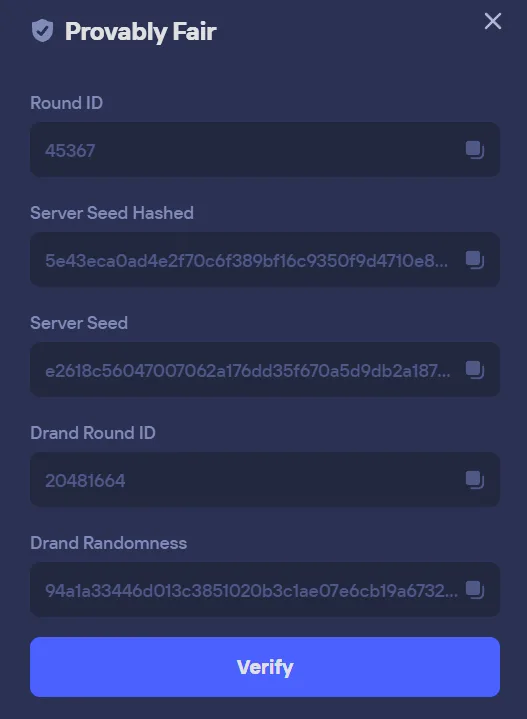
A verifier extension reuses the same algorithm a manual verifier would use. Given the server seed, client seed, nonce, and target, it computes a hash chain or HMAC digest, converts the digest to an outcome range, and compares the result with the displayed outcome. Some extensions fetch seeds directly from the casino’s API instead of reading them from the page.
An extension is not an independent oracle. It is JavaScript running in a privileged browser context on the same device that renders the casino UI. If the extension also draws the ‘verified’ badge, a compromised extension can make any outcome look valid.
Manual vs automated verification
| Task | Manual | Extension |
|---|---|---|
| Copy seed and nonce | User | Extension/API |
| Compute hash digest | External tool | Extension |
| Convert digest to outcome | External tool | Extension |
| Compare with casino | User | Extension |
| Keep audit trail | User file | Extension log |
The convenience is real: every manual step is compressed into one action, which matters for high-frequency play.
The Convenience Argument
How Does This Compare to 0% House Edge Protocols?
Audited 100% RTP
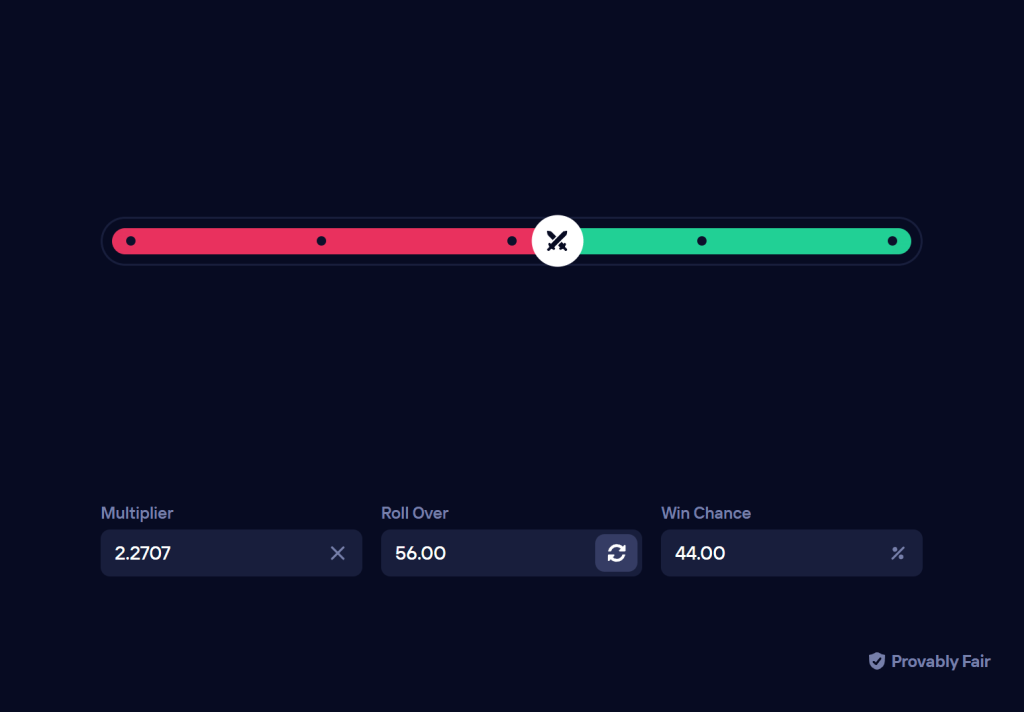
Instead of standard 1.00% to 4.00% casino house margins, compare with mathematically verified 100% RTP Originals (0.00% House Edge) on Duel Casino:

Manual verification is safe but tedious. The user must locate the correct seed pair, preserve the old server seed before rotation, copy the nonce, run a script, and compare outputs. A verification extension automates this inside the page. For high-volume games, this is the only practical way to verify more than a fraction of bets.
Still, convenience should not be the only criterion. The extension must be audited at least as carefully as the casino itself. For the underlying math, see our guide to provably fair verification.
Security Risks Specific to Extensions
Elevated browser privileges
A verifier extension does not need the ability to read or modify all websites. If it requests broad host permissions, a vulnerability in the extension exposes casino sessions, withdrawal addresses, and other browser data. Review the permission list before install and after each update that changes it.
Automatic updates and supply chain risk
Browser extensions update silently through the store. A compromised maintainer can replace the verification logic without requiring a visible user action. There is generally no practical way to review the diff between two published versions before the update applies.
Spoofable verification interface
An extension that reads seeds and also renders the ‘valid’ badge can be made to report valid for any input. If it fetches seeds from the same API it is supposed to verify, the user sees one interface rather than the raw values that enter the computation. This is a UI trust problem, not a cryptographic flaw.
No stronger guarantee than the underlying data
No extension can prove that the casino did not generate the outcome after seeing the client seed unless the casino has published a signed commitment beforehand. The extension only checks consistency of seeds and results. It does not prove timing of seed generation.
How a User Can Check What the Extension Does
These checks are practical and can be performed without formal malware analysis.
Inspect the manifest
In Chromium browsers, open chrome://extensions, enable developer mode, and locate the extension’s ID. Download and extract the CRX file, then read manifest.json. Look at host_permissions, content_scripts, and background.service_worker.
Build from source and compare hashes
If the extension is open source, clone the repository, build the extension, and compare the artifact hash with the distributed package. A reproducible build confirms that the store version is the code you reviewed. A project without reproducible builds is harder to audit.
Run a controlled fake bet
Create a local HTML page with a known server seed, client seed, nonce, and expected outcome. Install the extension in a clean browser profile and navigate to that page. If the extension flags the fake result correctly, it passed one functional test. Then change the displayed outcome after the bet; a correct verifier must flag the mismatch.
Risk-Reduction Checklist
- Use a dedicated browser profile for casino extensions, separate from banking and email.
- Avoid storing passwords or two-factor tokens in the same profile.
- Review permissions before install and after any update that requests more access.
- Disable auto-updates if you rely on a specific audited version.
- Treat the extension’s ‘verified’ badge as a convenience display, not as an audit record.
- Keep raw seed and result pairs in a local file or on-chain log before closing a session.
- Repeat final verification with an offline script for large withdrawals.
The last control is essential. Extensions are useful for routine monitoring, but a manual final check of the session state is a cheap safeguard. It belongs in the same process as bankroll management.
What to Check in Casino-Specific Context
If a casino recommends a particular extension, do not treat that as a security endorsement. Verify whether the casino publishes a separate commitment, such as an on-chain hash or signed message, before the game session. The extension may read that commitment, but you should confirm it with another tool.
Independent listings can help you identify what data a casino exposes. Our casino reviews document which provably fair fields are visible and which operators publish verifiable game data. Cross-check those details against the extension’s data source.
Conclusion
A browser-extension verifier is a reasonable convenience layer, but it expands the trust boundary. It is a third-party tool that must be audited for permissions, update behavior, and source reproducibility. A ‘verified’ badge is only as strong as the extension’s ability to receive honest inputs and the user’s ability to detect a malicious update.
FAQ
Can a browser extension guarantee that a casino result is fair?
No. It verifies that the published seed and result are consistent. It cannot prove that the server seed was committed before the client seed was known unless the casino provides a separately signed commitment.
What is the biggest risk of using a verifier extension?
The biggest risk is an automatic update that replaces the verification code. A compromised version can display false ‘verified’ messages, exfiltrate seed data, or read other browser data, especially if the extension has broad host permissions.
Should I use a browser extension or an offline verifier?
Use an extension only for routine checks when you understand its permissions and source. Use an offline script or standalone verifier for final settlement, large withdrawals, or any dispute involving session state.