Verify Before You Deposit: A 10-Point Casino Checklist

the author
ProvablySmart Research Desk
date post
Aug 28, 2026
Share


Deposit-first verification is backwards. In 2026 you can inspect operator licenses, seed hashes, game return tables, withdrawal rules and on-chain state before sending a single satoshi. This checklist lists 10 points of evidence a reasonable player should collect. If a point cannot be checked, do not fund the account.
Why a checklist before deposit
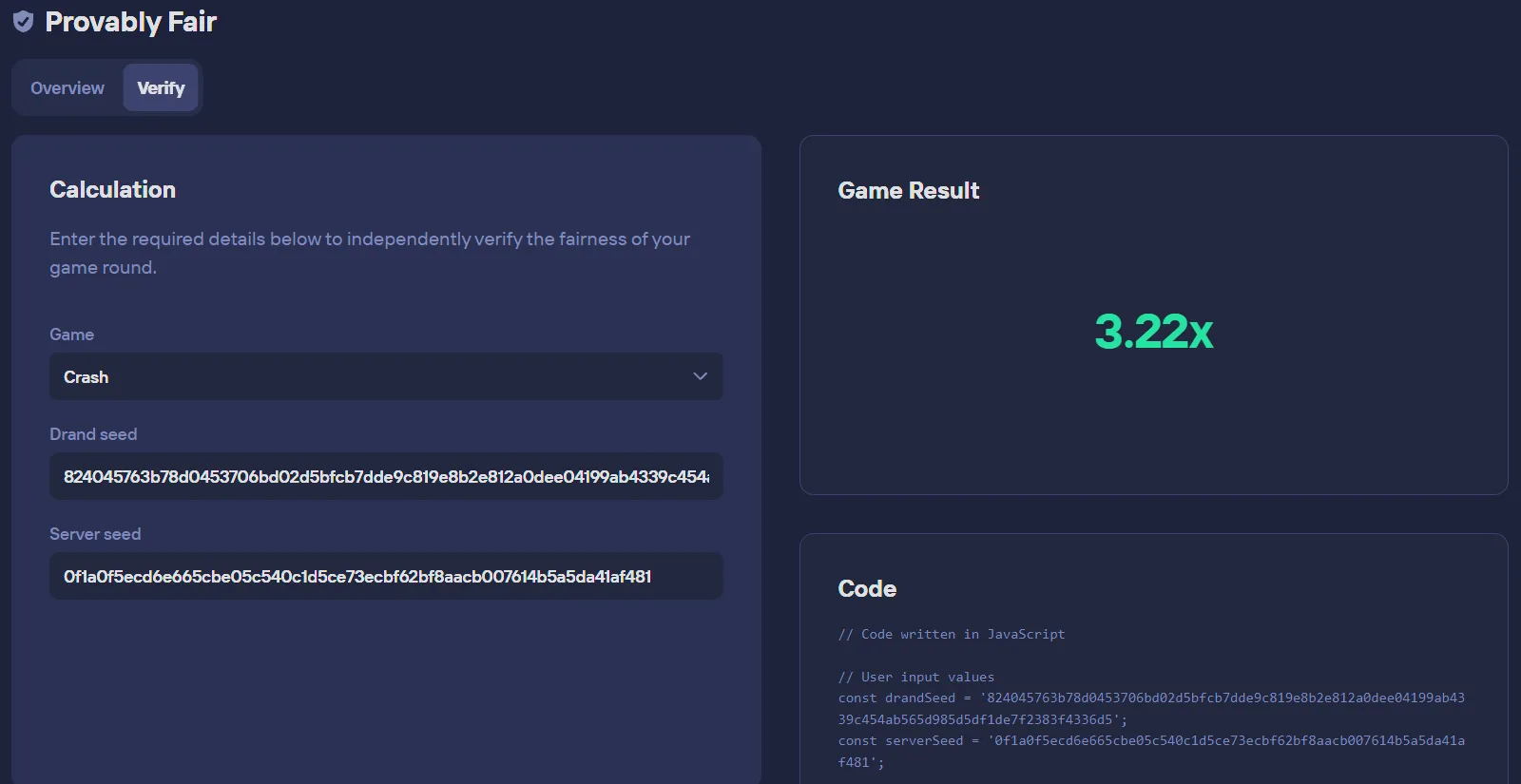
Once funds move to a casino ledger, recovery depends on terms and jurisdiction. The operator’s homepage is not a neutral source. Verify claims against primary records and your own calculations. The checklist below separates testable facts from marketing copy.
The 10-point checklist
How Does This Compare to 0% House Edge Protocols?
Audited 100% RTP
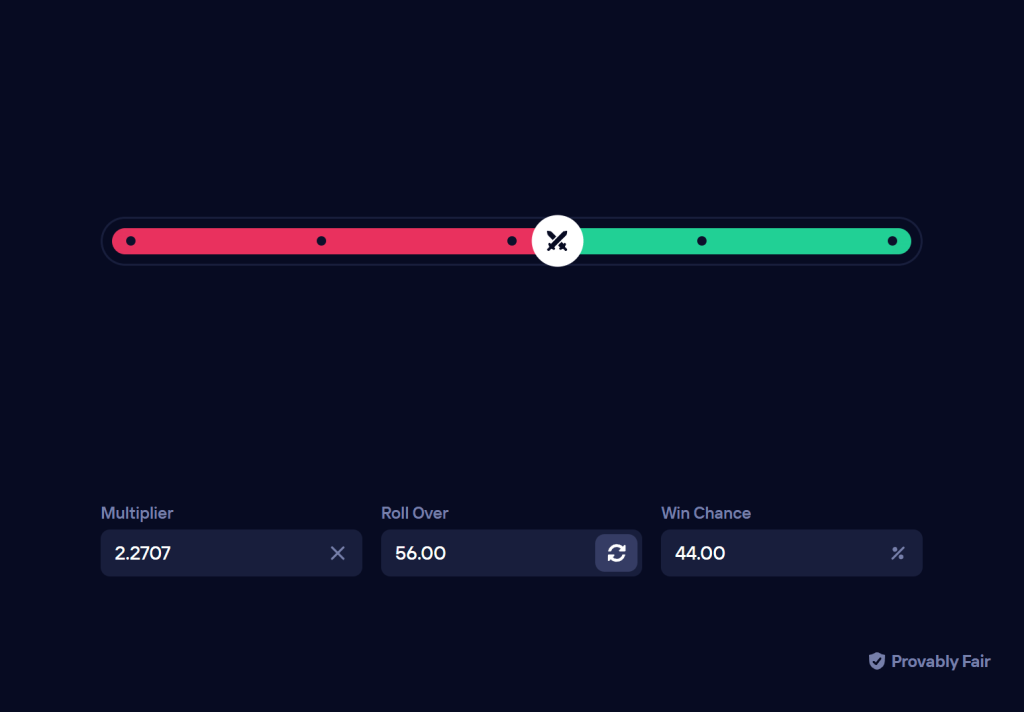
Instead of standard 1.00% to 4.00% casino house margins, compare with mathematically verified 100% RTP Originals (0.00% House Edge) on Duel Casino:

1. Licensing and jurisdiction
Check the licensee database of the stated regulator. In 2026, mature regulators publish entity names, domain lists and license validity. Confirm that the exact domain is covered by the license and the legal name matches the entity in the terms. A license creates a duty of care, but does not prove provable fairness.
2. Actual operator ownership
Read the terms’ governing law section. The entity that owes you money is the company behind the brand. Search corporate registries and regulatory news items for ownership changes, bankruptcies, licensing penalties. If the brand is a white label, ask which entity holds the player funds.
3. Provable fairness and seed integrity
Record the server seed hash, client seed and nonce before any bet. After the round, reveal the server seed and check the hash. Then replay the result algorithm with the same nonce and seed pair. If the replay does not reproduce the result, you have no proof. For a step-by-step walkthrough, see the provably fair guides on this site.
4. RNG and audit scope
An RNG certificate only proves statistical distribution for tested conditions. Check who performed the audit, what games were tested, and whether hash-based generation covers live dealer. A certified RNG can still be after-seeded; provable fairness is a separate control. Verify both where possible.
5. House edge and stated RTP
Open the game’s information panel and note the RTP. Calculate house edge as 1 – RTP. The table below shows the implication at $1,000 wagered.
| Claimed RTP | House edge | Expected loss per $1,000 wagered |
|---|---|---|
| 97% | 3% | $30 |
| 96.5% | 3.5% | $35 |
| 95% | 5% | $50 |
Check the table against rule variations, max bet effects and bonus wagering. If a game is described as 100% RTP, confirm that rules, commissions or side bets do not reintroduce an edge.
6. Withdrawal policy and payout history
Read the withdrawal flow: limits, processing period, KYC checks, fee schedule. Then test with a minimal deposit and immediate withdrawal. If the operator cannot return 10% of your planned bankroll quickly, depositing the other 90% is unjustifiable. The size of your test deposit should come from your bankroll management plan.
7. Bankroll segregation and reserve verification
Ask whether player funds are in separate accounts. Some jurisdictions require segregation and an annual auditor statement. For bitcoin casinos, check the publicly disclosed hot wallet and on-chain reserve levels. In 2026, large operators often publish cold wallet state. If an operator accepts crypto yet refuses to disclose a hot address, treat withdrawal risk as higher.
8. Security and data handling
Verify TLS certificate validity, absence of mixed content, and availability of two-factor authentication. Read the KYC policy for what data is required and how long verification documents are stored. Check whether data can be deleted after account closure. Browser DevTools network inspection can also show whether third-party session-replay scripts are present; legitimate verification should not require them.
9. Bonus and wagering terms
Assume a bonus exists to create negative expected value unless the math says otherwise. Use the wagering requirement as a fixed cost. For example, a $100 bonus at 35x wagering on a 96% RTP slot requires $3,500 of wagers. Expected loss is 4% of $3,500 = $140, which makes that bonus unprofitable for a rational player. Read the game contribution table before claiming anything.
10. Reputation and red flags
Search for public complaints and operator responses. Compare complaint frequency to brand age and current regulation. Read independent review pages in the casino reviews section and note whether they disclose the same terms. A single payout delay is a data point; a pattern is evidence. If the complaint pattern is unresolved, verification is complete and the deposit should not happen.
Putting the checklist into practice
Run this checklist on every new operator. If any point fails, do not continue to the next; ask for a document or decline. After a small withdrawal, record timing, amount and fees. Then decide whether to size up. For shifts in rules or regulation, keep up with regulatory news updates. For an amount you cannot afford to lose, bankroll management guides remain relevant before and after verification.
FAQ
How can I verify provable fairness before depositing?
Before betting, generate a client seed, note the server seed hash and nonce, then make one low-value round. After the round, reveal the server seed. Calculate the hash from the revealed server seed and compare it to the pre-round value. Replay the game’s deterministic algorithm with the same seeds and nonce. If any step fails, the game is not provably fair.
What RTP should I assume in 2026?
Ranges are game- and rule-dependent. Slots generally sit between 94% and 97%; blackjack can exceed 99.5% under strong rules with perfect strategy; roulette expected value is fixed by wheel zeros. Never assume an operator’s disclosed RTP is true: check the game information, calculate the expected loss per $1,000, and compare with wagering multipliers.
Can I verify payout reliability without making a deposit?
Partly. Inspect public KYC requirements, withdrawal thresholds, bonus wagering terms, on-chain payout logs, license warnings and user complaint data. These signals, however, cannot be confirmed as operational until you request an actual withdrawal. Make a minimum deposit and test a withdrawal before increasing exposure.