Reading Casino Terms: 12 Clauses That Cost Players Money

the author
ProvablySmart Research Desk
date post
Aug 28, 2026

Share


Casino terms of service (TOS) are not optional reading—they are the binding contract that governs every bet. Between 2022 and 2026, hundreds of player complaints on forums and regulatory sites trace back to terms that were either ignored or misunderstood. This article isolates 12 specific clauses that systematically reduce a player’s expected value. Each clause is presented with the exact mechanism that costs money, and the verification steps a player can take to confirm the operator’s compliance.
1. Wagering Requirements That Exclude Deposits

Most bonus terms require a player to wager the bonus amount a certain number of times. However, some clauses state that wagering requirements apply only to the bonus, not the deposit. Example: a 100% deposit bonus up to $100 with a 30x wagering requirement on the bonus only means you need to wager $3,000. If the clause says “on deposit + bonus” instead, the requirement becomes $6,000. The difference is 2x the required turnover. What to check: Look for the exact phrase “wagering requirement applies to the bonus amount only” or “to the deposit amount plus bonus.” The latter is far more expensive. Compare the stated requirement against the actual calculation in the bonus terms.
2. Maximum Bet While Bonus Is Active
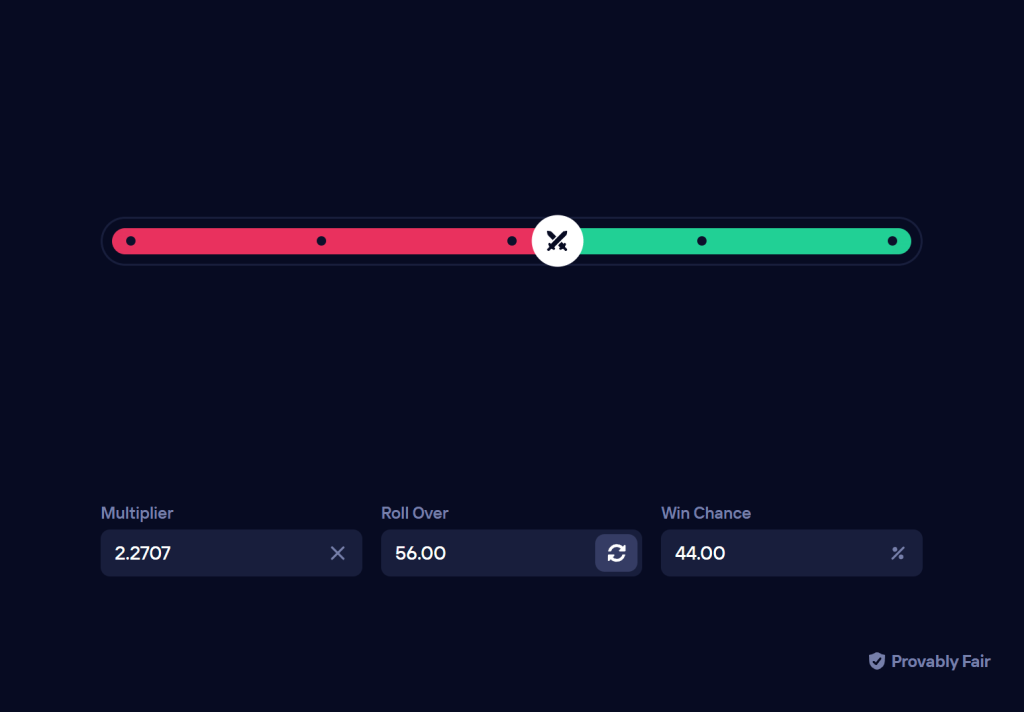
How Does This Compare to 0% House Edge Protocols?
Audited 100% RTP
Instead of standard 1.00% to 4.00% casino house margins, compare with mathematically verified 100% RTP Originals (0.00% House Edge) on Duel Casino:
A common clause limits the maximum bet a player can place while a bonus is active—often $5 or $10 per spin or hand. Exceeding this limit voids the bonus and any winnings. The cost appears when a player accidentally makes a larger bet (e.g., $12 on a slot) and the casino confiscates all associated winnings, even if the bonus was small. Verification: The maximum bet clause should be clearly stated in the bonus terms. If it is not, the casino may still enforce it in the fine print. Check the TOS for the exact numeric limit and whether it applies to all games or only those counting toward requirements.
3. Game Contribution Percentages
Casinos assign different contribution percentages to games toward wagering requirements. Slots often contribute 100%, table games 10% or 0%. The player’s expected loss is directly tied to these percentages. For example, a 30x wagering requirement on a $100 bonus with 100% contribution on a slot with 96% RTP costs $1,200 in expected loss (0.04 * $30,000). If the player uses blackjack at 10% contribution, the required turnover is $300,000, and the expected loss becomes $6,000 (assuming 0.5% house edge). What to check: The casino’s game contribution table is usually listed in the bonus terms. Verify that the percentages match the actual RTP of the games you intend to play. If a game has a high RTP but low contribution, the effective cost may be higher than playing a low-RTP slot.
4. Maximum Cashout from Bonus Winnings
Many bonus terms cap the amount you can withdraw from winnings derived from a bonus. A typical clause: “Maximum cashout from bonus winnings is 10x the bonus amount.” If you win $1,000 from a $100 bonus, you can only withdraw $1,000 — the rest is forfeited. The cap may be expressed as a multiple of the bonus or as a flat dollar amount. Verification: Look for the phrase “maximum cashout” or “max withdrawal from bonus winnings.” Also check if the cap applies only to the bonus winnings or to the entire balance (including deposit). A cap on the entire balance is more restrictive.
5. Withdrawal Limits and Processing Fees
Withdrawal limits are not always stated in the welcome bonus terms but are buried in the general TOS. Common limits: $2,500 per week, $10,000 per month. If you win a large jackpot, the casino will process your withdrawal in installments, effectively giving them an interest-free loan and potentially exposing you to further risk. Some casinos also charge a processing fee (e.g., $50 per withdrawal) that reduces the net amount. What to check: In the casino’s banking page, find the withdrawal limits per transaction, per day, per week, and per month. Also check for any fees listed under “pending withdrawal” or “processing fee.”
6. Dormant Account Fees
Many casinos charge a monthly fee (often $5–$10) after a period of inactivity, typically 90–180 days. This fee is deducted from your balance, and if it goes to zero, the account may be closed. The cost is a slow bleed of funds that could have been withdrawn. Verification: Search the TOS for “dormant account,” “inactivity fee,” or “account maintenance fee.” The fee amount and the inactivity period should be explicitly stated. Some jurisdictions prohibit this fee, so check if the casino is licensed in a region that bans it.
7. Forfeiture of Winnings on Voided Bets
If a casino determines that a bet was placed in violation of its terms (e.g., using a VPN, multiple accounts, or betting patterns considered abusive), the clause often states that all winnings from that bet are forfeited, and sometimes the entire balance is voided. The definition of “abusive play” is often vague. What to check: Look for the section on “voided bets” or “irregular play.” Examine whether the casino provides a list of specific prohibited actions. If the language is broad (e.g., “any behavior that the casino deems unfair”), the risk of losing winnings increases. Check if the casino has a published policy on how they detect abuse, and whether they require evidence before voiding.
8. Unfair Play / Bonus Abuse Clauses
Related to voided bets, many casinos include a clause that allows them to confiscate winnings if they suspect “bonus abuse” or “unfair advantage.” This can include taking advantage of a mathematical error in a game, using a strategy that reduces the house edge, or simply winning too much. Verification: Read the “Bonus Abuse” section carefully. If the clause says “the casino reserves the right to withhold winnings if it believes the player is abusing the bonus,” that is a red flag. Legitimate operators define abuse in specific terms, such as using multiple accounts or placing bets on opposite outcomes. Generic language costs players money because it gives the casino unilateral power.
9. Restricted Countries and Payment Methods
Even if you are allowed to register, the casino may restrict certain countries from receiving bonuses, or from using specific payment methods for withdrawals. A player from a restricted country may deposit with a credit card but find that the casino only allows bank transfers for withdrawals, which might be unavailable in their country. The result: funds are trapped. What to check: On the casino’s terms page, find the list of restricted countries and the payment methods accepted for withdrawals. Verify that your country is not listed and that at least one withdrawal method is available to you.
10. Expiration of Bonus Funds
Bonuses and their associated winnings expire after a certain period—typically 7 to 30 days. If the wagering requirement is not met within that time, the bonus and any winnings are forfeited. The cost is the time pressure that forces players to bet larger amounts than they would normally, increasing variance and risk of ruin. Verification: Find the bonus expiry date in the terms. Also check if the expiry applies only to the bonus amount or to the entire balance. Some casinos allow you to keep your deposit but forfeit the bonus and winnings. Others take everything.
11. Terms and Conditions Change Without Notice
Many TOS include a clause that the casino can modify the terms at any time, with or without prior notice. This means a bonus that was favorable when you signed up could be retroactively changed to reduce your winnings. While some jurisdictions require notification, many do not. Verification: Look for a clause titled “Amendment” or “Changes to Terms.” If it says “we may modify these terms at any time without notice,” that is a risk. Check if the casino has a history of changing terms retroactively (search for player complaints).
12. Minimum Deposit Requirements for Withdrawals
Some casinos require a minimum deposit amount (e.g., $30) before any withdrawal is allowed, even if you won with a no-deposit bonus. This forces you to deposit money you might not want to, just to access your winnings. What to check: In the general TOS, find the section on “Withdrawal Minimums” or “Cashout Policy.” If it says “you must have made at least one deposit of $X before a withdrawal can be processed,” that is a cost barrier. Also check if the requirement applies to winnings from free spins or no-deposit bonuses.
FAQ
How can I verify if a casino’s terms are being enforced correctly?
You can check the casino’s licensing authority and look for published audits. For provably fair games, you can verify the server seed and client seed yourself. For terms enforcement, the best evidence is screenshotting the terms when you sign up, and then comparing them with the terms shown when you request a withdrawal. If the casino changes the terms retroactively, you have a record to present to the regulator.
Are all these clauses present in every casino’s terms?
No. Some casinos, especially those with reputable licenses (e.g., Malta Gaming Authority, UK Gambling Commission), are required to have clear, fair terms. However, many offshore casinos include several of these clauses. The prevalence of each clause varies by operator. The best approach is to use a bankroll management strategy that accounts for the worst-case scenario of each clause.
Can I negotiate or get a waiver on a term that cost me money?
In rare cases, yes. If the term is ambiguous or if the casino’s customer support acknowledges a mistake, they may reverse a deduction. However, the terms are explicitly designed to be non-negotiable. The only reliable way to avoid costs is to read the terms before depositing and to choose casinos that do not include these clauses. If you are affected, file a complaint with the casino’s licensing authority and provide evidence of the term and how it was applied.