Casino Streamer Deals: How to Read Sponsored Play Critically

the author
ProvablySmart Research Desk
date post
Aug 28, 2026

Share


Casino streamers are a marketing channel. Their content—whether on Twitch, Kick, or YouTube—is often funded by operators through revenue share, flat fees, or free play credits. The critical question for a skeptical viewer is: What is the actual economic incentive behind the stream, and how does it distort the representation of the game? This article provides a framework for reading sponsored play critically, focusing on what you can verify yourself.
The Economics of Streamer Deals
Most streamer-casino agreements fall into one of three structures:
- Revenue Share (RevShare): The streamer receives a percentage of the net losses (or gross gaming revenue) from players who sign up via their affiliate link. Typical rates range from 25% to 50% of the casino’s margin. This creates a direct incentive to show winning sessions, as that encourages deposits.
- Cost Per Acquisition (CPA): A flat fee per depositing player, often $100–$500, independent of the player’s losses. The streamer is incentivized to drive volume, not necessarily to show wins—but winning sessions still convert better.
- Sponsored Play (Free Credits): The casino provides the streamer with a fixed bankroll (e.g., $10,000) to play with. The streamer may keep a portion of winnings, or the casino may reclaim all funds at the end. This is the most opaque model, as the streamer is playing with ‘house money’ and has no risk of personal loss.
In all models, the streamer’s financial interest is misaligned with the viewer’s. The streamer wants you to believe that winning is likely, sustained, and replicable. In reality, the house edge ensures that the long-term expectation is negative—unless the streamer is playing on a rigged or manipulated account.
Verification Checklist: What You Can Check
How Does This Compare to 0% House Edge Protocols?
Audited 100% RTP
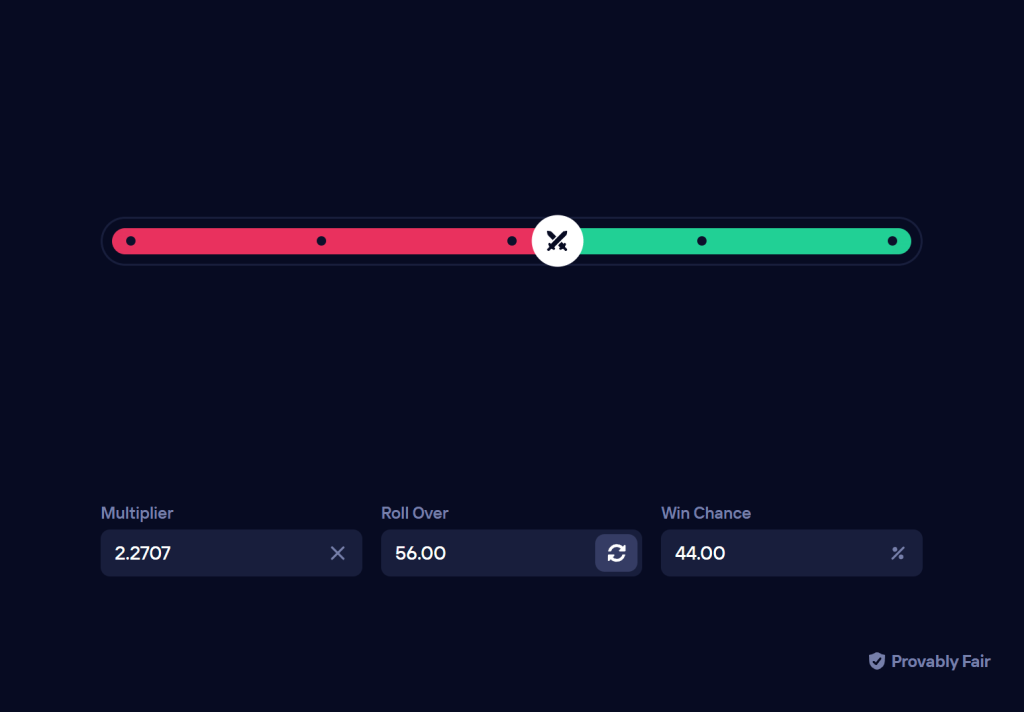
Instead of standard 1.00% to 4.00% casino house margins, compare with mathematically verified 100% RTP Originals (0.00% House Edge) on Duel Casino:

Not all streamer content is fraudulent, but much of it is carefully curated. Here is a checklist of verifiable elements you can examine to assess the credibility of the session.
1. Game RTP and Volatility
Every licensed game has a theoretical Return to Player (RTP) published in its paytable or metadata. For a slot, the RTP might be 96.5%. If a streamer wins 10,000x their bet in 100 spins, ask: What is the probability of that outcome given the RTP and volatility? You can calculate the expected win rate and compare it to the observed result. A session that is statistically improbable (e.g., >99.9th percentile) is a red flag for either cherry-picking or a modified game.
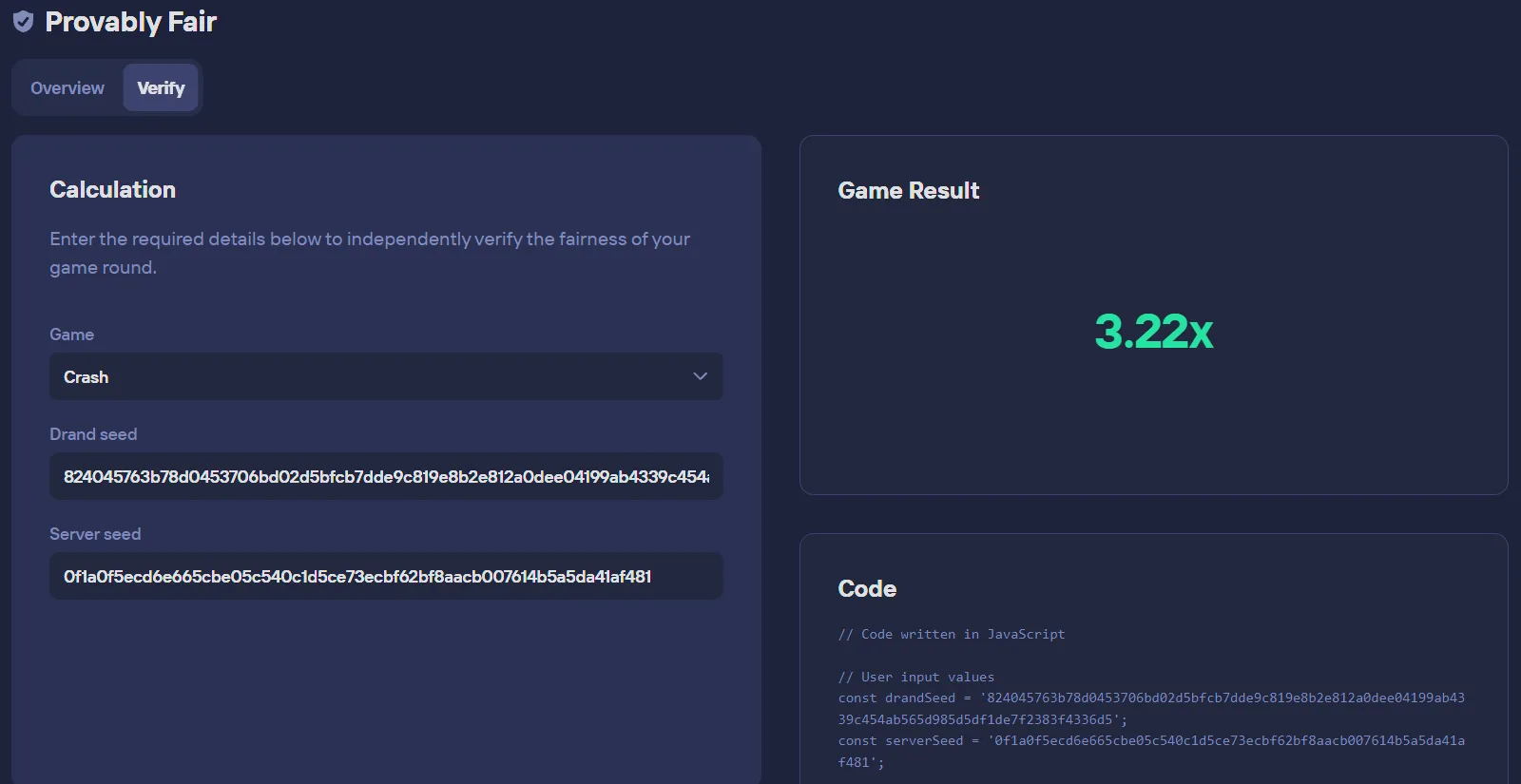
For provably fair games, you can verify the seed hash and server seed after the session. Most casinos that offer provably fair publish a nonce-based verification system. Check our guides on how to manually verify seed hashes.
2. Session History and Bet Sizes
Does the streamer show the entire session? Or do they cut away to highlight only winning spins? A full VOD with timestamps is more trustworthy than a highlights reel. Watch for bet sizes: if the streamer bets $100 per spin but claims to have deposited $1,000, the number of spins is limited. Count the spins and compare to the total wager. If the math doesn’t add up (e.g., 500 spins at $100 = $50,000 wagered, but the deposit was $1,000), the streamer is likely playing with a special account that has a higher balance or a ‘bonus’ that is not disclosed.
3. Deposit and Withdrawal Screenshots
Some streamers show deposit confirmations and withdrawal receipts. These can be faked. Verify the transaction ID on the blockchain if the casino accepts crypto, or check the timestamp against the VOD. If the casino is fiat-based, ask for a bank statement—but this is rarely provided. The absence of verifiable proof should be treated as a default assumption of non-disclosure.
4. Wagering Requirements and Terms
If the streamer is playing with a bonus, the wagering requirements may be 30x or 40x. A $1,000 bonus with 40x wagering requires $40,000 in bets before any withdrawal. The streamer rarely mentions this, because it would make the session look less impressive. Check the casino’s terms for the specific bonus code shown (if any). For a list of operators and their terms, see our casino reviews.
Red Flags in Sponsored Play
| Red Flag | Why It Matters |
|---|---|
| Consistent wins with no significant losses | Statistically improbable over a long session; suggests cherry-picked footage or rigged account. |
| Bet sizes that would bankrupt a normal bankroll | Indicates the streamer is using a ‘casino wallet’ with unlimited funds, not their own money. |
| No mention of wagering requirements | Omission of key terms that dramatically affect the expected value of the bonus. |
| Use of ‘demo’ or ‘free play’ mode without disclosure | Demo mode often has higher RTP or no house edge; real money play is different. |
| High frequency of ‘max win’ events | Slots have a defined maximum payout; seeing multiple max wins in a short period is near-impossible. |
These red flags are not proof of fraud, but they are indicators that the streamer’s content is not representative of a typical player experience. The burden of proof is on the streamer to provide transparency. In the absence of that, treat the content as entertainment, not as evidence of a viable strategy.
How to Read a Disclosure
Regulatory bodies like the UK Gambling Commission, Malta Gaming Authority, and others require clear labeling of sponsored content. However, compliance varies by jurisdiction and platform. Look for these markers:
- #ad or #sponsored in the title or description.
- “In partnership with [Casino Name]” – this generally indicates a paid deal, but does not specify the terms.
- Endorsement language – e.g., “I trust this casino” – which is a red flag if the streamer has a financial stake.
- Affiliate link – often found in the description or as a pinned comment. If present, the streamer is likely earning from your losses.
Even with a disclosure, the streamer may not be obligated to reveal the exact deal structure. For a deeper dive into regulatory standards, read our news section on affiliate marketing disclosures.
Practical Steps for the Skeptical Viewer
- Ignore the win/loss screen. Focus on the number of spins and the total wagered amount. Derive the expected loss using the game’s RTP.
- Look for a ‘loss session’ indicator. Does the streamer ever show a session where they lose 80% of their bankroll? If not, the content is selective.
- Check the chat. Often, viewers will call out inconsistencies. Use the community as a filter.
- Verify the casino’s license. A licensed casino is subject to periodic audits, but that doesn’t guarantee the streamer’s account is not on a different server.
- Apply bankroll management principles. If the streamer’s bets are larger than 5% of their bankroll (assuming they are using their own money), they are violating basic risk management. See our bankroll management guide for standard metrics.
Ultimately, the most reliable approach is to assume that streamer content is promotional, not educational. The only way to verify a player’s long-term results is to see their complete transaction history, including deposits, withdrawals, and all rounds played. That data is rarely available to the public.
FAQ
Are all casino streamers paid by the casinos?
No, but the majority of streamers who play with high stakes or promote specific casinos are under some form of commercial agreement. Even if they are not directly paid, they may earn through affiliate links. The absence of a disclosure does not mean no deal exists. In jurisdictions with strict advertising rules, such as the UK, a lack of a clear #ad label can be a violation.
Can I trust a streamer who shows a provably fair verification?
Provably fair verification only confirms that the game outcomes were not manipulated after the server seed was committed. It does not verify that the streamer deposited their own money, that the account had a normal balance, or that the session was not cherry-picked from a larger dataset. Verification is a necessary but insufficient condition for trust.
What should I do if I suspect a streamer is misleading viewers?
First, gather evidence: timestamps, screenshots, and any inconsistencies. Report the content to the streaming platform (Twitch, YouTube, etc.) under their ‘deceptive practices’ policy. If the streamer is promoting a specific casino, you can also report the casino to its licensing authority. However, enforcement is slow, and the best defense is to treat all streamer play as entertainment and never gamble based on it.