DIY Session Analytics: Tracking Your Own Play Like a Database

the author
ProvablySmart Research Desk
date post
Aug 28, 2026
Share


Most casino players rely on gut feeling or short-term memory to evaluate their performance. In 2026, with provably fair systems and verifiable hashes widely available, there is no excuse for guesswork. By treating your own play as a dataset, you can compute empirical RTP, session variance, and bankroll decay curves with the same rigor a database administrator applies to query logs. This article outlines a minimal but effective schema for logging sessions, the math behind the analysis, and how to cross-check your results against the casino’s own data.
Why Log Like a Database?
Casino operators compile petabytes of player data for internal analysis. You can do the same for your own account. The goal is not to detect patterns in random games (there are none), but to measure your actual experience against the theoretical house edge. Without a log, you are subject to cognitive biases: you remember wins more vividly than losses, and you underestimate the number of losing sessions. A structured log forces honesty.
Additionally, if you play at a provably fair casino, you can verify every round’s outcome against the server seed and client seed. Logging those seeds alongside each bet allows you to later audit the casino’s fairness programmatically. This is a crucial step for any technical player.
Essential Data Points to Record
How Does This Compare to 0% House Edge Protocols?
Audited 100% RTP
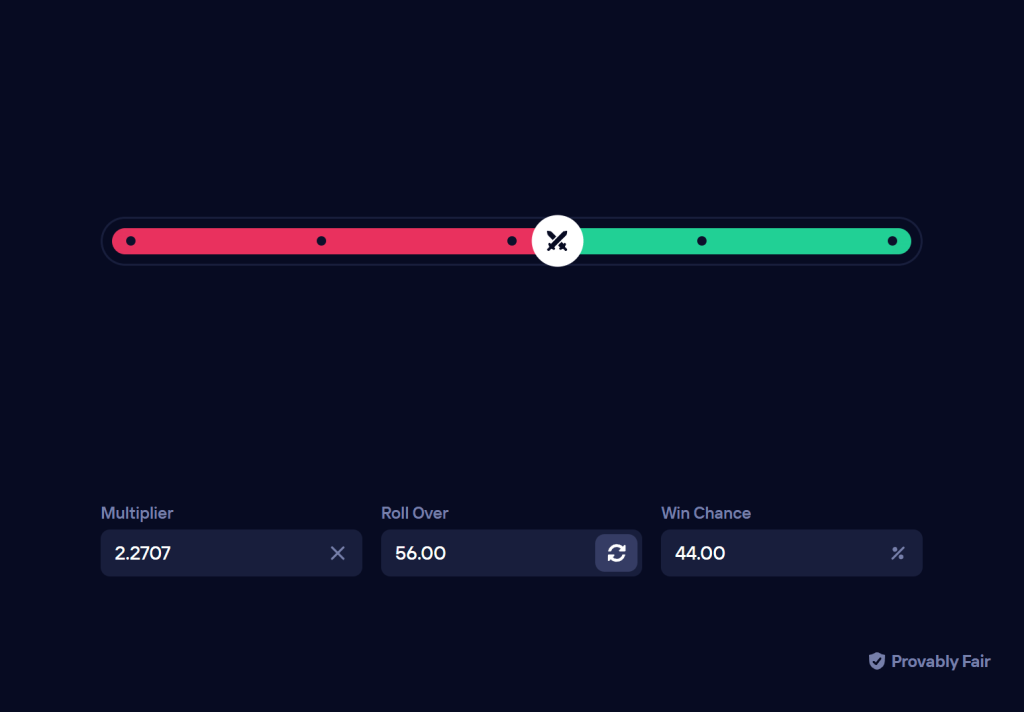
Instead of standard 1.00% to 4.00% casino house margins, compare with mathematically verified 100% RTP Originals (0.00% House Edge) on Duel Casino:

Design your log as a flat table with one row per bet or per session, depending on granularity. Bet-level logging is more accurate but more tedious; session-level logs are practical for most players. Below is the recommended schema for a session-level log.
Session Log Schema
| Field | Type | Description |
|---|---|---|
| session_id | UUID | Unique identifier (e.g., timestamp + random suffix) |
| start_time | ISO 8601 | UTC timestamp when session began |
| end_time | ISO 8601 | UTC timestamp when session ended |
| casino | string | Name of the casino (use consistent abbreviation) |
| game | string | Game title (e.g., “Blackjack Classic”, “Dice 2x”) |
| game_type | string | Class: slots, dice, blackjack, baccarat, etc. |
| house_edge | float | Theoretical house edge (from game rules or casino’s disclosed RTP) |
| starting_bankroll | float | Balance at session start (in your base currency) |
| ending_bankroll | float | Balance at session end |
| total_bets | integer | Number of rounds played |
| total_wagered | float | Sum of all bets placed |
| total_won | float | Sum of all payouts (including returned stake) |
| net_result | float | total_won – total_wagered |
| server_seed_hash | string | Hash of server seed used (if applicable, for verification) |
| client_seed | string | Your client seed (if applicable) |
| notes | text | Any anomalies, tilt, strategy changes |
If you prefer bet-level logging, add fields for bet_amount, outcome_amount, round_id, and nonce (for provably fair verification).
Tools for Implementation
You can start with a simple spreadsheet (Google Sheets or Excel). For better querying, use SQLite or a local PostgreSQL database. Players comfortable with Python can automate data entry via an API if the casino offers one (most don’t, but you can export CSV from your account page).
Spreadsheet Approach
Create a sheet with columns matching the schema above. Use SUMIF, AVERAGE, and pivot tables to compute aggregate metrics. For example, to calculate empirical RTP over all sessions for a specific game type:
=SUMIF(total_won) / SUMIF(total_wagered)This gives you a raw win percentage. Compare it against the theoretical RTP (house_edge converted: RTP = 1 – house_edge). If your empirical RTP after 10,000 hands of blackjack deviates beyond 2 standard deviations, something may be off—either your logging is incorrect, or the game’s RTP is not as advertised.
Database Approach
For SQL users, define a table:
CREATE TABLE sessions (
    session_id TEXT PRIMARY KEY,
    start_time TIMESTAMP,
    end_time TIMESTAMP,
    casino TEXT,
    game TEXT,
    game_type TEXT,
    house_edge REAL,
    starting_bankroll REAL,
    ending_bankroll REAL,
    total_bets INTEGER,
    total_wagered REAL,
    total_won REAL,
    net_result REAL,
    server_seed_hash TEXT,
    client_seed TEXT,
    notes TEXT
);
Then query the empirical RTP for each game type:
SELECT game_type, SUM(total_won)/SUM(total_wagered) AS empirical_rtp
FROM sessions
GROUP BY game_type;
You can also compute session-level standard deviation to gauge volatility. This is more informative than simply looking at win/loss streaks.
Analyzing Variance and Bankroll Impact
With a few hundred logged sessions, you can estimate your personal variance. For a game with variance σ² per bet, the total variance over N bets is N * σ². For slots, variance is often extremely high; for dice or blackjack, lower. Your session net results should follow a normal distribution (Central Limit Theorem) if you have enough rounds. Plotting the histogram of net results gives you a sanity check.
More importantly, track your bankroll over time. A simple moving average of net result per session helps identify whether you are drifting away from the theoretical expectation. Use the formula:
Expected net loss = total_wagered * house_edge
Compare actual net loss to this expected value. If after 1,000 bets your actual loss is, say, 5% of wagered while house edge is 1%, you are experiencing negative variance. That is not a problem—it’s expected. But if after 100,000 bets you are still 5% off, you should suspect a systematic error.
For a thorough guide on using this data to adjust bet sizing, see our bankroll management guide.
Verifying Provably Fair Data
Many crypto casinos in 2026 still use provably fair hashing. If you logged the server seed hash and client seed for each session, you can later verify that the outcomes were derived correctly. The process:
- Wait for the casino to reveal the server seed (either after the session or after you request a new seed).
- Hash the seed with your client seed and nonce to generate the outcome.
- Compare the generated outcome with the recorded outcome (or payout).
If you find any discrepancy, you have evidence of a fairness issue. Reputable casinos will cooperate; if not, consult our casino reviews for platforms with a history of transparent verification.
For a broader overview of tracking methodologies, see our guides section.
Limitations and Pitfalls
No log can make you a better player from a mathematical standpoint—the house edge remains. But rigorous logging lets you:
- Detect if a casino’s game RTP drifts over time (possible with algorithmic changes).
- Calibrate your own risk tolerance by observing actual drawdowns.
- Make data-driven decisions about when to stop, not emotional ones.
Be aware of selection bias: if you only log losing sessions, your analysis will be skewed. Commit to logging every session, no matter how trivial. Also, avoid overfitting—random data will always show patterns if you torture it enough. Stick to simple metrics: empirical RTP, standard deviation, and bankroll decay rate.
FAQ
What is the minimum number of sessions I need before the data becomes meaningful?
For games with low variance like blackjack or dice, 500–1,000 rounds provide a reasonable estimate of your empirical RTP (within ±2% of true RTP). For high-variance slots, you may need 10,000+ rounds. The standard deviation of the sample mean shrinks with the square root of the number of rounds. Use a confidence interval calculator to gauge your precision.
Should I log every single bet or just session totals?
Session totals are sufficient for most variance analysis, especially if you play many small bets per session. Bet-level logging is necessary if you want to verify each provably fair round individually, or if you want to compute exact variance per bet. Start with session totals; add bet-level logging only if you identify a specific need (e.g., suspected rigging).
How do I handle depositing and withdrawing from my bankroll separately from session results?
Track your overall bankroll as a separate table. The session log should only reflect the net change during play, not external deposits or withdrawals. Create a separate ‘bankroll_events’ table with fields: timestamp, event_type (deposit/withdrawal), amount, and resulting balance. Then you can compute your net gambling loss across all sessions by summing net_result, and compare it to the difference between total deposits and withdrawals.