Payout Queues: Reading Withdrawal Times Like Operations Data

the author
ProvablySmart Research Desk
date post
Aug 28, 2026
Share


Withdrawal time is a queue metric, not a promise. When a casino states “instant payouts,” it is describing a system composed of arrival, service, and settlement stages, each with its own failure modes. Treating payout speed as operational data — median completion times, percentile spreads, verification-induced delays — is more informative than any average or marketing label.
Anatomy of a payout queue
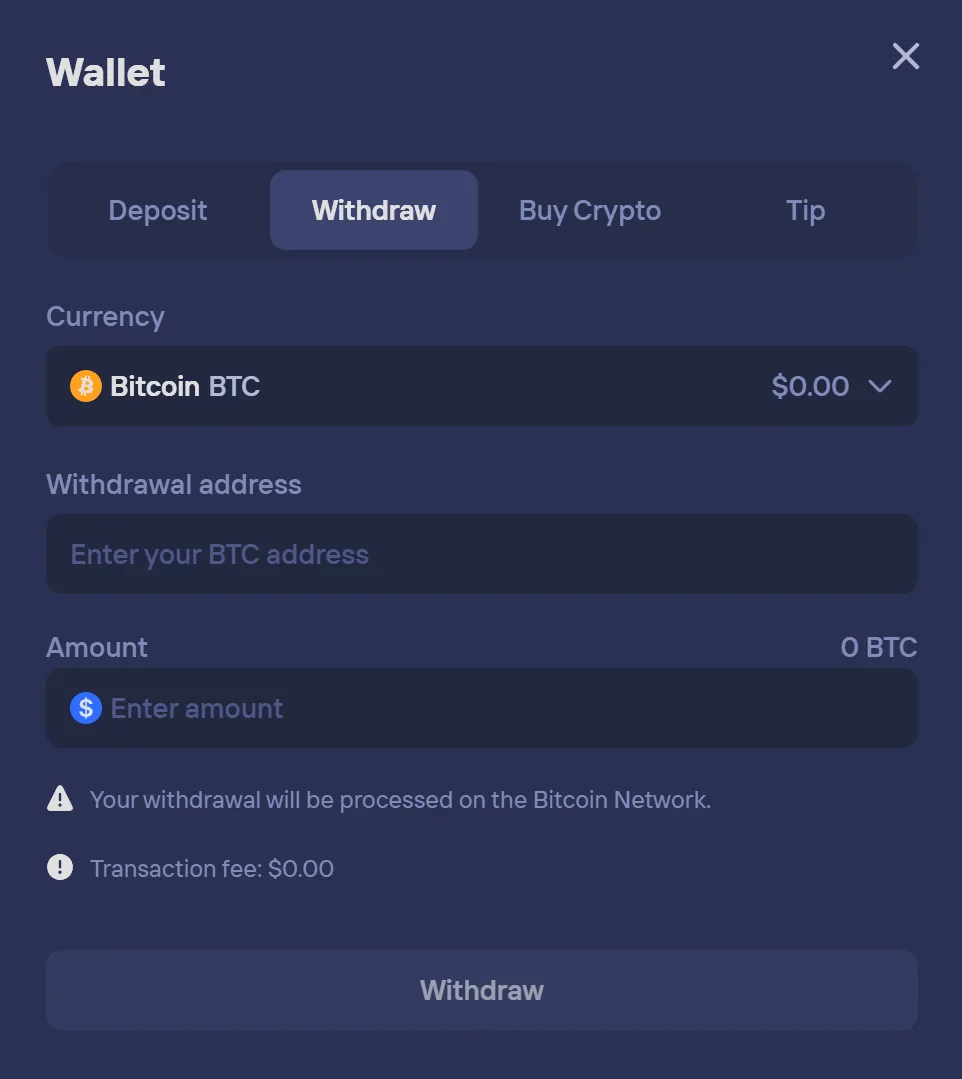
Every withdrawal request enters a queue at the moment you submit it. Before funds reach you, the request moves through several stages, and each stage can stall independently:
- Submission to acknowledgment: the operator logs the request and changes its status.
- Manual review window: flagged requests are held for identity, AML, or fraud checks.
- Batch execution: many operators process withdrawals in scheduled batches, not per-request. Position in the batch matters.
- Settlement layer: for crypto, this is blockchain confirmation; for fiat, it is PSP or bank clearing.
The total elapsed time is the sum of these stages. If the operator publishes only a median total, you cannot distinguish a fast settlement layer from a slow review queue. That distinction matters because review delays are discretionary, while settlement delays are infrastructural.
Metrics that tell the truth
How Does This Compare to 0% House Edge Protocols?
Audited 100% RTP
Instead of standard 1.00% to 4.00% casino house margins, compare with mathematically verified 100% RTP Originals (0.00% House Edge) on Duel Casino:

Averages are the wrong tool. A single stuck withdrawal at day 10 raises the mean and obscures a healthy median. The useful statistics are quantiles.
| Metric | Definition | What it indicates |
|---|---|---|
| Median (p50) | Middle value of observed completion times | Typical experience for a non-flagged player |
| p90 | 90% of requests complete within this time | Presence of a slow tail; consistency of the pipeline |
| p99 | Worst 1% of requests | Failure modes: stuck reviews, liquidity gaps |
| Approval-to-broadcast gap | Duration between operator approval and blockchain broadcast | Manual signing steps or internal authorization limits |
When an operator reports an “average withdrawal time of 2 minutes,” ask for the p90 and the sample size. A 2-minute median with a p90 of 8 hours describes a system quite different from one where the p90 is 3 minutes.
What you can verify yourself
The verification-first approach used for provably fair games applies equally to withdrawals. You cannot see the operator’s internal queue, but you can observe its outputs and timestamps.
- On-chain data: for crypto withdrawals, the txid gives the broadcast time, the confirmation time, and the fee paid. A withdrawal that sits as “approved” for hours before broadcast is delayed by operator procedure, not network congestion.
- Request and approval logs: email receipts and account history normally include timestamps for submitted, processed, and sent. Record these at submission time rather than relying on memory.
- Game hashes and seeds: these verify that winnings were generated fairly, which is not the same as proving the operator can pay. Combine the two: fair games plus a clean payout test is a stronger claim than either alone.
- Fee retention: compare the amount sent on-chain with the amount approved. Unexplained fee deductions are a cost not captured in the displayed payout time.
For specific operators, consult our casino reviews, which document testing methodology and observed payout behavior rather than operator-supplied averages.
The manual review bottleneck
As of 2026, most payout delays are not technical. They are discretionary holds triggered by risk rules. Common triggers include:
- KYC re-validation: documents re-checked at withdrawal time, even if verified at deposit.
- Source-of-funds requests: the operator asks for proof that deposited funds originate from an account matching your identity.
- Bet-to-deposit ratio anomalies: high bonus usage or low wagering before a large withdrawal can trigger anti-money-laundering review.
- Withdrawal-to-deposit ratio: players who deposit and withdraw without wagering are frequently flagged for bonus abuse or layering.
These checks are not necessarily malfeasance. A responsible operator runs them. But manual review means the queue is not first-in, first-out. Some requests are prioritized, others parked. The only way to estimate the probability of being parked is to test repeatedly and to read the policy documents — not the marketing page.
We cover the structural side of this in our guides on withdrawal policies and verification workflows.
Sampling an operator’s queue
You can build a small dataset without wagering meaningful money. The procedure is straightforward:
- Deposit a fixed, small amount using a method whose settlement time you know precisely — for example, a native blockchain transfer.
- Wager the minimum required to escape bonus restrictions, or play at the lowest house-edge game you can find.
- Request the withdrawal immediately after wagering. Record the request time.
- Poll the status at fixed intervals. Record each state change: pending, processing, approved, broadcast (for crypto), and confirmed.
Repeat the test at different times of day and different days of the week. A casino that processes within minutes on Tuesday but takes 12 hours on Saturday has a batch schedule — or a staffing schedule. That is operational information you can act on.
Sample size matters. One fast withdrawal proves nothing about the tail. Three to five withdrawals at the same stake level give you a usable median. Ten give you a rough p90. Budget for the test as you would for any other bankroll management exercise: the testing cost is the wagering loss plus the time value of the funds.
Interpreting the data
Once you have your observations, compare them against the operator’s stated policy. Discrepancies fall into three patterns:
- Constant small delay: every request takes slightly longer than stated. This suggests a batch interval or a deliberately conservative estimate. Low risk.
- Occasional long tail: most requests are fast, but a meaningful minority sits for days. This indicates discretionary holds — and a probabilistic risk you must price in.
- Status regression: a withdrawal moves from “processing” back to “pending” or “under review.” This is the most informative signal: the request was pulled out of the automatic pipeline by a human.
Status regression is the pattern you should treat with most caution. It converts a queueing problem into a counterparty risk problem. If the operator can unilaterally pause your withdrawal, the relevant measure is not the median but the probability of ever being paid. Track industry news for patterns of escalating hold times at multiple operators.
A casino that publishes its hashes and seeds but cannot publish a payout completion distribution is telling you something. The first data set proves game fairness; the second proves solvency and operational discipline. Both are required for a full verification picture.
FAQ
Is a withdrawal timer a reliable predictor of future payouts?
No single timer is. A single fast payout is an existence proof, not a distribution. Only a repeated sample of several withdrawals, recorded with timestamps at each state change, estimates the p50 and p90 of the queue. The more withdrawals you sample, the more reliable the prediction — but the sample cost must be budgeted like any other wagering expense.
What is the single best metric for payout speed?
The p90 (or p99) completion time, measured from request submission to funds available in your wallet or bank account. The median describes the typical case, which is rarely the problematic case. The p90 captures the probability of being caught in a manual review or a liquidity shortfall. A wide spread between p50 and p90 indicates that discretionary factors dominate the queue.
Can provably fair hashes tell me anything about withdrawal speed?
No. Provably fair hashes verify the fairness of game outcomes — they prove the casino did not alter results — but they say nothing about whether the casino will pay, or how quickly. Withdrawal speed is verified through on-chain data and timestamp logs, not game seeds. Treat the two verifications as separate and complementary.