
KYC Document Checklist: What Crypto Casinos Ask For and When

the author
ProvablySmart Research Desk
date post
Aug 28, 2026

Share


KYC (Know Your Customer) procedures are increasingly common at crypto casinos, even though many platforms originally marketed themselves as anonymous. As of 2026, the majority of licensed crypto casinos require some form of identity verification, often triggered by withdrawal amounts, total deposits, or regulatory obligations. This article provides a checklist of documents typically requested, explains the thresholds at which they are enforced, and gives you the tools to verify that the casino’s KYC process matches its stated policies.
Why Crypto Casinos Request KYC Documents
KYC serves two primary purposes: regulatory compliance and fraud prevention. Jurisdictions like Curacao, Malta, and the UK (for fiat-crypto hybrid casinos) mandate identity verification for anti-money laundering (AML) purposes. Even unregulated casinos may voluntarily implement KYC to reduce bonus abuse and chargebacks. The key point for a skeptical user: you can check the casino’s license (if any) and cross-reference its KYC policy with the local regulator’s requirements. For example, Curacao eGaming licensees must follow AML guidelines that include customer due diligence at thresholds above €2,000 in aggregate transactions.
Common KYC Documents Required
How Does This Compare to 0% House Edge Protocols?
Audited 100% RTP
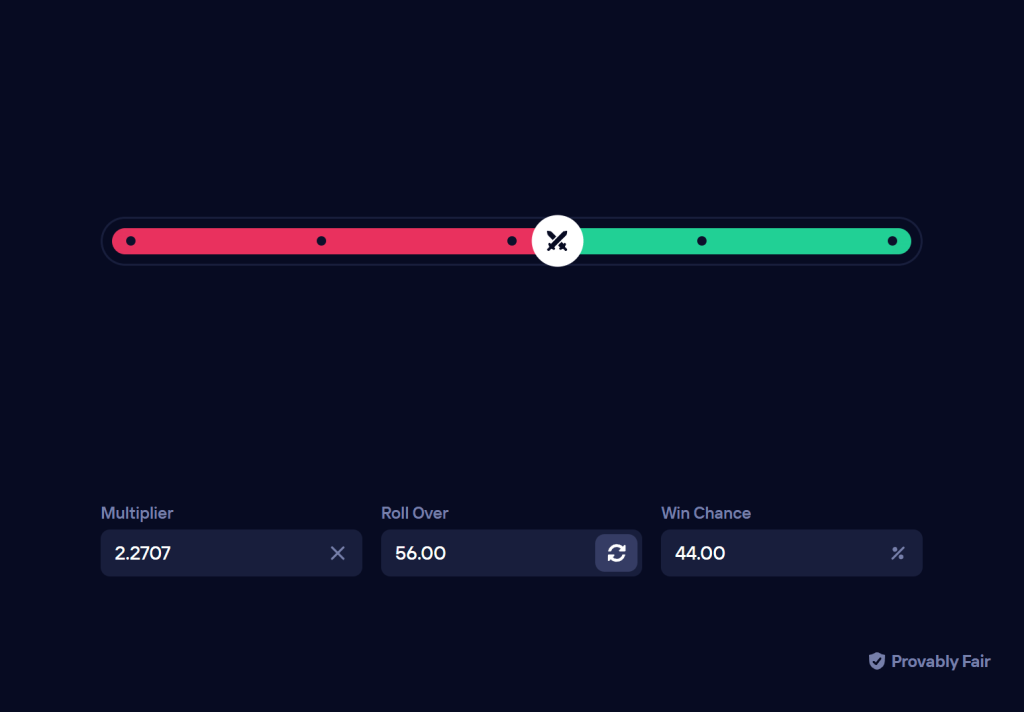
Instead of standard 1.00% to 4.00% casino house margins, compare with mathematically verified 100% RTP Originals (0.00% House Edge) on Duel Casino:

The documents requested fall into three categories: identity, address, and financial. Below is a checklist with typical formats and verification methods.
1. Proof of Identity (POI)
- Government-issued ID – Passport, driver’s license, or national ID card. Must show full name, date of birth, photo, and expiration date.
- Verification method – Upload a clear photo or scan. Some casinos use liveness detection (e.g., holding the ID next to your face).
- What to check – The casino should allow you to blur out non-essential data (e.g., ID number) if not required. Verify that the file is stored encrypted (look for HTTPS and a privacy policy that mentions data retention).
2. Proof of Address (POA)
- Accepted documents – Utility bill (electricity, gas, water), bank statement, or government letter. Must be issued within the last 3 months and show your name and residential address.
- Verification method – Upload a PDF or photo. Casinos often extract address and date to match your ID.
- What to check – Some casinos accept electronic statements (e.g., PDF from online banking). Confirm that the document is not older than 3 months from the date of submission.
3. Source of Funds (SOF) – for Higher Tiers
- Triggered at – Typically when total deposits exceed $10,000 or when a single withdrawal is above $5,000 (thresholds vary).
- Accepted documents – Bank statements showing salary deposits, cryptocurrency exchange trade history, tax returns, or proof of sale of assets.
- Verification method – Upload statements and answer a short questionnaire about the origin of funds.
- What to check – The casino should not ask for full bank statements with all transactions; they can request only the relevant pages. Verify that the request is consistent with their AML policy, which is usually published on the site.
4. Selfie with ID (Liveness Check)
- Common requirement – Many casinos request a selfie holding your ID next to your face. This helps prevent document fraud.
- Verification method – Live photo or short video. Some automated systems use facial recognition.
- What to check – Ensure the casino does not store the selfie indefinitely; check their privacy policy for data retention periods.
When KYC is Triggered: Thresholds and Triggers
Understanding when a casino will ask for documents is crucial for planning your play. The triggers vary but often follow a pattern. Below is a typical threshold table based on common industry practices (individual casinos may differ).
| Trigger Event | Typical Threshold | Documents Requested |
|---|---|---|
| First withdrawal | Any amount (some casinos start at $0) | POI + POA sometimes |
| Accumulated deposits | €2,000 – $10,000 | POI + POA |
| Single withdrawal > X | $2,000 – $5,000 | POI + POA + selfie |
| High-roller status | >$50,000 total deposits | POI + POA + SOF |
| Bonus abuse suspicion | No fixed threshold | Any of the above |
Important: You can verify the exact thresholds by reading the casino’s Terms of Service or KYC/AML page. Many casinos also display a progress bar in the account section showing how much you have deposited/withdrawn relative to the KYC limit. If you cannot find this information, contact support and ask for the specific thresholds in writing.
How to Verify the KYC Process is Legitimate
To protect your data, you should verify that the casino’s KYC process is as described and that your documents are handled securely. Here are actionable steps:
- Check the license – Look up the casino’s license number on the regulator’s website (e.g., Curacao eGaming, Malta Gaming Authority). Cross-reference the KYC policy with the regulator’s AML rules.
- Review the privacy policy – Ensure it states that documents are encrypted (AES-256) and deleted after a certain period (e.g., 5 years after account closure).
- Test the process – If you are a small player, you can request KYC voluntarily before depositing to see what documents are needed. Some casinos allow pre-verification.
- Search for independent reviews – Look at casino reviews that mention KYC experiences. If multiple users report requests for unnecessary documents (e.g., private keys), that is a red flag.
- Use a dedicated email – When submitting documents, if the casino sends confirmation emails, verify that the sender domain matches the casino’s official domain (not a third-party sketchy domain).
No-KYC Casinos: The Alternative
For players who prefer to avoid KYC entirely, some crypto casinos operate without mandatory identity verification. These are typically unlicensed or operate under licenses that do not require KYC for low amounts (e.g., some Curacao sub-licensees). However, even no-KYC casinos may request documents if triggered by fraud detection. To distinguish legitimate no-KYC casinos from scams, check if they have a proven track record of provably fair games and transparent withdrawals. Our guides explain how to evaluate provably fair systems. Also, note that without KYC, you have limited recourse if the casino refuses a payout.
Data Privacy and Security Considerations
When you submit KYC documents, you are trusting the casino with sensitive data. You should verify that:
- The casino uses HTTPS (check the padlock in your browser).
- Documents are uploaded via a secure portal (not via email unless encrypted).
- The casino’s data retention policy specifies deletion after a reasonable period (e.g., 5 years after account closure).
- They do not share your documents with third parties without your consent (except for compliance purposes).
If you suspect a data breach, you can check on-chain data for leaked documents? Not directly, but you can monitor services like Have I Been Pwned for your email. For a broader perspective on crypto casino security, see our news section for updates on data incidents.
FAQ
Can I play at a crypto casino without submitting KYC documents?
Yes, some casinos allow anonymous play up to a certain deposit or withdrawal limit. These no-KYC casinos typically cap withdrawals at $2,000–$10,000 per day. However, they may still request documents if you hit higher thresholds or if they detect suspicious activity. Always check the terms for the specific KYC triggers.
What happens if I refuse to submit KYC documents?
If you refuse KYC after the casino has requested it, they will likely suspend your account and may forfeit your balance according to their terms. To avoid this, request KYC proactively before making large deposits. If you believe the request is unjustified, you can contact the regulator (if the casino is licensed) or file a complaint on a third-party forum.
How can I verify that a casino’s KYC request is legitimate?
Cross-check the casino’s license number on the regulator’s site, read their KYC policy in full, and search for user reports of similar requests. If the casino asks for unnecessary documents (e.g., passwords, private keys, or credit card CVV), that is a major red flag. Legitimate KYC only requires identity, address, and sometimes source of funds.