Casino Downtime During Big Wins: Coincidence or Pattern?

the author
ProvablySmart Research Desk
date post
Aug 28, 2026
Share


Players occasionally report that after a large win, a casino site becomes unresponsive, lags, or goes offline entirely, preventing withdrawal or further play. This phenomenon raises a question: is it a coincidence arising from technical factors, or a deliberate pattern designed to protect the operator’s bankroll? This article examines the mechanisms behind such events, what data players can verify, and how to distinguish between random failure and intentional action.
How Provably Fair Systems Work
In a provably fair casino, each bet’s outcome is determined by three inputs: a client seed, a server seed, and a nonce. The server seed is hashed and presented to the player before the bet. After the bet, the raw server seed is revealed, allowing the player to verify that the outcome was not changed after the fact. This system is designed to prevent the operator from manipulating results after seeing the bet outcome.
However, downtime does not affect past bets—it only affects future bets and the ability to withdraw. The key question is whether the operator can use downtime to alter the server seed for subsequent rounds or to temporarily suspend withdrawals. In a properly implemented provably fair system, the operator cannot retroactively change the outcome of a bet that has already been placed and verified. But they can choose to change the server seed for future bets at any time. If a server seed change happens immediately after a large win, it may be a sign that the operator is trying to adjust the house edge for subsequent play, though this does not invalidate the previous win.
Potential Mechanisms for Downtime
How Does This Compare to 0% House Edge Protocols?
Audited 100% RTP
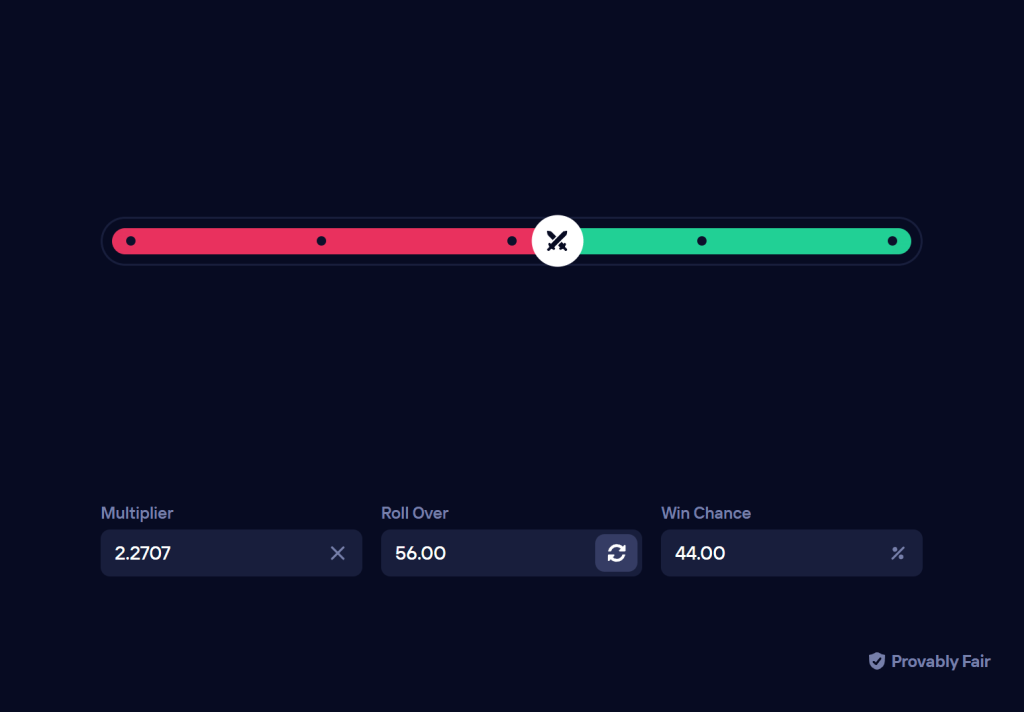
Instead of standard 1.00% to 4.00% casino house margins, compare with mathematically verified 100% RTP Originals (0.00% House Edge) on Duel Casino:
Technical Issues
Server overload, DDoS attacks, or routine maintenance can cause downtime. These are stochastic events that occur regardless of win size. However, a single large win is unlikely to generate enough traffic to crash a well-provisioned server. If the site experiences a sudden spike in visitors (e.g., other players rushing to mimic the winner), then load-related downtime is plausible.
Deliberate Suspension
Some casinos reserve the right to manually review large withdrawals. During this review, the site may temporarily disable withdrawals, or even the entire account interface. This is not necessarily a technical downtime, but from the player’s perspective, the site becomes unavailable for cash-out. In crypto casinos with no KYC, this is less common, but still possible if the operator has a suspicious transaction policy.
Server Seed Rotation
Operators can rotate server seeds at any time. If a player notices that their server seed was changed minutes after a big win, it could be a pattern. The player can verify this by checking the seed history (each casino should provide a list of previously used server seeds). If the new seed is used immediately, it may indicate that the operator is trying to reset the odds for future bets, but it does not affect the win already recorded.
| Downtime Type | Verifiable by Player | Potential Pattern |
|---|---|---|
| Site crash / 503 error | Timestamp, screenshot | Unlikely to be deliberate; coincidence if rare |
| Withdrawal disabled | Account status, error message | Possible if only large wins are affected |
| Server seed change after win | Seed history, hashes before/after | Could indicate attempt to adjust house edge |
Verifiable Data Points
Players can independently gather evidence to assess whether a pattern exists. The following steps are recommended:
- Record the provably fair data before and after the bet: client seed, server seed hash, nonce, and outcome. After the bet, retrieve the raw server seed and verify the hash. If the hash matches, the outcome was predetermined.
- Check server seed change timestamps. Most provably fair casinos provide a history of server seeds. If the seed was changed within minutes of a large win, note the time delta.
- Monitor on-chain transaction times for deposits and withdrawals. If a withdrawal is stuck in pending status while the site is down, that could be a red flag. Compare with average withdrawal times.
- Cross-reference with other players. Forums and social media can reveal if multiple players experienced downtime after large wins at the same casino. This is anecdotal but can indicate a pattern.
Statistical Analysis
If downtime were random, it should occur with equal probability regardless of the size of the win. Players only notice it after big wins because smaller wins are less memorable. To test for a pattern, one would need a large dataset of win amounts and corresponding site uptime status. A simple binomial test can compare the proportion of downtime events after wins above a certain threshold versus below. Without access to server logs, no individual player can perform this analysis, but the casino can be asked to provide such data. If the casino refuses, it raises suspicion.
Some casinos publish their RTP and server seed change logs. For example, a casino that changes seeds every 10,000 bets should not show a correlation with win size. If the seed change is triggered by a win amount, that would be a clear pattern. The player can check the seed change history and compare it to their own win history. However, correlation is not causation, and small sample sizes make it difficult to conclude.
What to Look For in a Casino
When choosing a casino, players should prioritize operators that are transparent about their seed rotation policy, have a clear withdrawal process, and provide a public ledger of provably fair hashes. Reviews on casino reviews often mention whether a site has a history of downtime after large wins. Additionally, reading guides on provably fair verification can help you understand exactly what to check. If you encounter a suspected pattern, report it to news outlets that cover casino incidents. Managing your bankroll wisely also means knowing when to cash out; see bankroll management tips for handling large wins.
Conclusion
At present, there is no publicly available dataset that definitively proves a deliberate pattern of casino downtime after big wins. The few reported cases are anecdotal and could be explained by technical coincidences or legitimate security reviews. However, the burden of proof lies with the operator to demonstrate that downtime is unrelated to win size. Players can protect themselves by verifying every bet, documenting seed changes, and choosing casinos that offer verifiable and transparent operations. If you experience a suspicious downtime, collect all evidence and submit it to the casino’s support team—or to a third-party dispute service if available.
Until more data is available, the question remains open. The prudent approach is to assume that downtime is a technical inconvenience unless proven otherwise, but to remain skeptical and vigilant.
FAQ
Can a casino use downtime to change the outcome of a previous bet?
No. In a provably fair system, the outcome is determined by seeds that were hashed before the bet. The operator cannot alter the result after the bet is placed. However, downtime can delay or prevent the withdrawal of funds from that win.
How can I check if a casino manipulated my win?
Verify the provably fair data using the seed history. The server seed hash that was shown before the bet must match the hash of the revealed seed. If the match is correct, the outcome was not manipulated. If the casino does not provide a seed history or refuses to reveal the server seed, that is a red flag.
What should I do if I experience downtime after a big win?
Immediately record all relevant data: screenshots of the win, the server seed hash, the client seed, nonce, and timestamps. Contact the casino’s support team and request a written explanation. If the issue persists, escalate to a casino dispute resolution platform or regulatory body, if applicable. Also, share your experience on trusted forums to help other players identify potential patterns.