Bonus Abuse Flags: What Gets Accounts Reviewed and Why

the author
ProvablySmart Research Desk
date post
Aug 28, 2026
Share


As of 2026, there is still no standardised definition of bonus abuse across crypto casinos; each operator defines it in its own terms. Bonus abuse flags are not a judgment on a player’s character; they are a risk-management response to patterns that reduce a bonus’s expected cost below zero. This article explains what those patterns look like, why operators review accounts, and which parts of the process you can verify yourself using public records, seed hashes, and your own wallet history.
The Economic Basis for Bonus Abuse Flags

A casino bonus is a contract. The operator offers a credit with wagering requirements; the player accepts the credit and agrees to bet a multiple of it at a given house edge. The operator’s expected profit comes from the fact that most players will wager more than the bonus amount and lose more than the bonus’s face value in the process.
The critical metric is the player’s expected loss during the wagering period. If the house edge is 2% and the bonus is 100 USDT with a 40x rollover, the player must place 4,000 USDT in bets. The casino’s expected profit from that turnover is 80 USDT, which covers the bonus and leaves margin. If the player only bets on a slot with a 0.5% house edge, the expected loss drops to 20 USDT, making the bonus a loss leader for the casino.
This is why operators impose game contribution rates and wagering requirements. The math is simple, and any player can check it against published RTP figures. What the player cannot check are the operator’s internal flagging rules, but the underlying behavior is observable in your own bet history and wallet logs.
Common Trigger Patterns
How Does This Compare to 0% House Edge Protocols?
Audited 100% RTP
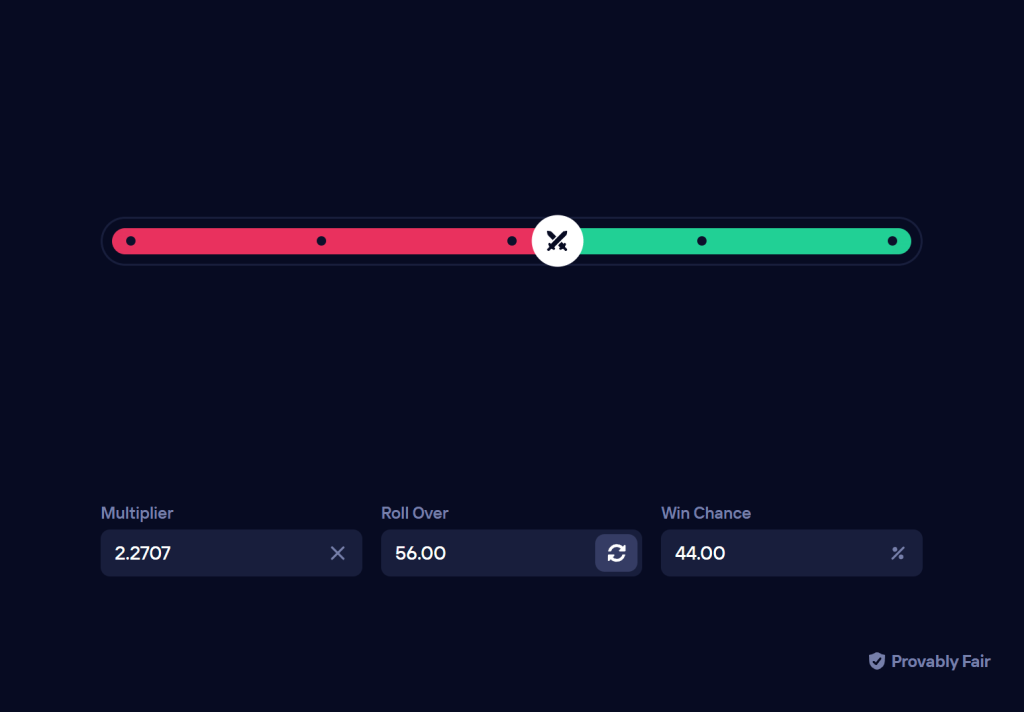
Instead of standard 1.00% to 4.00% casino house margins, compare with mathematically verified 100% RTP Originals (0.00% House Edge) on Duel Casino:
Operators typically do not publish their full flagging algorithms. However, the patterns that get accounts reviewed are consistently discussed in player forums and operator compliance interviews. The following list summarises the most common triggers and what an operator is likely to verify.
Multiple Accounts / Duplicate Identity
Most bonus terms require one account per player. Operators identify duplicates through a combination of device fingerprints, browser cookies, IP addresses, and for crypto casinos, deposit addresses. If two accounts deposit from the same wallet or share a device identifier, the operator will typically review both. You can check this yourself by examining the addresses you used and comparing them to the casino’s records—your account history should list the wallet addresses linked to deposits.
Wagering Evasion / Low-Risk Play
Players who place bets that have a high chance of returning the stake, such as red/black in roulette or banker in baccarat, undermine the expected loss calculation. Operators often cap the maximum bet allowed when a bonus is active and exclude games with very low house edges. If you consistently hit the maximum bet and then switch to 1 USDT bets once the wagering was nearly complete, that pattern stands out. It is not a crime, but it is a sign that you are optimising against the bonus contract, and many terms expressly forbid betting strategies.
Bonus Stacking and Game Restrictions
Some players collect multiple welcome bonuses by starting new accounts or use bonuses on games where the operator has not adjusted the contribution rate. Operators monitor whether the games you play are actually permitted for the bonus. The wagering contribution list is usually published in the bonus terms; check it against your own history to see if you accidentally played a game that did not contribute.
Device, Network and Geographic Anomalies
Using a VPN or Tor to change your apparent location is a common trigger because it interferes with the IP-based checks an operator uses to enforce regional eligibility. Even if you are a legitimate player, a VPN creates the same signal that a bonus abuser creates. A non-trivial number of operators state in their terms that VPN use voids bonuses entirely. That policy is announced, so you can verify it before you play.
| Trigger | Verifiable Signals | Why It Matters |
|---|---|---|
| Multiple accounts | Device ID, IP, deposit wallet address | Enforces one-bonus-per-player rule |
| Low-risk betting | Bet size, game selection, timing | Reduces expected loss below bonus cost |
| VPN use | IP geolocation mismatches | Bypasses regional restrictions |
| Bonus stacking | Activity timestamps and offer redemption | Prevents farmed signup bonuses |
How Operators Verify and What You Can Check
The good news for a technical player is that crypto casinos built on provably fair systems let you verify game results down to the seed and the hashed server secret. This is genuinely useful because it proves that any loss or win you experienced was generated fairly. However, it does not prove that you did not violate a bonus term. The operator’s wagering logs are internal records.
If your account is flagged, the operator is expected to provide a detailed breakdown of the specific terms you breached. That breakdown will include timestamps and wagers. You can cross-check those records against your own client-side history, your wallet’s transaction history, and the casino’s provably fair verification page. If the casino refuses to provide that breakdown, that is a serious warning sign about the operator’s overall reliability—something worth considering when you read casino reviews.
For crypto payments, you can independently verify deposits and withdrawals on the public blockchain, but you cannot verify the internal attribution without knowing which deposit addresses belong to your account. The casino’s own betting history page should list those pointers, so you can reconcile them. This process is not complex, but it requires matching on-chain data with the casino’s UI—a practice we cover more broadly in our guides on verifying provably fair games.
Consequences and Dispute Resolution
The typical sequence for a flagged account is: a temporary suspension, a manual review of wagering logs, and then one of four outcomes:
- No violation found; the account is reinstated and the bonus remains active.
- A technical breach (e.g., multiple accounts by mistake); the bonus is removed, but deposits are returned.
- A deliberate breach (e.g., staged betting to meet wagering with minimal risk); winnings are voided and the account may be closed.
- Evidence of fraud (e.g., stolen wallet or chargeback); funds are withheld and reported.
Operators are not required to publish the threshold that separates a mistake from deliberate abuse, so you should check their terms for definitions. Some operators explicitly list which patterns constitute abuse. Others leave it ambiguous, which creates a reputational risk you should factor into your choice of platform. The dispute process itself is not random—it follows the contract you accepted. That is why reading the terms before claiming a bonus is the single most important control you have.
Practical Advice for Avoiding False Positives
You can reduce the likelihood of being flagged by behaving in a way that does not resemble abuse. Practically speaking:
- Use one account, one email, and one wallet address for deposits.
- Do not use a VPN or Tor while logged in, unless the operator expressly allows it.
- Play only games that contribute to wagering at the rate listed in the bonus terms.
- Do not place a large bet immediately after a bonus is credited if that bet would exceed the maximum allowed stake.
- Keep your own records of bet sizes and wallet addresses so you can respond to a review with evidence.
These steps do not make a casino trustworthy; they make you a player who looks the same on paper as a compliant customer. Pair that with a solid bankroll strategy, because even compliant players lose money if they size their stakes incorrectly. Our bankroll management section goes deeper into how to calculate the right stakes when a bonus is active.
FAQ
Does using a VPN always trigger a bonus abuse flag?
Not always, but it is a strong trigger because it interferes with IP-based checks for regional eligibility and duplicate accounts. Many operators state in their terms that VPN use during a bonus voids the bonus; check the specific terms that apply to your country and account.
Can I verify a bonus abuse decision using provably fair data?
Provably fair data only verifies game outcomes, not bonus eligibility. You can confirm that each bet was generated fairly using seed hashes, but an abuse decision rests on the operator’s internal audit logs. If the operator withholds those logs, you have no objective evidence, which is why live casino reviews pay close attention to the operator’s dispute handling.
What is the safest way to use a bonus without being flagged?
Follow the contract literally: one account, no VPN, eligible games, bets below the maximum stake, and wagering completed before any withdrawal. Keep your own transaction records—wallet addresses, timestamps, and bet sizes—so you can reconcile them against the operator’s records if a review occurs.