
Affiliate Disclosures: How to Read Casino Review Sites Critically

the author
ProvablySmart Research Desk
date post
Aug 28, 2026

Share


Most casino review sites are not neutral information services. They are publishing businesses funded by affiliate commissions. This is not inherently corrupt, but it means that every score, list, and recommendation you read is produced inside a commercial relationship. This article explains how to read casino review sites critically, what affiliate disclosures can and cannot tell you, and how to verify the claims that matter.
The affiliate business model
Casino operators pay affiliates for sending players. The two primary payment structures are CPA, where a flat fee is paid per depositing player, and revenue share, where the affiliate receives a percentage of the operator’s net revenue from referred players. Revenue share is more common because it aligns the affiliate with the casino’s long-term income. It also creates a structural bias: a review site that earns a share of player losses has an incentive to recommend casinos with high house edges or restrictive bonus terms, even if those casinos are worse for the player.
This does not mean every revenue-share review is dishonest. It means you must assume a conflict of interest until the site demonstrates otherwise. Demonstrating otherwise requires more than a one-line ‘may contain affiliate links’ disclosure.
What a disclosure should actually say
How Does This Compare to 0% House Edge Protocols?
Audited 100% RTP
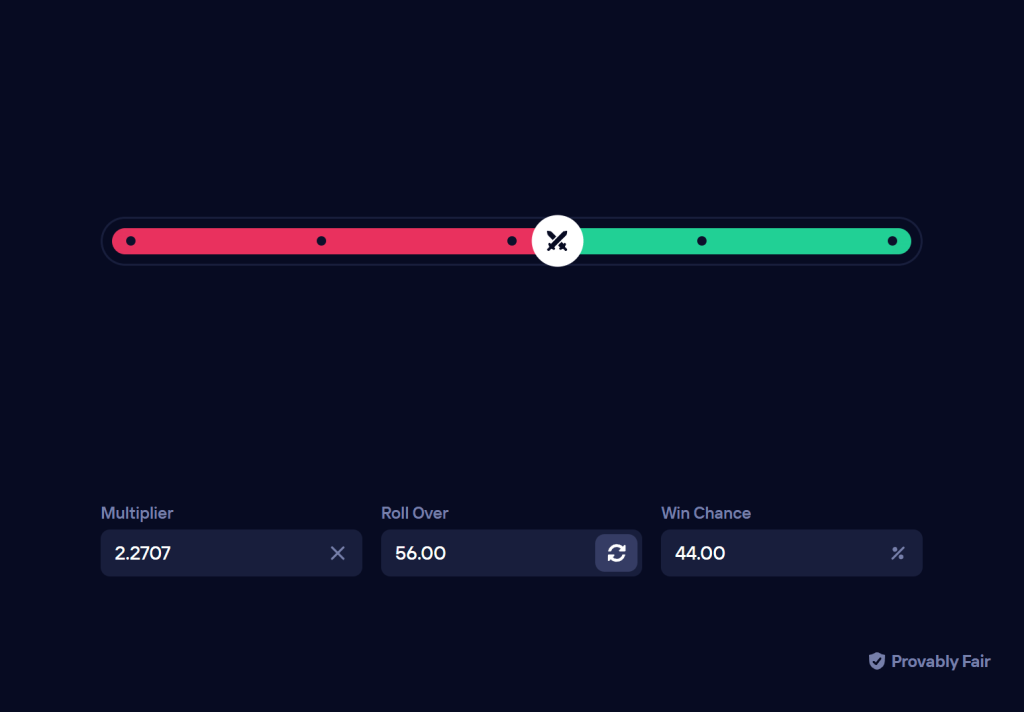
Instead of standard 1.00% to 4.00% casino house margins, compare with mathematically verified 100% RTP Originals (0.00% House Edge) on Duel Casino:

A meaningless disclosure looks like this: ‘We may receive compensation from some operators.’ It tells you nothing about which pages are affected, how the commission is calculated, or whether the review could be influenced.
What to check:
- Is the disclosure placed on the review page itself, not just in the site footer?
- Does it identify which links are affiliate links, and which are not?
- Does it describe the compensation type or at least acknowledge that commissions can affect rankings?
- Is there an editorial policy or methodology page that explains how reviews are produced? If not, treat the site as an advertisement.
- Is there a named author or editorial team? Anonymous reviews are harder to hold accountable.
Disclosure is a minimal legal or ethical baseline, not a badge of quality. The absence of a clear disclosure is a red flag; the presence of one only tells you that the conflict exists. The rest of the review must justify its conclusions.
How to audit the language, not just the score
Review language is often more revealing than the numerical rating. Phrases like ‘best casino for slots’, ‘top-rated platform’, or ‘player favourite’ are unverifiable. They are subjective judgments with no methodology attached.
Critical readers look for claims that can be checked against primary sources. For example, if a review states that a casino offers 96.5% RTP on a particular slot, check the game’s help file, the software provider’s published math, or the casino’s provably fair mechanism. If the number is not auditable, do not treat it as fact.
A reliable review should also state its negative findings. If a site rates a casino 9/10 but mentions no withdrawal problems, unfair wagering requirements, or poor support, the review is either incomplete or misleading. No serious casino review of any real operator is positive on every dimension.
Verifiable claims: RTP, wagering, and house edge
The most useful figures in a casino review are the ones you can check mathematically. Wagering requirements are a good example. A 20x wagering requirement on a bonus of €100 means you must wager €2,000 before withdrawing winnings. But that number is incomplete without the contribution percentage. A game that contributes only 10% to wagering is effectively a 200x requirement for that game. Our guides on bonus mechanics explain how to calculate the real cost of these offers. The same logic applies to bankroll management: a review that recommends a casino without mentioning volatility or edge is not helping you make a decision.
If a review site publishes a house edge or RTP figure, ask yourself how the author obtained it. For online slots, the RTP is part of the game’s math model, but it is not always publicly visible. For table games, the house edge can be calculated from the rules, but only if the rules are specified. A review that says ‘low house edge’ without giving the rules, number of decks, or dealer behaviour is an opinion, not a statistic.
Operator-specific claims: verify outside the review
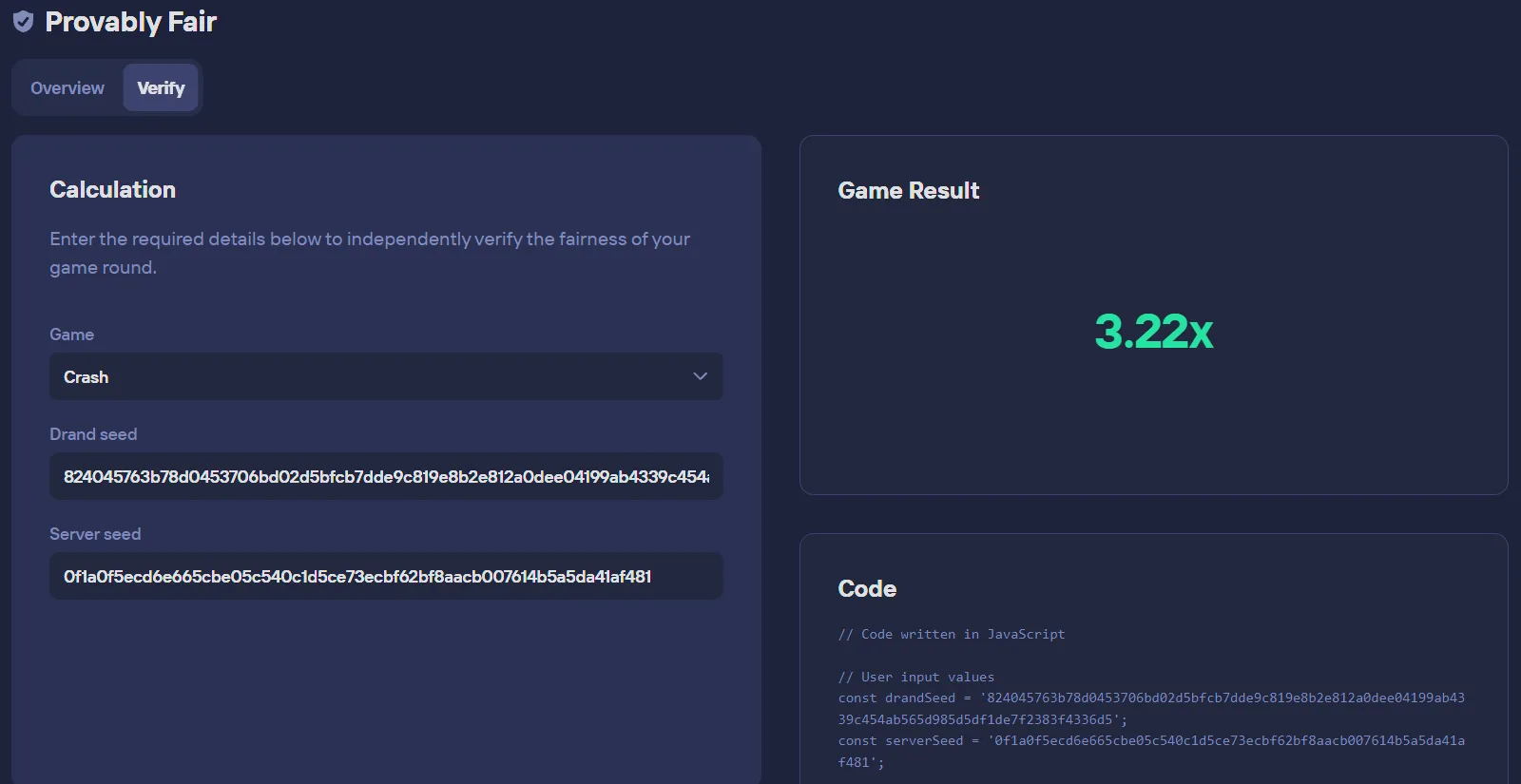
Many reviews include claims about casino licences, security, audit certificates, or provably fair systems. These are strong claims and should be checked at the source. Most regulators publish a licence number or a searchable database. Audit certificates from entities like eCOGRA include certificate numbers that can usually be verified. Provably fair casinos publish seeds and hashes; you can check them yourself before depositing, even on a low-stake bet. If a review site does not link to these primary sources, or if it merely says ‘licensed in Curacao’ without a number, then the claim may be true, but it is not useful.
This kind of verification is time-consuming. That is why review sites exist. But the correct use of a review site is as a shortlist, not as a final verdict. Use it to identify candidates, then verify the operator from primary sources before sending money. Our casino reviews are written to support that workflow, not to replace it.
Red flags and green flags
Here is a concise checklist to apply to any casino review site:
- Red flag: no affiliate disclosure on the review page.
- Red flag: review scores are not explained by a methodology.
- Red flag: all reviews are positive, and negative sections are missing.
- Red flag: no update date; a review of a regulated industry older than six months may be stale.
- Green flag: disclosure appears near the review, not only in the footer.
- Green flag: the review states the specific terms, numbers, and rules that support its rating.
- Green flag: named author and an editorial policy.
- Green flag: links to primary sources, such as licence databases or public provably fair pages.
How to use casino review sites in 2026
As of 2026, casino affiliate programmes are still the dominant revenue stream for comparison sites. That is not going to change. What changes is your ability to read them critically. The principles are simple:
- Never rely on a single review site.
- Look for a disclosure, but do not stop there.
- Extract only claims that can be checked mathematically or through primary sources.
- Check the casino’s own terms, licence, and provably fair data directly.
- Set a budget and a loss limit before you accept any bonus recommendation.
For the first principle, comparing review sites is useful if they use different methodologies and disclose their own incentive structures. For the last principle, review our bankroll management guidance before putting any of this into practice. For the specifics of bonus math and wagering requirements, the relevant sections of our guides cover the formulas you need.
Treat affiliate disclosure as the starting point of your due diligence, not the endpoint. Once you know how the site gets paid, you can adjust for the bias. Then the only remaining question is whether the claims in the review are true. Checking the maths and the licensing data will answer that question more reliably than any star rating.
FAQ
Is an affiliate disclosure enough to trust a casino review?
No. A disclosure confirms a conflict of interest; it does not resolve it. A trustworthy review needs a clear methodology, named authors, a willingness to include negative findings, and verifiable claims that point to primary sources.
What should I do if a review site hides its affiliate relationship?
Treat it as a serious red flag. If the site does not disclose commission revenue, you cannot evaluate its incentives. Move to a site that is transparent about its funding, and verify the casino’s licence and terms yourself before depositing.
Can any casino review site be fully objective?
No. Any site funded by affiliate commissions has a commercial incentive. Objectivity is not the test. The test is whether the site manages that incentive through editorial controls, discloses it clearly, and allows you to check the facts behind its recommendations.