Cashback Math: When 10% Back Beats a 100% Match Bonus

the author
ProvablySmart Research Desk
date post
Aug 28, 2026
Share


Casino bonuses are designed to appear generous, but their mathematical value depends heavily on the fine print. A 100% match bonus (e.g., deposit $100, get $100 bonus) is a common headline offer. A 10% cashback on net losses (e.g., get back 10% of what you lose) often seems less attractive at first glance. However, when you factor in wagering requirements, game contribution, and house edge, the cashback can be the superior option. This article compares the expected value of both offers using verifiable mathematics.
How Match Bonuses Work: The Wagering Tax

A typical 100% match bonus up to $100 requires you to wager the bonus amount (or deposit + bonus) a certain number of times before you can withdraw any winnings. For example, a 30x wagering requirement on the bonus means you must place bets totaling $3,000 (30 × $100) before the bonus balance converts to cash. The house edge on those bets is the effective cost of the bonus.
Let slot games with a house edge of 3% (97% RTP) be the qualifying game. The expected loss over $3,000 wagering is $3,000 × 0.03 = $90. You start with $100 bonus, but after wagering, expected remaining is $100 – $90 = $10. So the expected value of the bonus is only $10 (plus the $100 deposit you already have, but the deposit is yours). Net expected gain from the bonus is $10. However, this is only if you complete wagering; variance can cause you to lose more or less. The expected value is positive but small.
If the wagering requirement is 40x (common for many casinos), expected loss is $4,000 × 0.03 = $120, which exceeds the $100 bonus, resulting in negative expected value of -$20. The match bonus becomes a bad deal.
Cashback Mechanics: Loss Rebate Without Wagering
How Does This Compare to 0% House Edge Protocols?
Audited 100% RTP
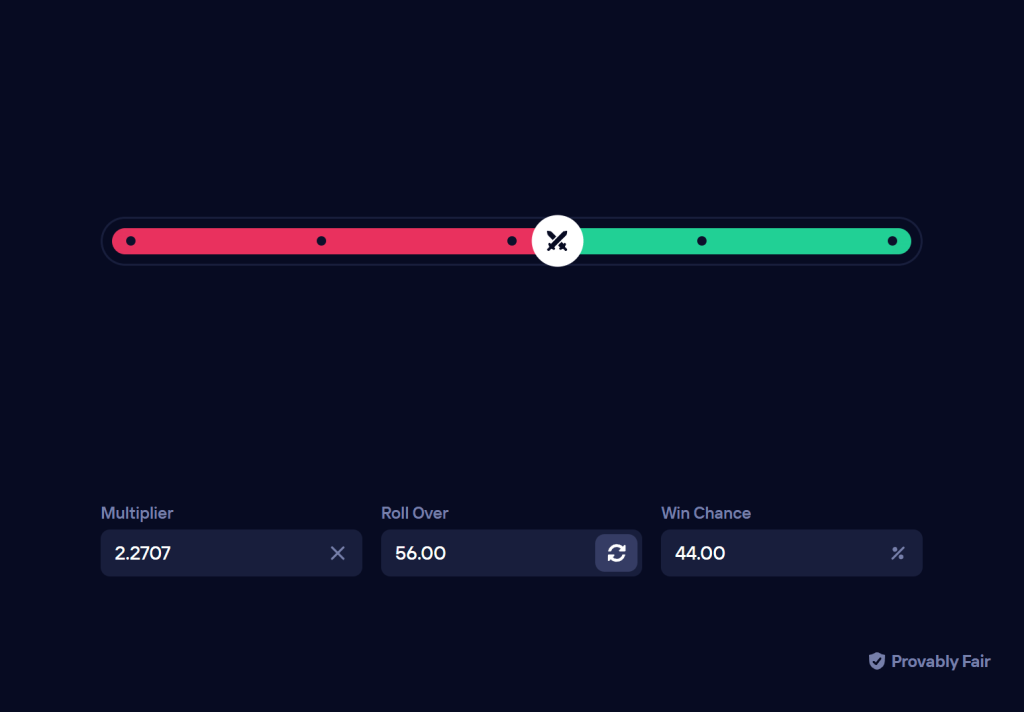
Instead of standard 1.00% to 4.00% casino house margins, compare with mathematically verified 100% RTP Originals (0.00% House Edge) on Duel Casino:
Cashback offers typically return a percentage of net losses over a specific period (e.g., 10% cashback on losses up to $100). Critically, many cashback offers have no wagering requirements – the cashback is credited as withdrawable cash immediately. Some may have a 1x wagering requirement, which is negligible. The key metric is the cashback rate and the cap.
For a 10% cashback on net losses up to $100, if you deposit $100 and lose it all, you get $10 back. Your net loss is $90. Compare that to a 100% match bonus where you might lose the bonus and more due to wagering. Cashback is a form of loss rebate that reduces the effective house edge. For a game with house edge h, the effective house edge after cashback (c) applied to losses is: h * (1 – c). If h = 3% (slots), then effective house edge becomes 3% * 0.9 = 2.7%. The expected loss per $100 wagered drops from $3 to $2.70.
Mathematical Comparison: EV Under Different Scenarios
We calculate the expected value (EV) of both offers for a $100 deposit, assuming optimal play (i.e., you play through wagering requirements fully). We assume slots with 3% house edge. We compare three scenarios: (A) 100% match bonus with 30x wagering on bonus, (B) 100% match bonus with 40x wagering, (C) 10% cashback on losses with no wagering, capped at $100 cashback.
| Offer | Wagering Requirement | Expected Loss from Wagering | Net Bonus EV |
|---|---|---|---|
| 100% match ($100 bonus) | 30x bonus ($3,000) | $90 | $10 |
| 100% match ($100 bonus) | 40x bonus ($4,000) | $120 | -$20 |
| 10% cashback (no wagering, cap $100) | None | N/A | +$10 (if you lose $100) |
But the cashback EV calculation is different: you only receive cashback if you lose. The expected value of the cashback is: Probability of losing * cashback amount. If you deposit $100 and play through once (i.e., $100 wagered), you have a high chance of losing some amount. The expected loss is $100 * 0.03 = $3. The cashback would be 10% of that $3 loss = $0.30. That’s small. However, the cashback becomes valuable when you plan to play a large volume. For example, if you intend to wager $1,000, expected loss = $30, cashback = $3. Not great. But if you are a high-volume player aiming to lose the maximum cap, say you play until you lose $100, the cashback gives $10. The expected value of the cashback is the expected cashback amount minus expected loss? Actually, the cashback reduces your net loss. The net expected loss after cashback is: expected loss – (c * expected loss) = expected loss * (1-c). So the cashback effectively gives a discount on the house edge.
To compare fairly, we consider the scenario where you play until you have wagered a certain amount. Let’s say you wager $1,000 on slots. Without bonus, expected loss = $30. With 10% cashback, net loss = $27. With 100% match bonus (30x, $100 deposit), you have $200 to play with, but you must wager $3,000. Expected net gain = $10. So for $1,000 wagered, the match bonus is better because you have extra $100 to play with and you only need to wager $3,000 total. But if you only have $100 and want to play $1,000, the match bonus gives you $200 bankroll, but you must wager $3,000 to unlock it. That’s a constraint.
The key insight: Cashback wins when the match bonus has high wagering requirements (e.g., 40x+) and when you intend to play games with high house edge or when you are risk-averse. Cashback provides a guaranteed rebate on losses, while a match bonus may require you to risk your own deposit to meet wagering, especially if you bust early.
When 10% Cashback Beats 100% Match: Scenarios
1. High Wagering Requirements
If a match bonus has 40x or 50x wagering on bonus, its expected value turns negative for slots. A 10% cashback with no wagering is strictly positive in expected value (you can just stop playing after losing). The cashback is a guaranteed reduction of loss.
2. High House Games
For games like keno or scratch cards with house edge 10% or more, the match bonus becomes even worse. Cashback, being a percentage of losses, scales with the house edge. The higher the house edge, the more cashback you get back. For a game with 10% house edge, 10% cashback reduces effective house edge to 9% – a 10% reduction. The match bonus’s wagering cost becomes prohibitive.
3. Low Bankroll, Conservative Play
If you have a small bankroll and do not want to risk large wagering, cashback offers a safety net. With a match bonus, you might lose your deposit before completing wagering, then you lose the bonus as well. Cashback at least returns a portion of your loss.
Verification: What to Check in the Terms
To evaluate any offer, you must verify the exact terms. For match bonuses, check: wagering requirement (multiplier on bonus, deposit+bonus, or winnings?), game contribution percentages (slots 100%, table games 10%), maximum bet allowed, and expiry. For cashback, check: is it on net losses or gross losses? Is there a cap? Is there wagering? Does it apply to all games? Some casinos offer cashback only on losses from specific games. Use the casino reviews to find operators with transparent terms. Always calculate the expected value yourself using the house edge of the game you intend to play. A guide to calculating bonus EV can help.
Also, for provably fair casinos, you can verify the house edge by checking the seed hashes and the game’s payout table. For example, if a slot claims 97% RTP, you can compute the expected return over a large sample. The news section often covers changes in bonus structures. Understanding the math allows you to choose the best offer for your play style.
Bankroll Management Implications
Cashback can be a tool for bankroll management because it reduces variance. If you know you will get 10% of losses back, you can adjust your bet sizes accordingly. The reduction in effective house edge increases your expected longevity. However, no bonus is a substitute for sound money management. Always set loss limits.
FAQ
Is a 10% cashback always better than a 100% match bonus?
No. If the match bonus has low wagering requirements (e.g., 10x) and you play high RTP games, the match bonus can have higher expected value. Cashback is superior when wagering requirements are high (>30x), the game has a high house edge, or you want to minimize risk.
Do I need to wager cashback amounts?
That depends on the terms. Some cashback offers credit the cashback as bonus funds with a wagering requirement (often 1x). Others give it as real cash. Always read the terms. The best cashback offers have no wagering requirement.
How can I verify the expected value of a bonus myself?
Use the formula: EV = (bonus amount) – (wagering requirement × amount per bet × house edge). For cashback, EV = – (expected loss without cashback) × (1 – cashback rate). For match bonuses, also account for the fact that you may lose your deposit. Use the house edge of the game you will play, and check the game contribution percentage. You can find game RTP values in the game info or provably fair verification tools.