
Bonus Wagering Requirements Decoded: EV Math Before You Claim

the author
ProvablySmart Research Desk
date post
Aug 28, 2026

Share


Bonus offers are not free money. They are conditional bets with a price attached: the wagering requirement. Before you claim anything, you should be able to calculate whether the bonus has positive expected value (EV). The math is public, the RTP numbers are published, and the terms are in front of you. This guide shows you the exact arithmetic and what to verify for yourself before entering a deposit code.
What a Wagering Requirement Actually Does

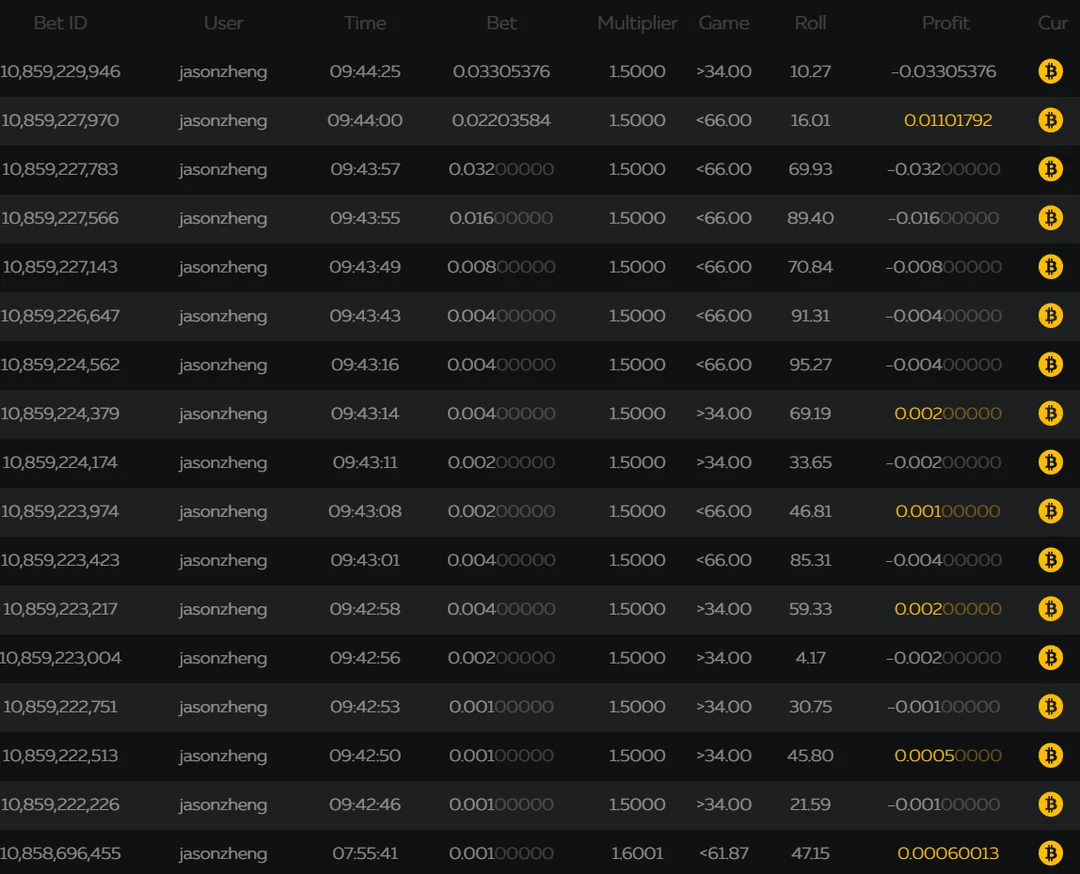
A wagering requirement (WR) is a multiple of a deposit, bonus, or both that you must wager before you can withdraw. If a casino offers a 100% match bonus up to $100 with 30x WR, and you deposit $100, you are given an extra $100 in bonus funds. The requirement is not one straight bet; it is $3,000 in total stakes across eligible games. This is not a single wager, because single bets rarely have 100% win probability, and the house edge works against you on every wager.
The first thing to check is the WR formula. Operators use different bases:
- Bonus-only WR: WR = multiplier × bonus. Example: 30x bonus, $100 bonus → $3,000.
- Deposit + bonus WR: WR = multiplier × (deposit + bonus). Example: 30x, $100 deposit + $100 bonus → $6,000.
- Deposit-only WR: WR = multiplier × deposit. This is rarer and can be far more favorable.
A “30x” offer is meaningless until you know the denominator. The table below shows the total wagering required for a $100 deposit and $100 bonus under common formulas:
| WR formula | Multiplier | Total wagers required |
|---|---|---|
| Bonus only | 30x | $3,000 |
| Deposit + bonus | 30x | $6,000 |
| Deposit only | 30x | $3,000 |
Always read the exact wording in the bonus terms. One word difference changes the EV dramatically.
Contribution Rates Change the True Cost
Casinos do not let every game count 100% toward the WR. Slots usually count 100%, table games count 10–20%, and live dealer games often count 5% or 0%. The reason is house edge. If a blackjack game with a 0.5% house edge counted fully, a skilled player could grind through a 30x requirement with an expected loss of only 0.5% × $3,000 = $15, while the bonus itself is $100. The casino would lose money on every bonus. Contribution rates are the balancing mechanism.
To compare games, calculate the effective cost per $1.00 of wagering requirement:
Effective cost = house edge ÷ contribution rate
For example, a slot with a 3% house edge and 100% contribution costs 3% per $1 of WR. A blackjack game with a 0.5% house edge at 10% contribution costs 0.5% ÷ 0.10 = 5% per $1 of WR. The low-house-edge game is actually worse for clearing the bonus. The table below shows typical numbers:
| Game | House edge (h) | Contribution (c) | Cost per $1 WR (h / c) |
|---|---|---|---|
| High-RTP slots | 2% | 100% | 2% |
| Medium-RTP slots | 3% | 100% | 3% |
| Blackjack | 0.5% | 10% | 5% |
| Roulette | 2.7% | 20% | 13.5% |
| Video poker | 1.0% | 5% | 20% |
Look up the contribution rates in the casino’s bonus terms. Many regulated casinos publish a full list of game categories. For provably fair games, you can verify the house edge and randomness using the provably fair verifier; for certified slots, the RTP is usually listed in the game’s paytable or on the provider’s site. In 2026, most licensed operators are required to disclose this data.
The EV Formula: No Hype, Just Arithmetic
Once you know the total wagering requirement T and the effective cost per dollar r, the expected value of the bonus is simple:
EV = bonus amount − (T × r)
This formula assumes the bonus is withdrawable, there is no maximum cashout, and you can complete all requirements without going bust. It is the baseline from which every other term subtracts value.
Worked example: You deposit $100, receive a $100 bonus, and face a 30x deposit+bonus WR on slots with 96% RTP (house edge = 4%). T = 30 × ($100 + $100) = $6,000. r = 4% / 100% = 0.04. Expected loss = $6,000 × 0.04 = $240. EV = $100 − $240 = −$140. You are paying $140 for the privilege of claiming this bonus.
Try the same offer with bonus-only WR: T = $3,000, expected loss = $120, EV = −$20. Still negative, but half the damage. Change to a 97.5% RTP slot (house edge = 2.5%), and EV becomes $100 − $75 = +$25. This is what EV-positive bonus hunting looks like when it exists.
The formula does not include variance. A high-variance slot can empty your balance before you reach the WR, even if EV is slightly positive. This is why bankroll size matters; see the failure risk discussion in bankroll management.
Hidden Terms That Destroy EV
Three common clauses materially lower EV beyond the house edge:
Maximum Cashout
If a bonus caps winnings at 5x the bonus, your upside is truncated while your downside is not. EV becomes the expected value of a capped payoff. In many cases, a positive-EV bonus before the cap becomes negative after the cap. You cannot calculate this with a simple formula; you would need to simulate the game’s prize distribution. When you see a max cashout above 10x, treat it as a red flag.
Maximum Bet During Wagering
Operators often impose a $5 maximum bet while clearing WR. This prevents large swing bets that can complete requirements very fast. It does not change EV by itself, but it forces you to grind through thousands of small bets, increasing the chance of a bad variance streak.
Sticky Bonuses
Some bonuses are not withdrawable; only profits above the deposit+bonus balance are yours. If you meet the WR and end with $250 from a $100 deposit + $100 bonus, a sticky bonus means you withdraw $50 profit, not $250. The effective EV is smaller, and sometimes negative even when the usual formula says positive. Read the word “sticky” or “non-withdrawable” in casino reviews and the actual terms.
What to Verify Before You Claim
The EV calculation is only as good as the inputs. You can independently verify all of them:
- RTP: Published by the game provider or available in the paytable. House edge = 1 − RTP.
- Contribution rates: Stated in the bonus terms, often as a table. Check whether “slots” excludes progressive jackpots or a specific provider.
- Provably fair results: For crypto games, the round seeds and hashes allow you to recalculate every outcome. Use a verifier tool and audit the casino’s ledger. This is the only way to confirm the actual return is close to the stated RTP. The fairness ledger tracks such evidence.
- WR formula: In the main bonus page or the general bonus rules. Look for “wagering contribution” and the multiplier basis.
- Expiration: Most WRs must be cleared within 7–30 days. A day-with limited time does not change EV but changes feasibility.
If an operator’s terms are unclear or the contribution table is hidden, that is a negative signal. Legitimate casinos in 2026 document these numbers plainly. You can also compare how other players rate a casino’s bonus fairness in bonus guides.
Sportsbook Bonuses: Different Math
Sportsbook wagering requirements are often expressed as “rollover” on odds of -200 or longer. The house edge or hold percent is not a single number; it varies by league and market. A typical sportsbook margin is around 4% to 5%. If a free bet has a 8x rollover, the expected loss is roughly 8 × 4% = 32% of the bet amount. You can apply the same EV logic, but you need a realistic hold estimate, not a single RTP. In-play betting and same-game parlays may have effective holds exceeding 10%.
Do the Math Before You Claim
No casino gives out bonuses to lose money. The operator sets the WR, contribution weights, and caps so that the average player contributes more profit than the bonus face value. The only question is whether your calculation shows positive or negative EV. In most cases it is negative. Occasionally, a mispriced bonus, a generous slot contribution, or a low WR creates a positive edge. That window closes quickly, and you must have the bankroll and the discipline to execute.
Write the formula. Check the terms. Verify the RTP. Only then decide if the bonus is worth a click.
FAQ
How do I calculate expected value of a bonus with wagering requirements?
EV = bonus amount − (total wagering requirement × effective cost per $1 wagered), where effective cost = house edge ÷ game contribution rate. For a $100 bonus, $3,000 WR, and 3% effective cost, EV = $100 − $90 = $10. If the result is zero or negative, the bonus costs you money on average.
Why do casinos set different game contribution rates?
Because games have different house edges. At a 0.5% blackjack edge with 100% contribution, a 30x WR would only cost the player $45 on a $3,000 requirement. To keep bonuses unprofitable to abuse, casinos apply lower contribution to low-edge games, raising the effective cost per $1 of WR. Slots contribute more because their high house edge already makes the bonus expensive.
What does “bonus-only” versus “deposit + bonus” mean?
The wagering requirement is calculated on different denominators. “Bonus-only” means you wager a multiple of just the bonus amount. “Deposit + bonus” means you wager a multiple of your deposit plus the bonus. The latter is roughly twice as large for a 100% match bonus, doubling your expected loss. Always convert a multiplier into the actual dollar amount you must wager.