
Bonus Hunting in 2026: What Is Still +EV and What Is Dead

the author
ProvablySmart Research Desk
date post
Aug 28, 2026

Share


Bonus hunting—the practice of extracting positive expected value (+EV) from casino promotions—has undergone a fundamental shift by 2026. Operators have tightened wagering requirements, game contribution rules, and withdrawal caps to the point where many traditional offers are now negative EV. However, some opportunities remain mathematically viable. This article evaluates what is still +EV, what is dead, and how to verify the math yourself.
What Made Bonus Hunting +EV Historically

The classic bonus hunting formula relies on the difference between the bonus value and the cost of wagering. The expected value of a deposit bonus is:
EV = (Bonus Amount) – (Wagering Requirement × House Edge × Average Bet Size)
Key variables: game contribution percentage (e.g., slots 100%, table games 10%), wagering requirement (e.g., 35x bonus + deposit), maximum bet size, and game RTP. A +EV bonus exists when the bonus amount exceeds the expected loss from wagering.
What Is Dead in 2026
How Does This Compare to 0% House Edge Protocols?
Audited 100% RTP
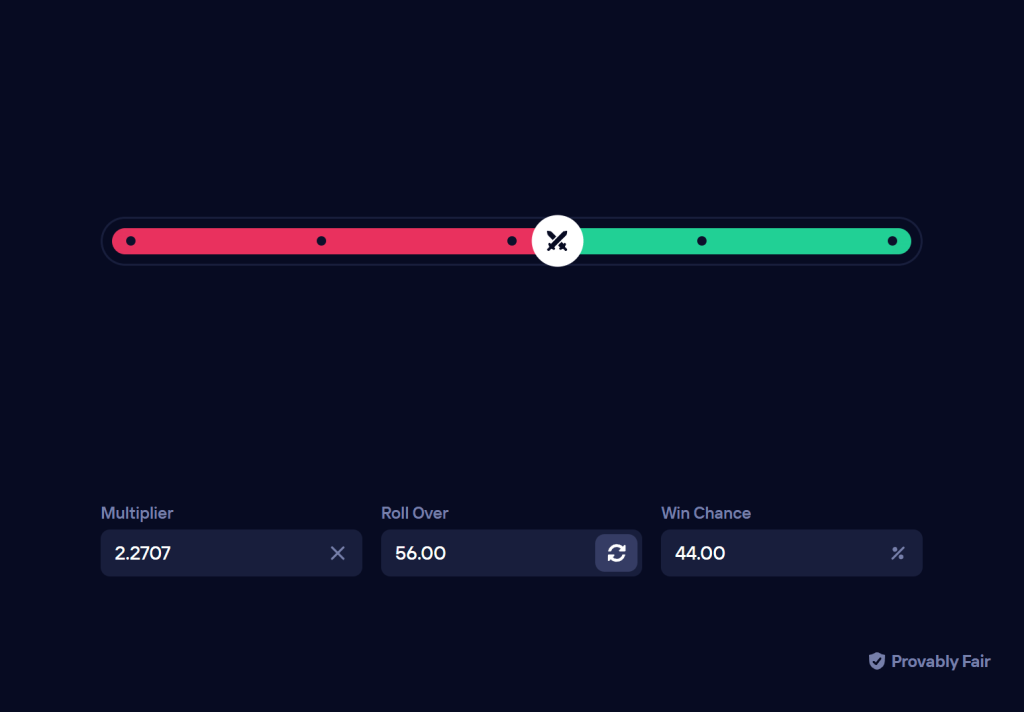
Instead of standard 1.00% to 4.00% casino house margins, compare with mathematically verified 100% RTP Originals (0.00% House Edge) on Duel Casino:
High Wagering Multipliers (≥40x)
With typical slot RTPs of 96–97%, a 40x wagering requirement on bonus+deposit means the expected loss is about 40×0.04 = 1.6× the bonus. For a 100% match bonus of $100, the expected loss from wagering is $160, yielding -$60 EV. Even with optimal RTP choices, these offers are almost always negative unless the bonus is very large relative to deposit.
Sticky Bonuses (Non-Cashable)
Sticky bonuses that are not withdrawable—only winnings from them—are effectively a loan. The house edge on the wager eats away the bonus value. In 2026, most sticky bonuses have wagering requirements that render them negative. The only exception is if the bonus is small and the withdrawal cap is high, but such cases are rare.
Restricted Game Contributions
Operators now commonly exclude high-RTP slots (e.g., 99% RTP games) or limit contributions to 50% or less. Even if the wagering is 20x, if the game contributes 50%, the effective wagering becomes 40x. Combined with a lower RTP (e.g., 96%), the EV turns negative. Always check the terms—many bonuses in 2026 list RTP caps (e.g., “games with RTP > 97% contribute 0%”).
Short Expiry Periods
Bonuses that expire in 7 days or less force aggressive betting, which increases variance and may cause you to hit max bet limits. The expected value formula assumes you can play through at optimal bet size, but short expiry introduces practical constraints that degrade EV.
Max Bet Restrictions Below $10
If the maximum bet while wagering is $5, you cannot exploit low-variance strategies. The house edge remains constant, but the time required increases, and the risk of ruin from a few unlucky spins becomes higher. This is not a mathematical death sentence but a practical one for most bankrolls.
What Is Still +EV in 2026
Low Wagering Requirements (≤20x)
Bonuses with wagering requirements of 20x or less on bonus-only (not deposit + bonus) are often +EV. For example, a $50 bonus with 20x wagering on slots at 97% RTP yields expected loss of 20×0.03×$50 = $30, leaving +$20 EV. Check the operator’s RTP data—some crypto casinos allow you to verify game RTPs via provably fair hashes.
Cashable Bonuses with No Max Bet
If the bonus is cashable and there is no maximum bet restriction, you can use a low-variance strategy like betting the minimum allowed on high-RTP slots. This reduces the effective house edge per wager. However, most operators now impose a max bet (e.g., $10). The few that don’t are worth investigating—see our casino reviews for up-to-date terms.
Referral and Loyalty Programs
Referral bonuses (e.g., $50 per friend) with no wagering or low wagering are often +EV. Coin-based loyalty programs that offer cashback on net losses can also be +EV if the cashback percentage (e.g., 10% on losses) exceeds the house edge of your wagering. These are less common but still exist in 2026, especially at crypto-focused sites.
Free Spins on High-RTP Slots
Free spins with no deposit required, if on a slot with 98%+ RTP and a low wagering requirement (e.g., 10x winnings), can be +EV. The expected value per spin is (RTP × bet size) minus wagering cost. For example, 10 free spins at $0.50 each on a 98% RTP slot yields $4.90 expected winnings; if wagering is 10x, the cost is about 10×0.02×$4.90 = $0.98, netting +$3.92.
Matched Deposits with Low House Edge Games
Some operators allow bonuses on table games with low house edge (e.g., blackjack with 0.5% house edge) if the contribution is 100%. This is rare but still available at a few licensed crypto casinos. The EV calculation becomes: bonus amount – (wagering requirement × house edge). For a $100 bonus with 30x wagering on blackjack (0.5% house edge), cost = 30×0.005×$100 = $15, EV = +$85.
How to Verify +EV Yourself
To determine if a bonus is +EV, you need three pieces of data from the operator’s terms:
- Wagering requirement (e.g., 20x bonus, 30x bonus+deposit)
- Game contribution percentages (e.g., slots 100%, table games 10%)
- Game RTP (preferably verified via provably fair or published RTPs)
Then calculate: EV = (Bonus Amount) – (Wagering Requirement × House Edge). For a multi-game bonus, weight the house edge by contribution. For example, if slots contribute 100% at 96% RTP (house edge 4%) and table games contribute 10% at 99% RTP (house edge 1%), the effective house edge is 0.04×1 + 0.01×0.1 = 0.041 (4.1%). Use this in the formula.
We provide a detailed step-by-step guide in our guides section, including worst-case variance scenarios. Remember that EV is theoretical; actual results can deviate significantly due to variance, especially with small sample sizes.
The Role of Bankroll Management
Even +EV bonuses carry risk. If you only have a $100 bankroll and attempt a $50 bonus with 20x wagering, a bad run of 200 spins at 97% RTP could wipe out half your bankroll. Proper bankroll management, as discussed in our bankroll management guide, is essential to surviving the inevitable downswings. A good rule is to allocate no more than 5% of your bankroll per bonus attempt.
Conclusion
Bonus hunting in 2026 is not dead, but it requires rigorous mathematical verification. The low-hanging fruit of 20x wagering on any game is gone. Surviving opportunities are those with low wagering, cashable bonuses, and high-RTP games. Always check the terms and update your calculations as operators change their rules. For the latest changes in bonus policies, see our news section.
FAQ
What is the most important factor in determining if a bonus is +EV?
The wagering requirement relative to the bonus amount and the house edge of the eligible games. A low wagering requirement (≤20x) combined with high RTP games (≥97%) is the strongest indicator of +EV. Always verify the game contribution percentages, as they can artificially inflate the effective wagering.
Are no-deposit bonuses still +EV in 2026?
Yes, but they are rare. No-deposit bonuses with low wagering (e.g., 10x winnings) on high-RTP slots can be +EV. However, most no-deposit offers now have maximum withdrawal caps (e.g., $50) that limit upside. Calculate EV as: expected winnings minus wagering cost. If the cap is binding, the EV may be lower than the formula suggests.
Can I use provably fair data to verify game RTP for bonus hunting?
Yes, many crypto casinos publish the seed hashes and game RTPs. By verifying the server seed and client seed, you can confirm that the game returns match the stated RTP. This is a powerful tool for bonus hunting because it eliminates the trust factor. Our guides include instructions on how to perform this verification.