Bitcoin Lightning Casino Deposits in 2026: Speed, Fees and Reliability

the author
ProvablySmart Research Desk
date post
Aug 28, 2026
Share


Lightning Network deposits at Bitcoin casinos have become a standard cashier option by 2026. The promise is simple: settle a Bitcoin payment in seconds and see the balance update without waiting for block confirmations. In practice, speed, fees, and reliability are not fixed constants; they depend on channel liquidity, the casino’s backend, and your own wallet. This article explains what you can measure, what you can verify, and where a Lightning deposit can still fail.
The lifecycle of a Lightning deposit

BTC

ETH

SOL

XRP

USDT

LTC
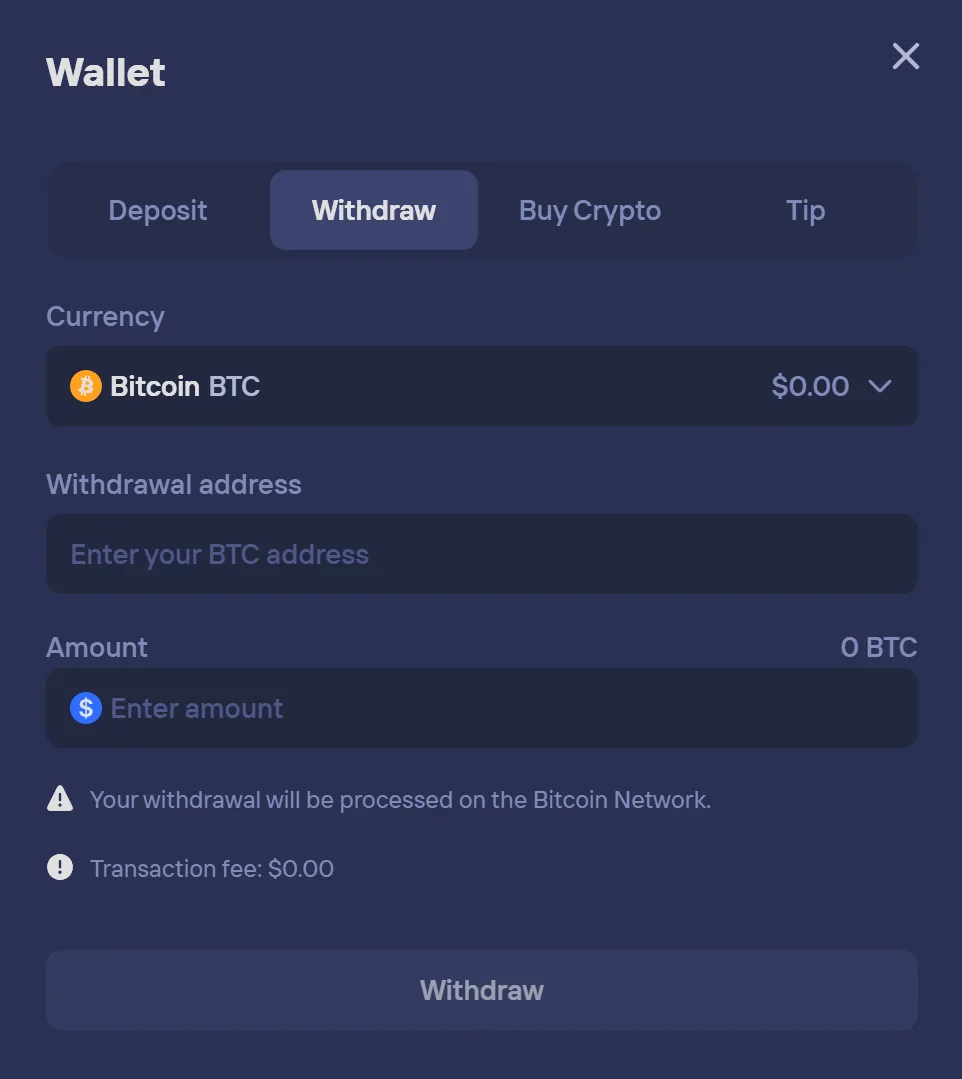
A Lightning deposit is not a normal Bitcoin transaction. It is an off-chain payment that uses a network of payment channels. In a casino context, the sequence is straightforward:
- The casino’s cashier generates a Lightning invoice containing an amount and a payment hash.
- Your wallet finds a route to the casino’s node and pays the invoice. If the payment succeeds, you receive a preimage that proves settlement.
- The casino’s node sees the preimage and credits your account. The channel balance changes, but no individual on-chain deposit transaction exists.
You can verify each of these steps. The invoice itself contains the payee node’s public key. The payment hash can be checked against the preimage: SHA256(preimage) = payment_hash. This is a cryptographic proof independent of any casino dashboard.
Speed: what “instant” means in practice
How Does This Compare to 0% House Edge Protocols?
Audited 100% RTP
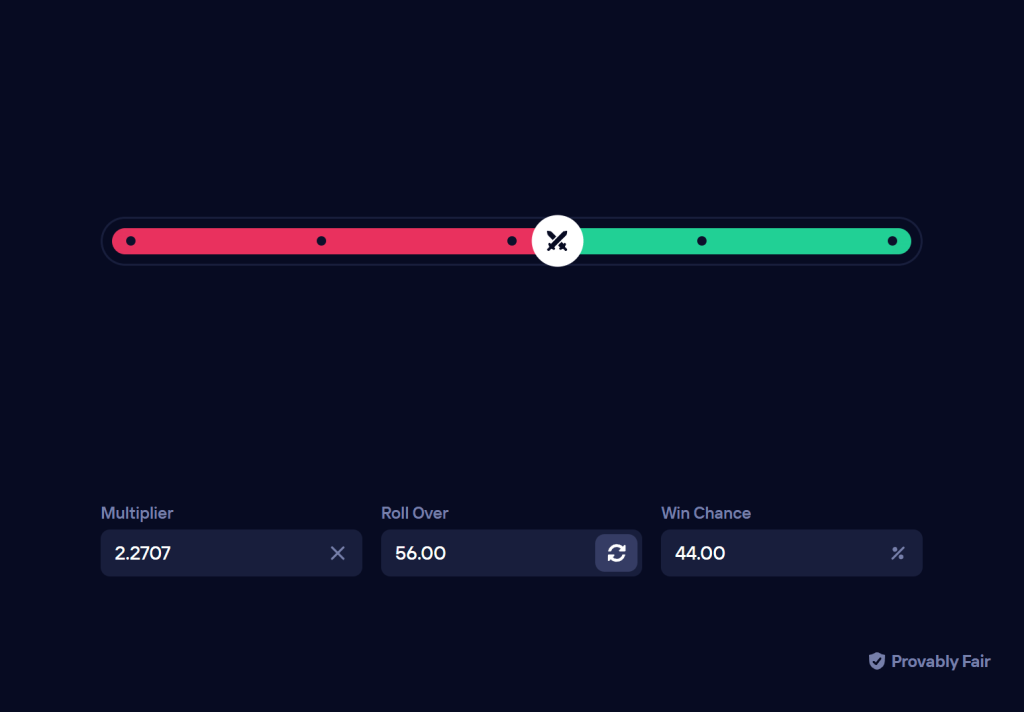
Instead of standard 1.00% to 4.00% casino house margins, compare with mathematically verified 100% RTP Originals (0.00% House Edge) on Duel Casino:

In 2026, Lightning payments are faster than any on-chain settlement, but “instant” does not mean automatically credited.
| Stage | Typical duration | Main variable |
|---|---|---|
| Invoice generation | <1 s | Casino cashier backend |
| Route negotiation and payment | 0.2–5 s | Channel liquidity, node software, max send limits |
| Preimage release and settlement | <1 s | Network protocol |
| Casino account credit | <1 s to 60 s | Casino’s internal wallet/webhook integration |
You can test this yourself. Record the time on your wallet before scanning the invoice, then note when the casino balance changes. A delay of more than a few minutes after the preimage is released indicates a backend issue, not a Lightning network issue.
What slows down a Lightning deposit
The main bottleneck in 2026 is inbound liquidity to the casino’s node. If the casino’s node has low inbound capacity, it cannot receive large payments through existing channels, so your wallet must break the payment into parts or find a longer route. Longer routes increase the chance of a failed attempt. If you are using a custodial Lightning wallet, you are limited by that wallet’s peers and fee policies.
Another common issue is invoice expiry. Some casino invoices are valid for only 5 minutes. If your wallet is slow to open or the channel is offline, the invoice expires and you must generate a new one. This is not a network failure, but it is a real reliability problem.
Fees: what you pay and what you don’t
Lightning deposits have no miner fee per payment. There are routing fees, and each channel along the route may charge a base fee plus a proportional fee. For a small casino deposit, the total routing fee is often negligible compared with an on-chain transaction fee. The tradeoff is that if a route includes high-fee nodes, the payment can be rejected by your wallet if it exceeds your configured fee limit.
| Attribute | On-chain Bitcoin deposit | Lightning deposit |
|---|---|---|
| Confirmation time | 10–60 minutes | Seconds |
| Fee basis | Block-space fee rate | Route fees (base + ppm) |
| Per-deposit on-chain record | Yes, a txid | No, only when channel closes |
| Failed payment recovery | Unconfirmed transaction | Atomic fail: no payment, no preimage |
Before scanning an invoice, check the amount and the fee shown by your wallet. Many Lightning wallets display the total including routing fees. If the casino advertises “zero deposit fees”, that means the casino does not add a fee on its side; it does not guarantee that routing fees are zero.
Reliability: the failure modes that matter
For a depositor, there are only three meaningful failure modes: the payment does not route, the payment routes but the casino does not credit the account, or the casino credits the account after a long delay.
- Route failure: no path with sufficient liquidity exists. Fix: choose a better-connected wallet, or ask the casino for a node pubkey and check its channel capacity before depositing.
- Invoice error: wrong amount, expired invoice, or mismatched payment hash. Fix: verify the invoice amount and pay only through a wallet you control.
- Crediting failure: the casino’s webhook or wallet integration fails to update your balance. Fix: save the payment hash and preimage; they are your proof of payment.
How to verify a Lightning deposit yourself
You can do the following checks without relying on the casino’s user interface:
- Save the invoice string before payment. Extract the payment hash and the payee node ID.
- After payment, obtain the preimage from your wallet. Verify that
SHA256(preimage)equals the payment hash. - Search the payment hash in a public Lightning explorer. It will show whether the payment was completed and via which nodes.
- Check whether the payee node ID matches the node pubkey documented by the casino. If the casino uses a third-party Lightning processor, the node ID will not match the casino’s name; that should be disclosed in the cashier terms.
- If a dispute occurs, send the invoice, payment hash, and preimage to support. That is stronger evidence than a screenshot of the balance.
Before trusting an operator with a Lightning deposit, read our casino reviews and check whether the operator documents its node identity and deposit processing rules. A casino that cannot explain how its Lightning deposits work is not a good test case for your funds.
A note on provably fair and RTP
Lightning deposits and provably fair results are separate systems. Once your deposit is credited, verify game outcomes using the client seed, server seed, and nonce. The house edge or RTP is a long-run statistical property, not a prediction of your next session. Depositing via Lightning does not change that math. For setting deposit limits around that math, see our bankroll management guide.
What to check before using Lightning at a casino in 2026
Because Lightning is still a specialist payment rail, the burden of verification falls on the user. Here is a practical checklist:
- Does the casino disclose its Lightning node pubkey? Public nodes can be inspected for channel count and inbound liquidity.
- Does the cashier limit Lightning deposits? Max send limits are set by the casino or payment processor, not by the network.
- What happens when an invoice expires? Generate a new one and confirm the old payment did not settle. An atomic swap makes double payment impossible if you re-use the same payment hash, but re-use of a payment hash is bad practice and should be avoided.
- Does the casino retain the preimage? If so, it can prove you paid even if your wallet record is lost. Ask for their retention policy.
If you are new to self-custody Lightning wallets, start with small amounts and follow a guide to funding and withdrawing from casino wallets. The network is reliable only when both sides of the channel are managed competently.
FAQ
Is a Lightning casino deposit visible on the Bitcoin blockchain?
Not as a per-deposit transaction. A Lightning payment settles within a channel, and only the channel open and close transactions are broadcast. To verify a deposit, use the payment hash and preimage rather than looking for a transaction ID in the blockchain.
What happens if the casino does not credit my Lightning deposit?
You should keep the invoice, payment hash, and preimage. The preimage demonstrates that the payment was settled and the casino’s node received it. Send those details to the casino’s support. If the casino uses a payment processor, the processor’s invoice record should match your payment hash. If the casino rejects a valid preimage, that is an operator reliability problem, not a Lightning network problem.
Are there minimum or maximum deposit amounts on Lightning?
The network does not define minimums, but channel capacity and routing fees do create practical limits. Casinos set their own minimums, frequently 1,000 satoshis or more, to cover overhead. Maximums are determined by the inbound capacity of the casino’s node and by any limits in its wallet or payment processor. Check the cashier page and be skeptical of an operator that claims an unlimited Lightning deposit.