Bankroll Segmentation: The Hot Wallet vs Vault Strategy for Crypto Gamblers

the author
ProvablySmart Research Desk
date post
Aug 28, 2026

Share


Bankroll segmentation—the practice of splitting your crypto gambling funds into a hot wallet (for immediate play) and a vault (for long-term storage)—is a risk management technique borrowed from traditional finance and adapted to the unique properties of cryptocurrency. The core idea: limit exposure to theft, casino counterparty risk, and emotional decision-making by keeping only a small fraction of your bankroll in a wallet that is connected to online platforms. This article explains the mechanics, optimal ratios, and verification steps you can take to implement this strategy in 2026.
Hot Wallet: Purpose and Characteristics

BTC

ETH

SOL

XRP

USDT

LTC
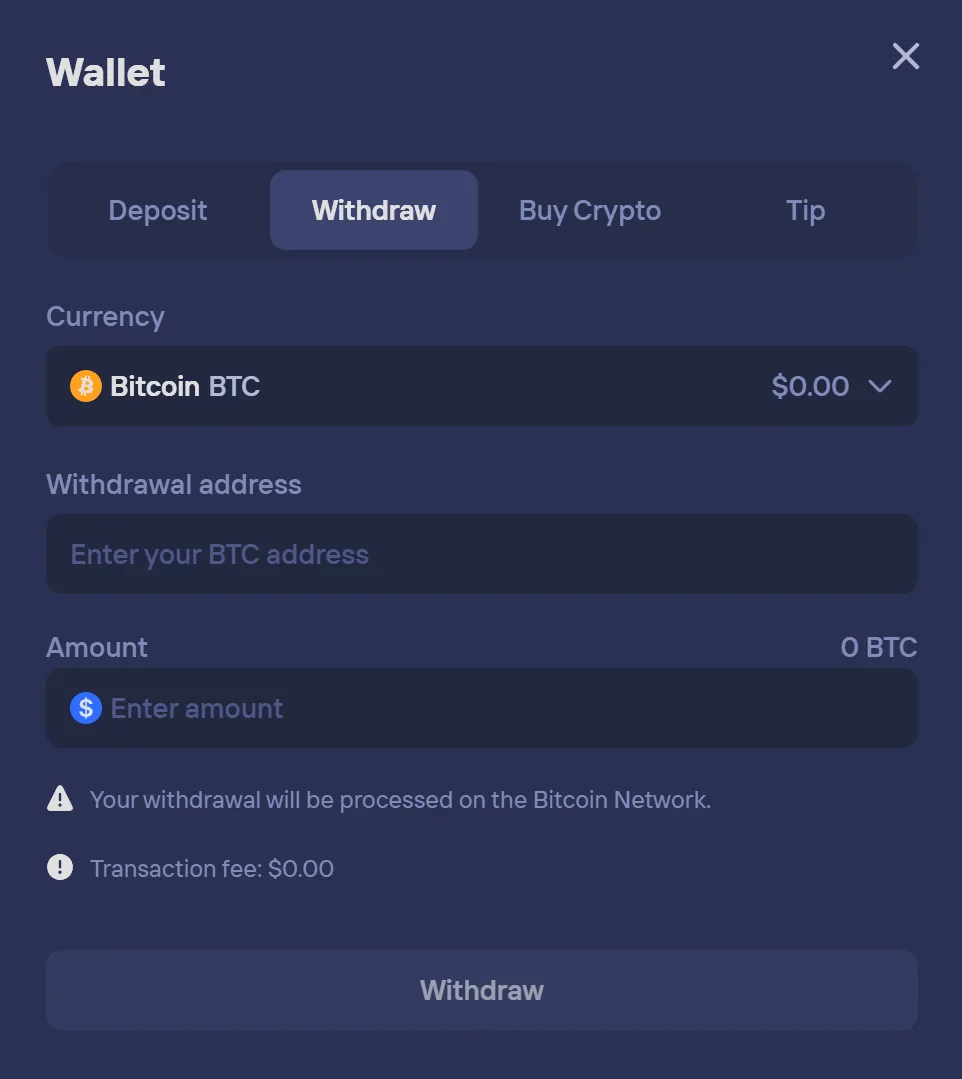
The hot wallet is the portion of your bankroll that you actively use for deposits, bets, and withdrawals. It is typically a software wallet (mobile, desktop, or browser extension) that holds a private key on a device connected to the internet. Because the private key is exposed to online environments, the hot wallet carries higher security risk. Therefore, its balance should be strictly limited to the amount you intend to wager over a short period—typically one to two weeks of play.
What to check in a hot wallet
- On-chain transaction history: Every deposit and withdrawal from the hot wallet is recorded on the blockchain. You can verify that the casino’s deposit address matches the one you sent to, and that withdrawals arrive back to your hot wallet within the expected time.
- Provably fair seed hashes: Before placing any bets, check that the casino has published the server seed hash for the current round. This is a cryptographic commitment that can be verified after the round ends. If the casino does not provide this, consider it a red flag.
- Withdrawal limits: Many crypto casinos enforce daily or monthly withdrawal caps. Your hot wallet should contain only enough funds to stay within those limits, plus a small buffer for variance.
For a step-by-step guide on verifying provably fair games, see our guides section.
Vault: Long-Term Storage
How Does This Compare to 0% House Edge Protocols?
Audited 100% RTP
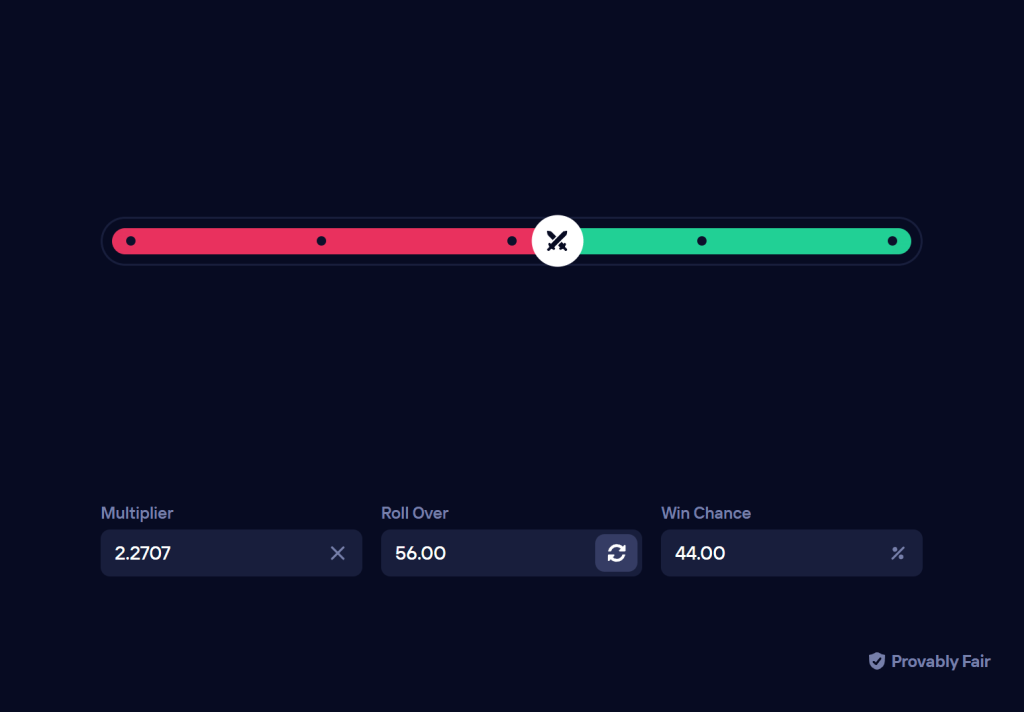
Instead of standard 1.00% to 4.00% casino house margins, compare with mathematically verified 100% RTP Originals (0.00% House Edge) on Duel Casino:
The vault holds the majority of your bankroll—typically 80% to 90% of total funds. This wallet should be a cold storage device (hardware wallet like Ledger or Trezor) or a multi-signature setup. The vault never connects to the casino or any online platform directly. Its only purpose is to replenish the hot wallet when the balance runs low.
On-chain verification of vault
- Balance audit: You can query the vault’s public address on a block explorer (e.g., Etherscan for Ethereum, Mempool for Bitcoin) to confirm the balance at any time. The balance should be static for long periods, except during scheduled transfers.
- Withdrawal address whitelisting: Some casinos allow you to whitelist withdrawal addresses. Ensure your vault address is not whitelisted—only the hot wallet address should be. This prevents a compromised vault from being drained directly to the casino.
- Multi-sig security: If using a multi-signature vault, verify that the required number of signers is at least 2-of-3 and that the keys are stored separately (e.g., one on hardware, one with a trusted third party, one in a safety deposit box).
For a deeper analysis of bankroll management techniques, refer to our bankroll management guide.
Optimal Ratio and Mathematical Basis
The optimal split between hot wallet and vault depends on your bankroll size, average bet size, and the house edge of the games you play. A common starting point is the Kelly criterion, which suggests that the fraction of bankroll to risk per bet should be proportional to the edge. For a typical casino game with a 2% house edge, the Kelly fraction is about 0.02 (2% of bankroll). To avoid frequent rebalancing, many players set their hot wallet balance to 10–20 times the Kelly bet size.
Example: a bankroll of 10 ETH, with an average bet of 0.01 ETH and a house edge of 2%. The Kelly bet is 0.2 ETH (2% of 10 ETH). A hot wallet of 2 ETH (20% of bankroll) would cover 10 such bets. The remaining 8 ETH stays in the vault. This ratio ensures that even if the hot wallet is completely drained (due to a run of losses or a security breach), the vault remains intact.
Recommended ratios by bankroll size
| Total Bankroll (ETH) | Hot Wallet (ETH) | Vault (ETH) | % in Hot |
|---|---|---|---|
| 1 | 0.2 | 0.8 | 20% |
| 5 | 1.0 | 4.0 | 20% |
| 10 | 2.0 | 8.0 | 20% |
| 50 | 5.0 | 45.0 | 10% |
Note: The percentage in hot wallet can be reduced as the bankroll grows because absolute variance becomes less significant. For very large bankrolls, a 5% to 10% split is defensible.
Verification Methods for Crypto Gamblers
To implement the hot wallet/vault strategy with confidence, you must verify that the casino itself is trustworthy. The following steps are all independently verifiable using public blockchain data and provably fair algorithms.
Check the casino’s reserve address
Many reputable crypto casinos publish a public wallet address that holds player funds. You can monitor this address on a block explorer to see if the balance is consistent with reported liabilities. If the casino claims to hold 100% of deposits in reserve, the address’s balance should be at least equal to the sum of all player balances. This is not a guarantee, but it provides a transparent audit trail.
Verify seed hashes before each session
Before you start playing, note the server seed hash provided by the casino. After the session, you can request the full server seed and compare its hash to the published one. This is the core of provably fair gameplay. If the casino does not allow you to verify after the fact, do not use it.
Monitor withdrawal addresses
Each time you withdraw from the casino to your hot wallet, confirm that the transaction appears on the blockchain with the correct amount and destination address. If you see a different address, stop all play and investigate. For a list of casinos that have transparent withdrawal policies, see our casino reviews.
Practical Implementation Steps
- Generate a new hot wallet address for each deposit. Most casinos support unique deposit addresses. This prevents linking of transactions and limits the impact of a single address compromise.
- Set a hard limit on hot wallet balance. Use a script or a manual reminder to transfer excess funds (above your chosen threshold) back to the vault immediately after a winning session.
- Schedule replenishment transfers. For example, every Sunday, transfer a fixed amount from the vault to the hot wallet—enough to cover the next week’s expected wagers. This automation reduces the temptation to dip into the vault for impulsive bets.
- Backup all seed phrases offline. The vault’s seed phrase should be stored in a fireproof safe or a deposit box. The hot wallet’s seed phrase can be stored in a password manager, but only if you trust the manager’s security model.
For more detailed operational advice, explore our news section for the latest on crypto security practices.
Common Pitfalls
- Keeping too much in the hot wallet. Convenience leads many players to hold 50% or more of their bankroll in the hot wallet. This defeats the purpose of segmentation. Stick to the 10–20% rule.
- Losing the vault seed phrase. If you lose the vault’s seed phrase, the funds are gone forever. Use a redundancy system (e.g., split into two physical locations) and test recovery before storing large amounts.
- Not verifying withdrawal addresses. A compromised casino account can redirect withdrawals to an attacker’s address. Always check the destination address on-chain before confirming the withdrawal request.
- Assuming the casino is solvent. Even if the casino publishes a reserve address, it may not be legally obligated to honor withdrawals. Diversify across multiple casinos and keep the majority of your crypto in your own wallet.
FAQ
What is the ideal hot wallet percentage for a small bankroll (under 1 ETH)?
For very small bankrolls, the hot wallet percentage can be as high as 30% to 50% because the absolute amount at risk is low. However, we recommend keeping at least 70% in cold storage to avoid losing everything in a single security incident. As the bankroll grows, reduce the hot wallet percentage toward 10–20%.
Can I use a smart contract to automate vault replenishment?
Yes, but it is not recommended for most users. A smart contract that automatically transfers funds from a vault to a hot wallet introduces a new attack surface: if the contract is compromised, an attacker could drain the vault. Manual transfers with a hardware wallet are safer and give you time to react to suspicious activity.
How do I verify that a casino’s provably fair system is honest?
Check the casino’s documentation for the algorithm used (e.g., server seed, client seed, nonce). Before each session, record the server seed hash. After the session, request the server seed and compute the hash yourself. If the hash matches, the round was not manipulated. For a more rigorous audit, compare the bet outcomes with the expected distribution (e.g., for a 1% house edge game, the expected loss over 10,000 bets is 100 bets).