Anjouan Casino Licenses in 2026: What the Reform Actually Changed

the author
ProvablySmart Research Desk
date post
Aug 28, 2026
Share


The Anjouan Gaming Authority (located on the autonomous island of Anjouan, part of the Union of the Comoros) has been a popular licensing venue for crypto casinos since the early 2020s. Historically, Anjouan offered a low-cost, low-oversight path to market, which attracted many operators but also raised concerns about legitimacy and player protection. In 2026, a regulatory reform came into effect, billed as a major step toward credibility. This article examines what the reform actually changed, what remains unresolved, and how a skeptical player can verify the claims being made.
Background: The Pre-2026 Anjouan License Landscape
Before the reform, Anjouan licenses were essentially a registration process with minimal due diligence. The authority did not perform background checks on operators, did not require technical audits, and did not publish a public register of licensees. Many casinos displayed a fake license number or used the Anjouan name without having a valid license. Players could not easily verify the status of a license, and the authority had no mechanism to enforce its rules. The reputation of Anjouan-licensed casinos suffered as a result.
What the 2026 Reform Actually Changed
How Does This Compare to 0% House Edge Protocols?
Audited 100% RTP
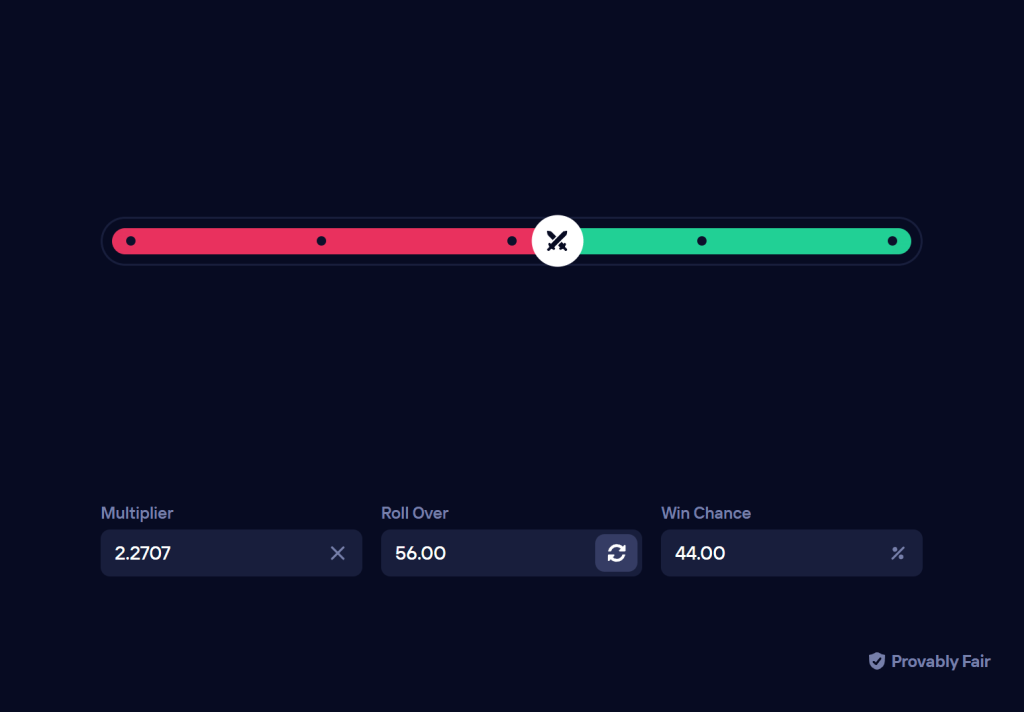
Instead of standard 1.00% to 4.00% casino house margins, compare with mathematically verified 100% RTP Originals (0.00% House Edge) on Duel Casino:

The reform introduced several concrete requirements that can be independently verified. The changes are outlined below, grouped by area of impact.
1. Mandatory Provably Fair Audits
Operators applying for a new license or renewing an existing one must now submit their provably fair implementation to an independent auditor approved by the Anjouan Gaming Authority. The audit must confirm that:
- The server seed is generated using a cryptographically secure random number generator (CSRNG) and that its hash is published before any game round begins.
- The client seed can be changed by the player at any time, and the change is reflected in the next round.
- The final seed (combination of server seed, client seed, and nonce) is hashed using a standard algorithm (e.g., SHA-256) and the result is used to determine game outcomes.
The authority maintains a list of approved auditors. As of 2026, players can check the authority’s website for the current list. The auditor’s report is not publicly available, but the operator must display the auditor’s name and license number on their site. Players can cross-reference the auditor’s credentials with the authority’s list.
2. Public Register with Hash-Verified Certificates
The reform introduced a publicly accessible register of all licensed operators. Each entry includes:
- License number (format: AG-2026-XXXXX)
- Operating company name and registered address
- License issue and expiry dates
- Status (active, suspended, revoked)
To prevent document forgery, each license certificate now includes a SHA-256 hash of the certificate’s PDF content. The authority publishes the hash alongside the register entry. Players can download the certificate from the operator’s website, compute its hash locally, and compare it to the hash on the register. If the hashes match, the certificate is genuine. This is a significant improvement over the previous system where fake licenses were common.
3. Enforcement Powers and Penalties
The reform grants the authority the power to:
- Impose fines of up to €50,000 for non-compliance (e.g., failure to display valid license, failure to submit to audit).
- Suspend or revoke licenses for violations of the provably fair requirement or for misrepresentation.
- Request that internet service providers (ISPs) block access to operators whose licenses have been revoked or who are operating without a license.
As of mid-2026, the authority has reportedly revoked three licenses and suspended two others, all for failure to comply with the audit requirement. These actions are recorded in the public register with a date and reason. Players can verify the status of any operator.
4. Minimum Capital Requirements
New license applicants must demonstrate a minimum capital of €100,000 (or equivalent in cryptocurrency) held in a bank account or a custodial wallet. The authority does not require fund segregation or escrow, so the capital is not ring-fenced for player deposits. However, the capital requirement is a barrier to entry for fly-by-night operators.
What Has Not Changed
It is equally important to understand what the reform does not address:
- No player fund protection. There is no requirement for operators to hold player deposits in separate accounts or to offer insurance. If an operator declares bankruptcy or disappears, players have no recourse through the Anjouan authority.
- No complaint mechanism. The authority does not mediate disputes between players and operators. Any resolution must be pursued through the operator’s internal support or, if applicable, through a third-party arbitration service (e.g., CasinoDaddy, AskGamblers).
- No KYC for players. The reform only mandates that operators perform KYC on themselves (company registration). Players can still play anonymously, which is a feature for crypto casinos but also a risk.
- Limited jurisdictional reach. The Anjouan police force is small and has no extradition treaties. Enforcement actions are largely symbolic, though the ISP blocking mechanism is a new tool.
How to Verify an Anjouan License in 2026
If you are considering playing at a casino that claims to be licensed in Anjouan, follow these steps:
- Visit the Anjouan Gaming Authority’s official website (the URL is typically displayed on the casino’s footer).
- Navigate to the public register. Enter the license number shown on the casino’s site, or search by operator name.
- Check that the license status is “Active” and that the expiry date has not passed.
- Download the certificate PDF from the casino’s site. Compute its SHA-256 hash using a tool like `shasum -a 256 file.pdf` on Linux/macOS or `certutil -hashfile file.pdf SHA256` on Windows. Compare the resulting hash to the one published on the register. They must match.
- Check the auditor’s name on the casino’s site. Verify that the auditor appears on the authority’s list of approved auditors. If the auditor is not listed, the casino may be non-compliant.
For more details on provably fair verification, see our comprehensive guide to provably fair. You can also check our casino reviews for up-to-date license status and provably fair test results.
Broader Implications for Crypto Casinos
The Anjouan reform is part of a wider trend of smaller jurisdictions tightening their licensing requirements to compete with established regulators like Malta and Curaçao. However, the reform does not bring Anjouan to the level of those jurisdictions in terms of player protection. For a player who prioritizes provably fair verification and does not require deposit insurance, an Anjouan-licensed casino that complies with the 2026 reform is a viable option. The addition of a public register with hash-verified certificates is a genuine improvement that reduces the risk of fake licenses.
Nevertheless, players should always apply proper bankroll management when playing at any casino, especially those in lightly regulated jurisdictions. The reform does not remove the need for personal due diligence.
Looking Ahead
The Anjouan Gaming Authority has indicated that further reforms are under consideration, including mandatory reporting of monthly transaction volumes and a requirement for operators to hold a reserve in cryptocurrency. No timeline has been announced. For now, the 2026 reform is the most significant change to the licensing framework. Operators who fail to comply risk losing their license and being blocked by ISPs. Players who wish to stay informed about regulatory changes can follow our news section for updates on Anjouan and other jurisdictions.
FAQ
Can I trust an Anjouan-licensed casino after the 2026 reform?
The reform improves transparency through mandatory provably fair audits, a public register with hash-verified certificates, and enforcement powers. However, it does not provide player fund protection or a complaint mechanism. You can verify the license’s authenticity and the audit status yourself, but you must still accept the risk that deposits are not segregated.
How do I verify a casino’s Anjouan license?
Go to the Anjouan Gaming Authority’s public register, enter the license number from the casino’s site, and confirm the status is active. Download the certificate PDF from the casino, compute its SHA-256 hash, and compare it to the hash listed on the register. Also check that the auditor named on the casino’s site appears on the authority’s list of approved auditors.
Does the reform require provably fair?
Yes, all licensees must submit their provably fair implementation to an approved auditor and pass the audit. The audit verifies that the server seed hash is published before play, the client seed is changeable, and the outcome is deterministically derived from the combined seeds. Players can check the auditor’s name and cross-reference it with the authority’s list.