
Best Roulette Strategy: Each Tested a Million Times
Why Did I Decide to Find the Best Roulette Strategy?
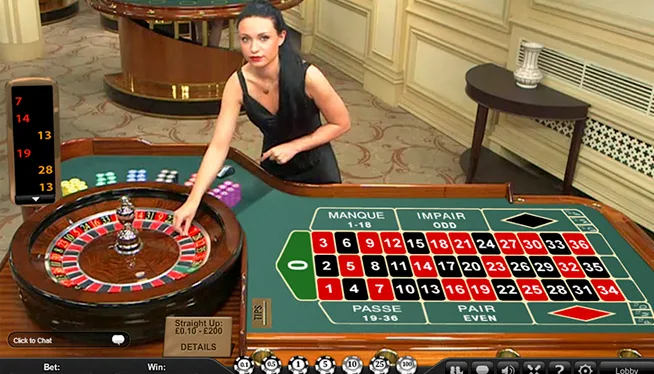

I’ve been playing roulette at various online casinos. You’ve probably seen articles claiming that no betting system can beat the house edge. That’s true—but it’s not the whole story. These strategies can’t guarantee you’ll walk away with more money, but they can increase your chances of doubling your money in a single session. I wanted to know which of the six most popular strategies gave me the best shot at hitting a 2x goal, so I simulated each one a million times.
I started with $100, bet $5 per round (except Fibonacci where bets follow the sequence), and stopped when I hit $200 or went bust. Here’s what I tested:
- Martingale
- Reverse Martingale (Paroli)
- d’Alembert
- Fibonacci
- James Bond
- Labouchere
Best Roulette Strategy: The Martingale
Martingale is the most famous progressive betting system. You bet on even-money outcomes (red/black, even/odd, 1-18/19-36) with a 1:1 payout. The rule: double your bet after every loss, revert to the initial bet after a win. The idea is that a single win recovers all previous losses plus a small profit.
But the risk is steep. Starting with $2, a losing streak of 7 spins forces bets of $2, $4, $8, $16, $32, $64, $128—that’s $254 total. The house edge ensures you’ll eventually hit a long losing streak. Martingale requires a large bankroll to survive variance.
Best Roulette Strategy: The Reverse Martingale (Paroli)
Reverse Martingale flips the logic: double your bet after a win, reset to the base after a loss. You ride winning streaks and cut losses short. This strategy also uses even-money bets. The progression is steep in the right direction, but a single loss after a streak wipes out the gains.
Example: bet $2 and win → $4. Win again → $8. Win again → $16. If you lose the next spin, you’re back to $2. The key is to set a profit target and walk away before the streak ends.
Best Roulette Strategy: The d’Alembert
Named after 18th-century mathematician Jean le Rond d’Alembert, this strategy increases bets by a fixed unit after a loss and decreases by the same unit after a win. It’s less aggressive than Martingale because you don’t double. Choose your unit (e.g., 0.33%–0.5% of bankroll). The system aims to balance wins and losses over time.
With a $2 base and $1 unit, a loss → bet $3, another loss → $4, then a win → $3, etc. The unit size controls risk: larger units mean faster progressions but higher volatility.
Best Roulette Strategy: The Fibonacci
Based on the Fibonacci sequence (1, 1, 2, 3, 5, 8, 13…), you move one step forward after a loss and two steps backward after a win. Bets are on even-money outcomes. The sequence determines the bet size, so you can’t adjust the unit yourself. This makes it a flat progressive system.
Example: start at $1. Lose → bet $1 again. Lose → bet $2. Win → move two steps back to $1. The system never goes below the first 1. Fibonacci is easy to follow if you write the sequence down.
Best Roulette Strategy: The James Bond
In Casino Royale, James Bond used a non-progressive system covering most numbers. Bet $14 on 19–36, $5 on the six-line (13–18), and $1 on 0—total $20 per spin. This covers numbers 13–36 and 0, leaving 1–12 uncovered. Payouts: 0 pays 35:1 ($35), 13–18 pays 5:1 ($25), 19–36 pays 1:1 ($28), and 1–12 loses the $20.
Over 37 spins with each number once, the net result is –$51. That’s a 2.7% house edge on the combination. You win most spins, but the losses on 1–12 are large enough to outweigh the smaller profits.
Best Roulette Strategy: The Labouchere
This 19th-century system requires you to choose a target profit (e.g., $10) and split it into a sequence of smaller numbers (e.g., 1,2,2,3,1,1). Bet the sum of the first and last numbers. If you win, remove those numbers. If you lose, add the bet amount to the end of the sequence. Continue until the sequence is empty (you hit your target) or you can’t cover the next bet.
Example: first bet = 1+1 = $2. Win → remove 1 and 1 → sequence becomes 2,2,3,1. Next bet = 2+1 = $3. Loss → add 3 to end → 2,2,3,1,3. The system recovers losses by betting larger amounts.
Results of Playing Each Strategy a Million Times
I ran one million games for each strategy with the same bankroll rules. Here’s a summary of the key findings:
| Strategy | Win Rate (doubled money) | Avg Win Amount | Avg Bets to Double | Avg Bets to Lose |
|---|---|---|---|---|
| Reverse Martingale | 43% | $258 | 18–19 | ~14 |
| Fibonacci | ~38% | $220+ | 216 | ~165 |
| Labouchere | ~35% | $230+ | 18–19 | ~10 |
| Martingale | ~32% | $210 | ~30 | ~20 |
| d’Alembert | ~30% | $205 | ~40 | ~30 |
| James Bond | 26% | $201 | N/A (fixed bets) | N/A |
Reverse Martingale came out on top with a 43% win rate. After 1 million games, the net profit was $163,500—assuming you always bet $5 and stop at $200. The average win amount was $258, meaning you leave with $158 profit. The average number of bets to double was only 18–19, making it both fast and effective.
Fibonacci was the safest: it took 216 bets on average to double your money, and 381 bets per game overall. That means you can play for a long time without busting. The win rate was around 38%, and the average win amount was over $220.
Labouchere doubled money in 18–19 bets on average, but the loss rate was high. It ended games fastest—14 bets on average—because the escalating bets quickly drain a losing bankroll.
James Bond performed worst, winning only 26% of the time. The math shows a steady loss over 37 spins.
How Much Did I Walk Away With?
When I won, my final balance was almost always above $200 because the bet sizes vary. Fibonacci, Labouchere, and Reverse Martingale left me with significantly more than $200 on average—$258 for Reverse Martingale, over $220 for the others. This means that even though you lose more often than you win, the wins are larger than the losses. With Reverse Martingale, after 100 games you’d be up $36.20 on average (if you lose $100 every loss). In reality, losses are often less than $100 because you stop when you can’t cover the next bet.
Did I Double or Lose Money Faster?
For four strategies, it took more bets to double than to lose. But Fibonacci and Reverse Martingale showed the opposite: it took more bets to lose than to double. This gives you a predictive window. With Fibonacci, if you haven’t doubled after 216 spins, you can stop with a high probability of being ahead in the long run. That’s a useful risk-management tool.
Should I Go for the Money or Run?
If you want to maximize play time, Fibonacci is the clear winner—almost 400 bets per game on average. That’s 12 times more than any other strategy. If you want the best chance to double your money, Reverse Martingale is the most reliable, though it still loses more than half the time.
Which Strategy Is the Best?
No strategy beats the house edge, so your odds are always below 50%. But the data shows that Reverse Martingale, Fibonacci, and Labouchere produce positive expected value over many sessions because the average win exceeds the average loss. After 1 million games, Reverse Martingale netted $163,500. Fibonacci also stayed in profit, while Martingale, d’Alembert, and James Bond ended in the red.
The lesson: choose a strategy that gives you a statistical edge over the long run, set strict win/loss limits, and never chase losses. Provably fair casinos let you verify each spin’s outcome, but that only confirms the math—it doesn’t make the strategy safe.
In Conclusion
I didn’t expect James Bond to be the worst, but the numbers don’t lie. The best roulette strategy for doubling your money is the Reverse Martingale—use it with a preset target and a stop-loss. For a safer, longer session, pick Fibonacci. And always remember: roulette is a game of probability, not a guaranteed path to profit. The only way to win long-term is to treat it as entertainment with a mathematical edge, not a source of income.