
What Is Seed Management and Why It Matters
Seed Management Playbook: Server Seeds, Client Seeds and Rotation Policy
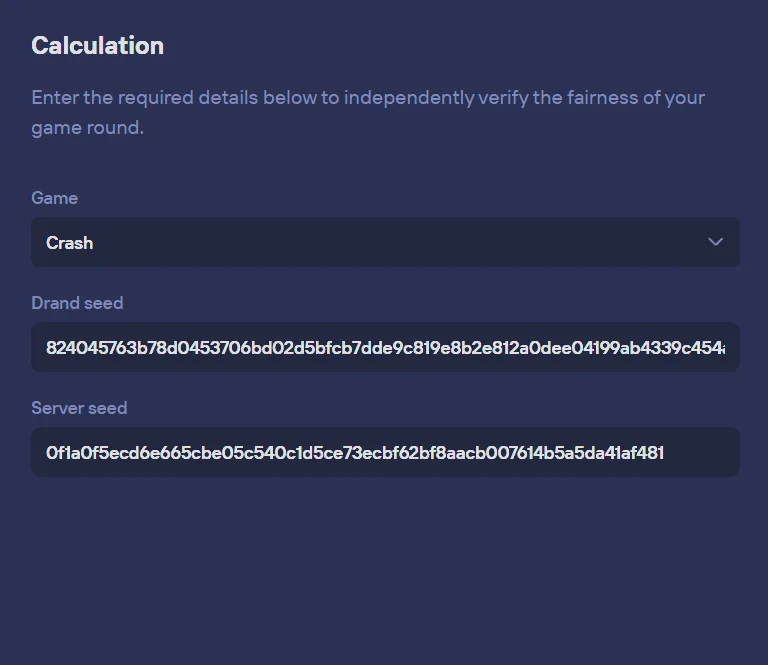
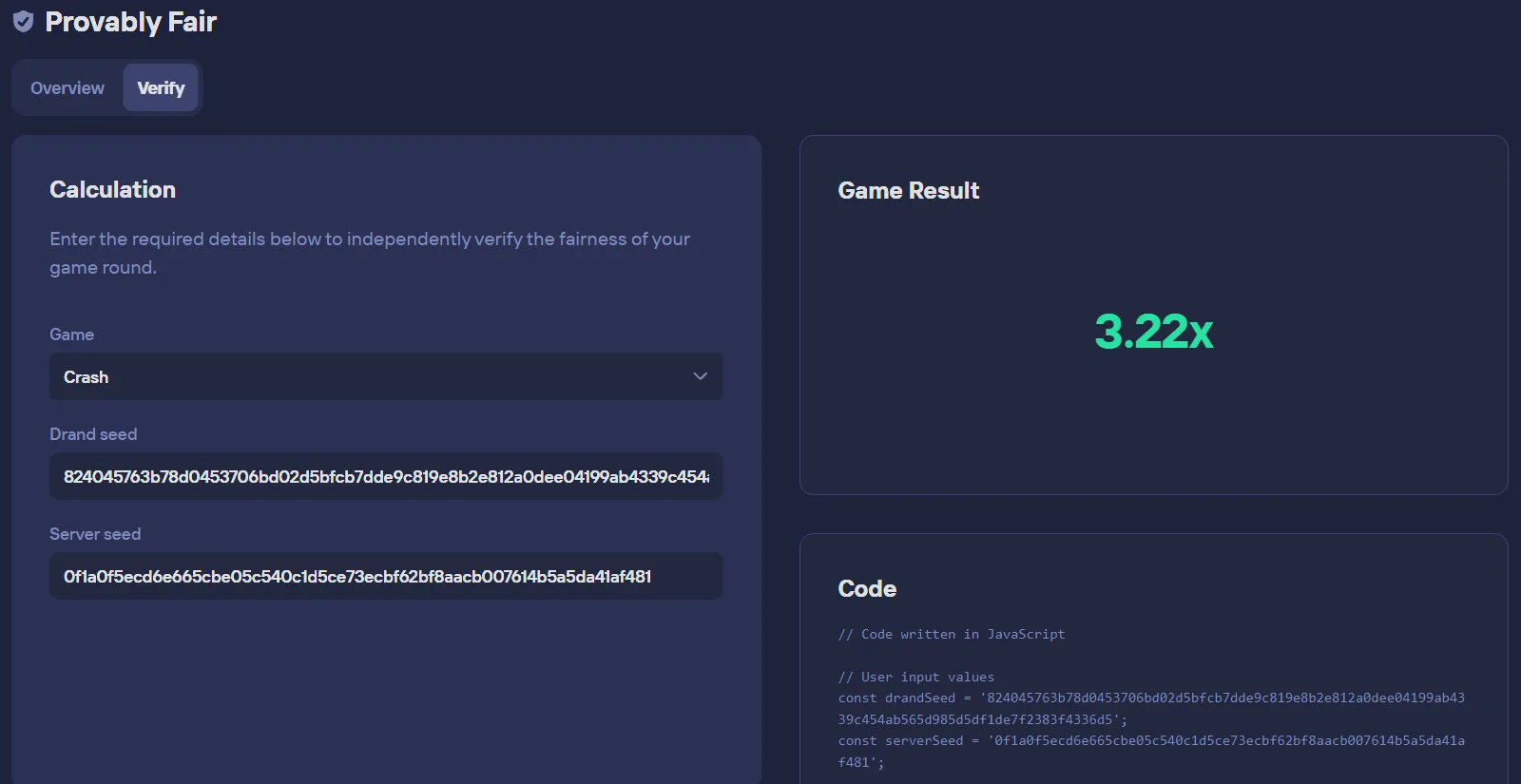
A seed management playbook defines how a casino generates, publishes, and rotates the server seed and client seed for every provably fair game. The server seed is the operator-controlled secret, the client seed is player-supplied, and the nonce is an incrementing counter that turns the same two seeds into a unique game result. Rotation policy is the part most players skip: it dictates when the server seed changes, when the old seed is revealed, and how long a client seed remains valid. Without a clear policy, a casino can keep a server seed hidden for years, meaning fairness is asserted rather than verified.
In 2026, credible crypto casinos publish a SHA-256 commitment before a server seed becomes active and reveal the full seed after it rotates. As a player, you can verify every result by checking three things: the pre-commitment hash, the revealed seed, and the exact derivation function used for the game. This playbook is built for verification-first casino reviews, so each item below is a concrete check you can run with a terminal, a block explorer, or a simple calculator. See the provably fair glossary for definitions of every term before you run these checks.
Server Seeds, Client Seeds and Nonces: The Three Values You Can Check
Pre-commitment hash: the only proof that a server seed was chosen before bets
A provably fair casino should show a hex-encoded SHA-256 hash of the next server seed before it is used. When the seed is rotated, the casino reveals the plaintext seed; your first check is to hash that plaintext and compare it with the previously displayed commitment. If they match, the seed was fixed before any result using it. If the platform does not display a commitment, or rotates a seed before showing a hash, treat the game as non-auditable.
Server seed, client seed, and nonce: what each value proves
The table below summarises the three values and the verification step that proves each one.
| Value | Who controls | Verification step |
|---|---|---|
| Server seed | Casino | Hash revealed seed and compare with pre-commitment. |
| Client seed | Player | Check that your seed is visible in the game session you used. |
| Nonce | Casino increments | Confirm it increases by 1 for each bet; when client seed changes, nonce resets. |
Derivation function
The game result is not simply the server seed; it is a deterministic function of the server seed, client seed, and nonce. Most casinos use HMAC-SHA256 with the server seed as key and client seed:nonce as message, then convert the digest to a number. You should locate the casino fairness documentation before playing and note the exact digest and conversion rule. The same input must always produce the same output.
- Record the displayed pre-commitment hash before you start a session.
- After rotation, download the revealed server seed and run SHA-256 locally.
- Confirm the revealed seed equals the commitment; a mismatch means the audit trail is broken.
- Check that the client seed shown in the active game matches the one you entered.
- Verify the nonce used in the game log matches the one in your own calculation.
For a step-by-step command-line workflow, see the guides section on provably fair verification.
Rotation Policy: What to Require Before You Trust a Casino
Three rules every rotation policy should state
When you read a casino fairness page, look for three explicit rules. First, when a server seed rotation is triggered: after a fixed number of games, after a client seed request, or on a fixed schedule. Second, how the old server seed is revealed and how long it remains accessible in an archive. Third, what happens to the nonce when a client seed changes. A policy that does not answer these three questions is incomplete.
What good rotation looks like
- The next server seed and its SHA-256 hash are visible before the current seed becomes inactive.
- The old server seed is revealed at the exact moment of rotation, with no delay.
- All revealed seeds are archived in a downloadable list with timestamps and nonce ranges.
- Each client seed change resets the nonce count, and the new nonce starts from 0 or 1.
- The fairness page states how long the archived data is kept, so you can verify old bets later.
Risk scenarios to check
A server seed that rotates only when the player asks may be acceptable if the casino reveals the previous seed at that point. A seed that never rotates until site-wide maintenance creates a long period with no proof of integrity. Similarly, a client seed set by the casino instead of by the player weakens the fairness model. You should verify that the casino cannot reuse a seed after a client seed reset without revealing it. The audit trail should be indexed and searchable; a pile of CSV exports is far less reliable than a permanent seed archive.
| Event | Required evidence | Where to look |
|---|---|---|
| New client seed requested | Old nonce range is logged, new nonce starts at 0 or 1 | Game history or API |
| Server seed rotated | Old seed revealed and matches its pre-commitment hash | Fairness page archive |
| Session ended | Client seed and nonce are still retrievable | Bet history export |
We apply these exact checks when we assess operators in our casino reviews; the review should state whether the rotation policy is disclosed and consistently followed.
Final Checklist and Frequently Asked Questions
The checklist below can be used before depositing at any crypto casino. It does not rely on the operator reputation; every item is a verifiable action.
- Open the fairness page and copy the SHA-256 commitment for the next server seed.
- Set your own client seed and confirm it is visible in the game session.
- Read the stated rotation policy and note the trigger and archive duration.
- Before the server seed rotates, save one game result with its server seed, client seed, and nonce.
- After rotation, download the revealed server seed and verify the SHA-256 hash matches the commitment.
- Recompute the game result using the documented derivation function and compare it with the casino output.
- Calculate the house edge and maximum loss for the planned session using the RTP in the game rules.
- Set a loss limit before playing and record your session in a spreadsheet. See our bankroll management guide for a working template.
What happens if the client seed changes without a nonce reset?
If the nonce continues from the same server seed, the same server seed and client seed combination is not necessarily reused if the nonce is unique. The risk is when the client seed is reset to its initial value and the nonce restarts from 0: the exact tuple can repeat, making results predictable. You should check that the rotation policy states a nonce reset procedure for client seed changes.
Can I verify a result after the server seed has rotated?
Yes, if the casino archives the revealed server seed and keeps your client seed and nonce in bet history. Hash the archived server seed to confirm it matches the pre-commitment, then apply the derivation function to produce the game result. If the archive is missing or the seed cannot be hashed to the commitment, no post-hoc verification is possible.
How often should a server seed rotate to be considered safe?
There is no universal number. A policy that rotates after every 10,000 games is fine if the commitment is shown in advance and the seed is revealed on time. What matters is that the policy is explicit, the hash is published before use, and the revealed seed matches. Avoid casinos that do not publish their rotation policy or refuse to reveal old seeds.