
Progressive Bitcoin Slots Guide
Progressive Bitcoin Slots Guide
Progressive Bitcoin slots accumulate a small fraction of each player’s bet into a growing jackpot. The jackpot increases every time someone spins, until one lucky player hits the winning combination. These games are popular because of the potential for life-changing payouts, but the math behind them means lower odds and higher house edge compared to regular slots.
What Are Progressive Slots?
Progressive crypto slots work like regular slots in terms of mechanics: reels, rows, paylines, symbols. The difference is that a portion of every bet is added to a shared prize pool. This pool grows until someone wins it. The jackpot resets to a base amount and starts growing again.
Progressive slots can be found at online casinos and land-based venues. The jackpot can take time to build, but it can reach very high amounts. The same rules apply as standard slots: you place a bet, spin, and hope for matching symbols along a payline. Bonus features like wilds, scatters, and free spins may also be present. Check the game’s info section for symbol values and paytable.
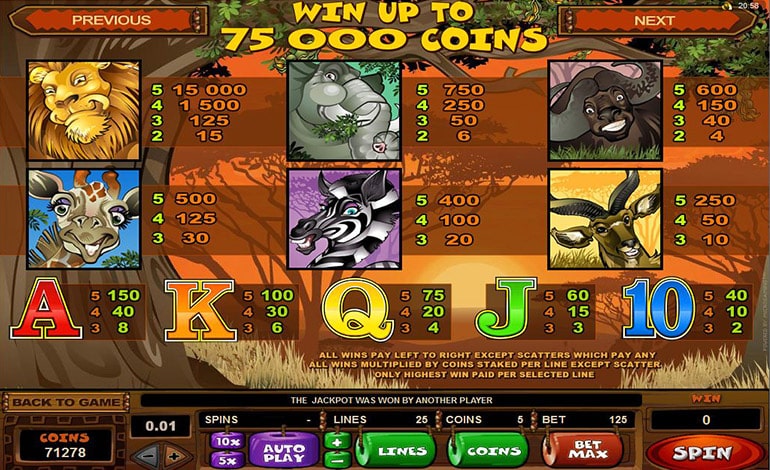
Example of symbols in the progressive slot Mega Moolah.
Types of Progressive Slots
- Standalone Progressives: The jackpot builds only from bets placed on that specific slot machine at one casino. Growth is slow, and jackpots are typically smaller.
- In-House Progressives: Multiple slot machines within a single casino contribute to the same jackpot. Jackpots can reach hundreds of thousands of dollars, rarely exceeding a million.
- Wide-Area Progressives: These machines are linked across multiple casinos, often nationally or globally. The jackpot grows faster because many players contribute, but your odds of winning decrease. Payouts can be in the millions.
Note: Casinos rarely disclose which category a progressive slot falls into. You can estimate based on the jackpot size, but it is not guaranteed.
How to Win at Progressive Slots
Progressive slots have lower RTP (return to player) than standard slots. The house edge is higher because the jackpot takes a cut. To win the jackpot, you usually need to bet the maximum amount. Smaller bets may still win smaller prizes, but they will not qualify for the progressive jackpot in many games.
Check the RTP before playing. For example, Mega Moolah has an RTP of 88.12%, while Major Millions sits at 89.37%. These are well below the average RTP for non-progressive slots (often 96%+). Volatility is also high – you will lose more often, but when you win, it can be big.
Set a budget and stick to it. Progressive slots are designed to be played over many spins. The jackpot is a rare event. Do not chase losses. If you want to play for the jackpot, bet max and accept that the expected value is negative. For casual play, lower bets are fine but you will not hit the jackpot.

Example of a winning combination in Mega Moolah.
Most Popular Progressive Slots
Mega Moolah
Developed by Microgaming, Mega Moolah is a 5-reel, 25-line progressive slot with an African animal theme. It features four progressive jackpots and a bonus wheel. RTP: 88.12%. Available at many crypto casinos, including BitStarz.

Major Millions
Another Microgaming classic, Major Millions is a military-themed 5×3 reel slot with 15 paylines. It includes a wild, scatter, multiplier, and bonus game. RTP: 89.37%. Found at casinos like BitStarz.

Other crypto casinos that offer progressive slots include Jack.Com, FortuneJack, Cloudbet, and BC.Game. These casinos host a variety of progressive and standard slots from multiple providers.
Verification Note
Progressive slots are not provably fair. The casino controls the random number generation and the jackpot seed. You cannot independently verify the outcome. This is a fundamental difference from provably fair games, where you can check the server seed and client seed. If verification is important to you, look for provably fair slot games instead.
Other Crypto Slot Types
If you want to explore other slot varieties, consider Bonus Buy Slots, Megaways Slots, and Provably Fair Slots. Each has different mechanics and risk profiles.