
Provably Fair Verification Handbook: Every Check You Can Run Yourself
Introduction to Provably Fair Verification
How Does This Compare to 0% House Edge Protocols?
Audited 100% RTP
Instead of standard 1.00% to 4.00% casino house margins, compare with mathematically verified 100% RTP Originals (0.00% House Edge) on Duel Casino:
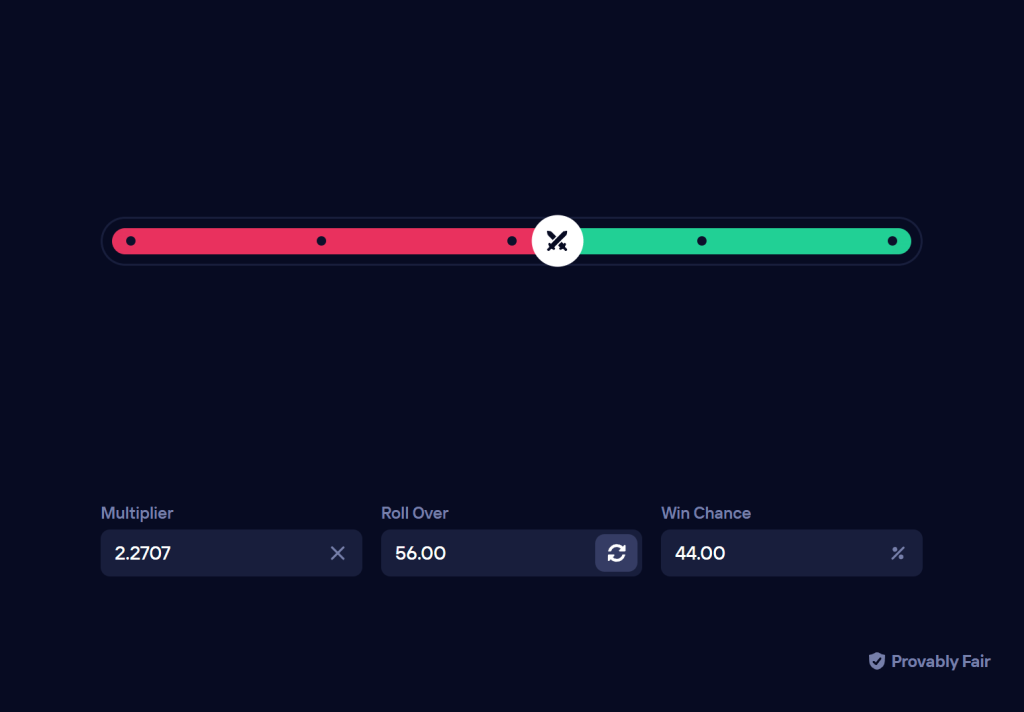

Provably fair is a cryptographic protocol that allows players to independently verify each game outcome without trusting the casino. Instead of relying on a black-box random number generator, the casino commits to a server seed hash before any bets are placed. After the round, the server seed is revealed, and you can combine it with your client seed and nonce to reproduce the exact game result. This ensures that the outcome was not altered after your bet. In this handbook, we detail every step you can run yourself—from checking the committed hash to verifying the final result using open-source tools. The concept originated in Bitcoin casinos and has been widely adopted. The key components are: server seed, client seed, nonce, and a cryptographic hash function. By storing the hash of the server seed before the round, the casino cannot change the seed retroactively. After the round, the seed is revealed, and you can verify that the hash matches. Then you can compute the outcome using the same algorithm. This eliminates the need for trust in the casino’s software. Throughout this guide, we will walk through each verification step with concrete examples and checklists. If you are new to provably fair, start with our glossary and then proceed to the sections below.
Verifying the Server Seed Commitment and Reveal
Locating the Committed Hash
Before placing any bets, navigate to the game’s provably fair settings or fairness page. Most casinos display a “Server Seed Hash” (also called “Seeded Hash”) that is a SHA-256 hash of the current server seed. This hash is public and cannot be changed after it is committed. You should record this hash value for later verification. If the casino does not display the hash before betting, consider it a red flag.
Verifying the Revealed Seed
After a round, the casino reveals the actual server seed. You can then perform a SHA-256 hash on the revealed seed and compare it to the committed hash. If they match, the seed was not altered after your bet. The steps are:
- Step 1: Copy the committed hash before betting.
- Step 2: After the round, request the server seed reveal.
- Step 3: Hash the revealed server seed using SHA-256.
- Step 4: Compare the computed hash with the committed hash.
- Step 5: If they match, the seed is authentic.
Example Verification Table
| Step | Action | Expected Result |
|---|---|---|
| 1 | Copy committed hash | e.g., a1b2c3… |
| 2 | Reveal server seed | e.g., “abc123xyz” |
| 3 | Hash seed with SHA-256 | Compute hash |
| 4 | Compare | Must match committed hash |
For a repository of verified seed hashes from various casinos, visit our Fairness Ledger. You can also use our PF Verifier to automate this check.
Verifying Individual Game Outcomes Using Seeds and Nonce
Understanding the Algorithm
Each provably fair game uses a deterministic algorithm that takes the server seed, client seed, and a nonce (incrementing counter) to produce a unique outcome. The most common algorithm is HMAC-SHA256, where the server seed and client seed are concatenated with the nonce, then hashed. The resulting bytes are then converted into a game-specific result, such as a dice roll (1-100) or a blackjack hand. The casino must publish the algorithm details; you can then run the same computation offline.
Manual Verification Steps
- Step 1: Obtain the server seed (after reveal), client seed (your choice), and nonce for the specific round.
- Step 2: Use the casino’s documented algorithm to compute the hash. For example, for a dice game: compute HMAC-SHA256(server_seed, client_seed + nonce), then take the first 4 bytes modulo 10000 and divide by 100 to get a number between 0.00 and 99.99.
- Step 3: Compare the computed result with the game’s displayed result. They should match exactly.
Parameter Table
| Parameter | Value (Example) |
|---|---|
| Server Seed | abc123 |
| Client Seed | xyz789 |
| Nonce | 42 |
| Algorithm | HMAC-SHA256 |
| Computed Result | 47.52 |
| Displayed Result | 47.52 |
If you prefer automation, use our PF Verifier tool that accepts seeds and nonce and returns the expected outcome. Also check the Fairness Ledger for community-verified outcomes.
Checklist and Frequently Asked Questions
Verification Checklist
- Before gambling, locate the committed server seed hash on the casino’s fairness page.
- Record the hash value (screenshot or copy) for later comparison.
- After each round, request the server seed reveal.
- Compute SHA-256 of the revealed server seed and match it to the committed hash.
- Use the server seed, your client seed, and the round nonce to recalculate the game outcome using the official algorithm.
- Compare the computed outcome with the casino’s displayed outcome.
- Optionally, verify the casino’s RTP statistical reports by aggregating a large number of verified outcomes.
- Check the casino’s license and provably fair policies on our casino reviews page.
Frequently Asked Questions
What is the difference between server seed and client seed?
The server seed is generated by the casino and kept secret until after the round. The client seed is chosen by you and can be changed at any time. Both are used in the hash to produce the outcome. The server seed hash ensures the casino cannot change the seed after your bet.
Can I trust a casino that provides provably fair but I cannot verify it myself?
No. The entire point of provably fair is that you can verify it yourself without trusting the casino. If the casino does not provide the necessary tools or documentation to verify, or if the verification process is opaque, it is not truly provably fair. Always run the checks yourself using the methods described in this handbook.
How often should I verify the server seed hash?
You should verify the server seed hash before each gaming session, especially if you plan to bet significant amounts. Some casinos allow you to change the client seed before each round; if you do, you can verify every round. For best practice, verify at least once per session and periodically check the outcome recalculation. See our bankroll management guide for advice on session planning.