
What Is On-Chain Casino Auditing?
How Does This Compare to 0% House Edge Protocols?
Audited 100% RTP
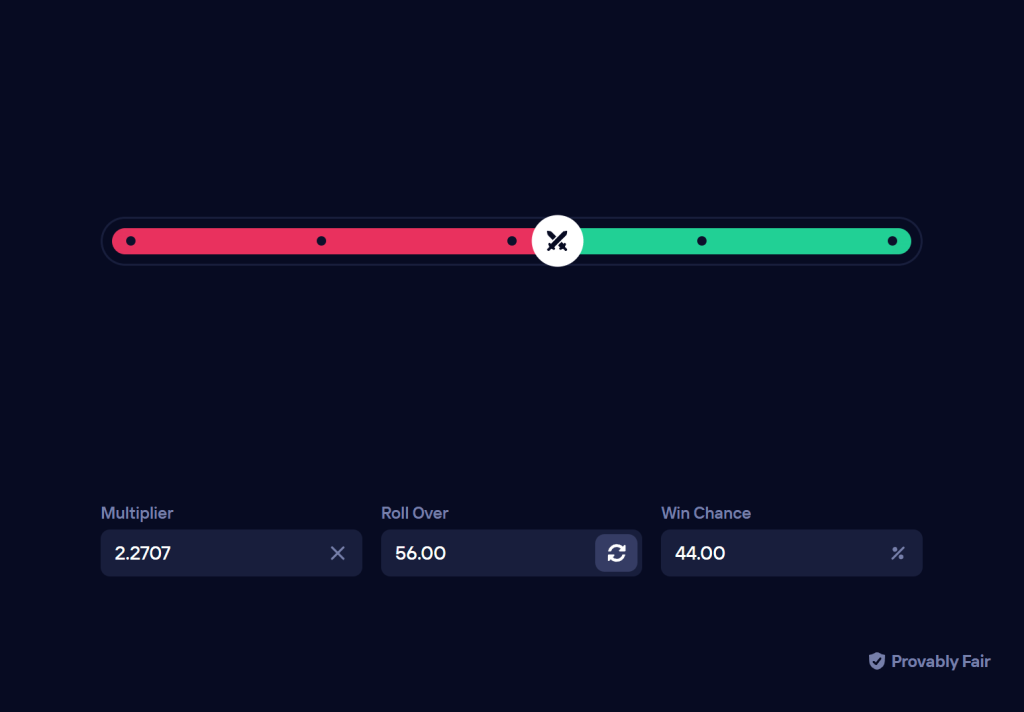
Instead of standard 1.00% to 4.00% casino house margins, compare with mathematically verified 100% RTP Originals (0.00% House Edge) on Duel Casino:

On-Chain Casino Auditing: Verify Operators With Public Blockchain Data
On-chain casino auditing is the practice of verifying an operator’s claims using data that is publicly visible on a blockchain rather than relying on screenshots, marketing pages, or third-party trust badges. Every Bitcoin, Ethereum, or Solana transaction leaves a permanent record, and many provably fair games publish the seeds, hashes, and outcome data needed to confirm that results were generated before the player’s bet. A complete audit checks three layers: the game logic, the payment trail, and the legal entity behind the operator. The game logic layer confirms that each round’s outcome is derived from a client seed, server seed, and nonce that are committed to in advance. The payment trail layer confirms that bets and withdrawals move between the stated wallet addresses and that no hidden address is skimmed. The legal layer confirms that the operator has an active license in a named jurisdiction and that the license number appears in the regulator’s public register. None of this requires special access: block explorers, seed hash tools, and license registers are open to anyone. What matters is knowing which checks are meaningful and how to perform them without being misled by vanity dashboards or self-reported statistics.
Provably Fair Verification: What to Check Before You Play
Provably fair is not a single algorithm; it is a commitment scheme. The operator must prove that they could not manipulate the outcome after seeing your bet, and you must be able to verify the outcome after it is published. Before you deposit, look for a public page or API that explains the exact hashing method, seed format, and result calculation. One common method is SHA-256: the server seed is hashed and shown to you before the round, the client seed is supplied by you, and the final outcome is a function of both seeds plus a nonce. Without that pre-commitment hash, no gambling site can honestly claim provable fairness.
Core verification steps
- Check that the server seed hash is published before your bet and that the revealed seed produces that hash.
- Verify that the client seed is generated by your browser or wallet, not chosen by the operator after the round.
- Recompute the final outcome using the public seed pair and confirm it matches the result shown in the game history.
- Confirm that a new server seed is generated periodically and that old seeds are not reused across different players.
For games such as dice, crash, or blackjack, the result is typically mapped to a game-specific table. The table itself should be documented, so you can convert the hash output into the exact number of cards or multiplier points. If the operator publishes a house-edge or RTP figure, ask whether the sample size and formula are disclosed. A 98% RTP claim is only meaningful when the full probability distribution is published alongside the payout table.
| Check | What to verify | Where to look |
|---|---|---|
| Server seed commitment | Hash shown before bet equals revealed seed | Game info panel or fairness page |
| Client seed control | You supplied the seed, not the operator | Browser local storage or wallet log |
| Outcome replay | Your calculation matches the game result | Independent provably fair verifier or script |
| RTP consistency | Payout table and house edge match published RTP | Game rules or /glossary/ RTP entry |
Do not accept an operator’s “verified by” badge unless you can reproduce the verification yourself. A badge is not a proof; a reproducible hash is. For a practical walkthrough of these calculations, see our /guides/ on provably fair verification.
Reading On-Chain Records: Wallets, Smart Contracts, and License Registers
The second layer of an audit is the payment trail. Public blockchains let you see every deposit, withdrawal, and internal transfer associated with an operating wallet. The goal is to answer three questions: Does the operator use a clearly labeled deposit address? Are player withdrawals sent from that same wallet family? And does any part of the flow route through an anonymous mixer or a personal hot wallet in a way that contradicts the operator’s stated custody policy? These checks do not require a wallet balance; they require a block explorer and a few hours of careful reading.
Wallet-level checks
- Identify the official deposit address from the operator’s cashier page and confirm that address appears in on-chain history with multiple deposits.
- Trace a withdrawal you made to the balance that paid it; the source wallet should be one the operator controls and publicly associates with its casino operations.
- Check for large monthly outflows to cold wallets or treasury addresses; this is normal but should be disclosed in the operator’s terms or transparency report.
- If the operator uses smart contracts, verify that the contract bytecode matches the published source on the block explorer.
Smart-contract-based casinos add another layer: the contract itself is the dealer. You should verify that the contract has been deployed, that its functions are not upgradeable in a way that would let the owner change payout logic, and that a security audit report exists from a named firm. A public contract address is not a guarantee of fairness; it is only a starting point. If the contract is upgradeable, read the governance mechanism and ask who controls the upgrade key.
| Data point | Relevance | Example indicator |
|---|---|---|
| Deposit address age | Older, active addresses indicate continuous operation | First transaction more than 12 months before your review |
| Withdrawal source | Confirms operator-controlled reserves | Same address family as deposit address |
| Contract source match | Prevents hidden logic | Verified bytecode on Etherscan or Solscan |
| License number | Legal right to operate in a jurisdiction | Entry in official regulator register |
The legal layer is often overlooked but is just as public. Regulators such as the UK Gambling Commission, the Malta Gaming Authority, and Curaçao’s licensing body publish registers of active licensees. Search for the operator’s exact legal name and the license number. If the operator directs you to a “license certificate” hosted on its own domain, cross-check that certificate against the regulator’s website. A screenshot is not a proof. Our /casino-reviews/ pages list which jurisdictions are auditable and which operators fail to provide verifiable license numbers.
Finally, check the operator’s recent on-chain history for the pattern that matters most: whether withdrawals are consistently paid from available balances. This is not a prediction of future behavior, but it is a measurable fact that separates a funded operation from a shell. For ongoing disputes and changes to license status, follow our /news/ coverage of blockchain gambling regulation.
Audit Checklist and Frequently Asked Questions
- Record the server seed hash shown before your bet and verify the revealed seed matches it after the round.
- Recompute at least three game outcomes using the published seed formula and compare them to the game history.
- Find the official deposit address on the operator’s cashier page and confirm it appears in the block explorer with prior activity.
- Trace one of your own withdrawals back to the operator-controlled wallet to confirm the payment source.
- If the game uses a smart contract, check the block explorer for verified source code and a named audit report.
- Search the regulator’s official license register for the operator’s legal name and license number, not just the operator’s website.
- Check the published RTP and house-edge table against the actual payout multipliers for at least one bet size.
- Set a deposit cap using a rule from our /bankroll-management/ guide before you perform any audit test with real funds.
Can I audit a casino without making a deposit?
Yes, for most transparency checks. You can inspect the operator’s public server seed hashes, leaf schema, and historical game hashes without betting. You can also read the license register and smart contract source. The only check that requires a deposit is verifying that your own withdrawal is paid from the stated wallet, but you can do that with a minimal deposit and immediate withdrawal.
What is the difference between a provably fair hash and an on-chain audit?
A provably fair hash proves that a single game outcome was generated fairly. An on-chain audit uses blockchain data to verify the broader operation: that the operator controls the wallets, that funds flow as described, that smart contracts match their source, and that the legal license is active. Both are necessary for a complete audit.
Are there any blockchain records that a casino cannot fake?
No single record is impossible to fake, because an operator controls both the server seeds and the private keys to its wallets. What on-chain data does is make it much harder to lie consistently. Faking a seed hash requires revealing a seed that matches a previously committed hash, and faking a withdrawal trail requires controlling a wallet with real funds. The strongest audit is a combination of timestamped hashes, on-chain transfers, and an independent license register entry.