
Why Gambling Math Matters More Than Luck
Gambling Math Quick Reference: Every Formula You Actually Need
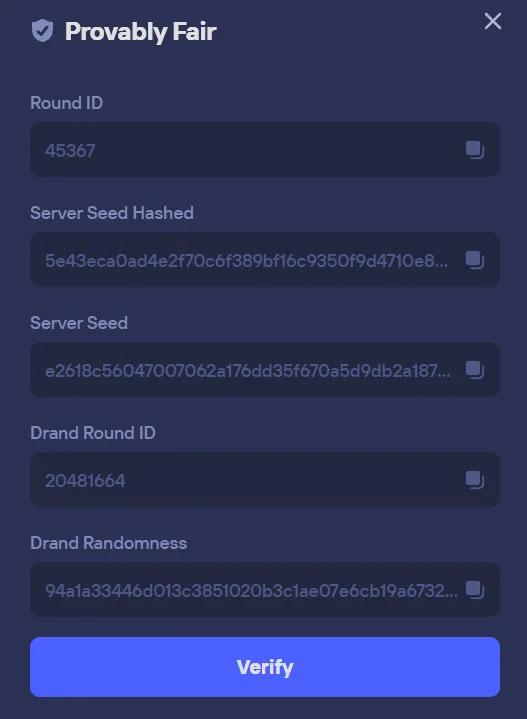
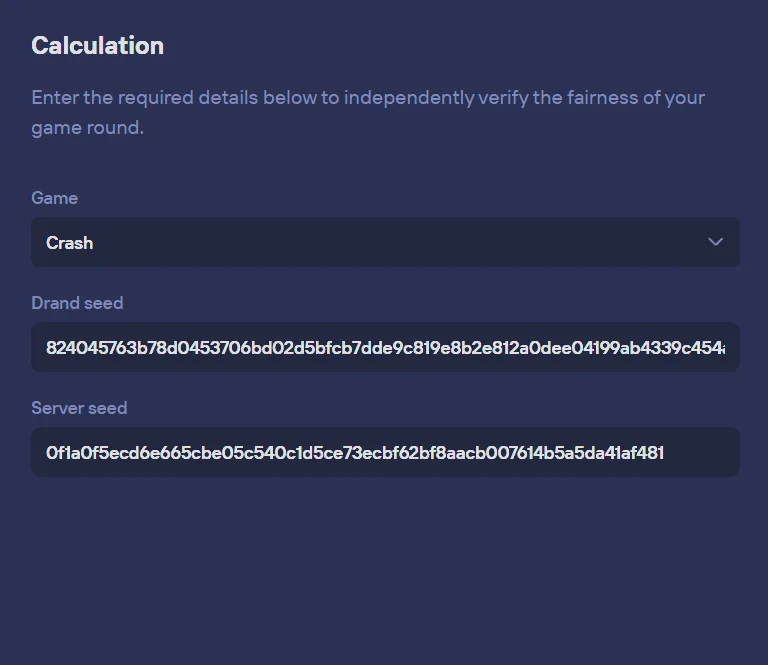
Gambling math is the set of probability and expectation formulas that determine every bet’s long-run value. The core definition to remember: the house edge is the percentage of each wager the casino expects to keep over infinite play, and it is simply 1 – RTP where RTP is the payout percentage. Every licensed game publishes a theoretical RTP, and every provably fair round uses a server seed hash that can be checked after the round is complete. This page is a quick reference for the formulas you actually need — not a lecture in statistics. You will learn how to calculate expected value, house edge, variance, and stake sizing using Kelly, and how to verify those numbers using seeds, hashes, on-chain data, and regulator license registers. If you run across a term you do not recognize, our gambling math glossary defines it in plain language. For full walkthroughs of applying these formulas in practice, see our gambling guides. The goal is not to remove uncertainty — that is impossible — but to make sure the uncertainty you face is exactly the mathematical edge you agreed to.
Core Formulas: Expected Value, House Edge and RTP
The three formulas you will rely on most are expected value, house edge, and return-to-player percentage. Each can be calculated from first principles and checked against published data.
Expected Value (EV)
EV shows what a bet will win or lose on average per wager. For a binary bet:
EV = (Probability of Win × Net Payout per Win) – (Probability of Loss × Amount Lost per Loss)
If you bet €1 on a coin flip at even odds (2.0 decimal from a sportsbook), your EV is (0.5 × €1) – (0.5 × €1) = €0. The game is fair. When a casino pays 0.96 on a win, your EV is (0.5 × €0.96) – (0.5 × €1) = –€0.02. That €0.02 is the house edge.
House Edge
House edge is the casino’s advantage per wager, expressed as a percentage. It is the negative EV divided by the stake:
House Edge = (EV / Stake) × 100
In the example above, house edge is –(–0.02 / 1) × 100 = 2%. The mathematical relationship between RTP and house edge is:
House Edge = 100% – RTP
Return to Player (RTP)
RTP is the theoretical percentage of total stakes a game returns to players over infinite rounds. It is calculated as:
RTP = (TotalReturns / TotalStaked) × 100
No single session will hit RTP — actual short-term volatility is described by variance, covered in the next section. What you can verify right now:
- The game’s published RTP in its paytable or provider documentation.
- The long-run payout percentage in an on-chain casino’s public ledger, which is directly observable.
- The RTP reported by the regulator or independent testing lab from the game provider.
Before you play, check that the game’s listed RTP matches the formula in the provider’s help file. Many games have different RTP versions per casino, so do not assume the number you read on a review forum is the one installed.
| Formula | Purpose | Verifiable Source |
|---|---|---|
| EV = (P_win × payout) – (P_loss × stake) | Average profit/loss per bet | Computed from odds or game math |
| House Edge = 1 – RTP | Casino advantage | Published RTP, on-chain payout data |
| RTP = total returns / total staked | Long-run payout percentage | Game provider docs, license register audits |
For a quick reference on how odds translate to implied probability, convert decimal odds to percentage with 1 / decimal_odds × 100. American odds use a different formula, but decimal odds are standard in crypto casinos and most regulated European markets. If you want to see how real casinos publish their RTP numbers, browse our casino reviews and check the game tile before you open any title.
Variance, Standard Deviation and Bankroll Sizing
RTP tells you the mean, not the ride. Two slots can both have 96% RTP, yet one pays out small frequent wins and the other only pays jackpots. The difference is variance.
Variance and Standard Deviation
Variance measures how dispersed bet outcomes are around the expected value. Standard deviation (σ) is the square root of variance. For a binary even-money bet with win probability p and net odds b, variance is:
Variance = p × (1 – p) × b²
For a casino game with multiple payout outcomes, variance is calculated from the probability-weighted squared deviations from EV. You rarely need the derivation — what matters is that a higher standard deviation means bigger swings and a longer road to the theoretical RTP.
You can approximate session standard deviation in units of stake using:
σ(session) = σ(bet) × √number_of_rounds
This is known as the square-root of N, or the square root rule in bankroll management.
Bankroll Sizing with Kelly
The Kelly criterion gives the fraction of your bankroll to stake when you have a positive edge. It is:
f = (bp – q) / b
where b is the net odds (profit if you win), p is the probability of winning, and q = 1 – p. If f is negative, no bet should be placed. For casino games where the house has an edge, Kelly output is negative — the mathematically sound response is no wager. If you use it in a positive-EV bonus or promotion, stake only a fractional Kelly (e.g., half or quarter) to reduce variance.
Why Fractional Kelly?
Full Kelly maximizes the expected growth rate of your bankroll but can draw it down severely. Fractional Kelly trades some growth for lower volatility, which is why most advantage players use 1/4 to 1/2 Kelly. For entertainment gambling, use an even smaller fixed percentage.
- Never bet more than 1% of your bankroll on a single round of a high-variance slot.
- Choose games whose volatility you can measure from the paytable or public bet history.
- Use the square-root rule to estimate how many rounds are needed for actual RTP to approach the theoretical value.
- Check the game’s volatility rating in bankroll management guides before placing significant bets.
Variance numbers are published by some game labs and can be independently estimated from hash-verified bet history on a blockchain. The point is not to find a winning strategy — the house edge remains negative in nearly every game. The point is to know how bad the swing can be before your bankroll is gone.
Gambling Math Verification Checklist and FAQ
Use this checklist before you play any game, and apply the formulas above to decide whether the game fits your risk tolerance.
- Confirm the game’s listed RTP from the provider’s paytable or help screen — write down the exact number.
- Check the current server seed hash before the round is played, and verify it after the round using the original seed.
- If the casino is crypto-native, look up the bet result on a block explorer to confirm the on-chain record matches the displayed result.
- Calculate your stake’s EV using the house edge and your exact bet size.
- Compute the standard deviation of the game, then multiply by √number_of_rounds to estimate a plausible swing.
- Set a stake size that is a small fraction of your bankroll — never above 1% per round for volatile games.
- Cross-check the casino’s license in the regulator’s official register, not just the footer logo.
- Track your own results in a spreadsheet and compare them to the theoretical RTP after each session.
What is the single most important gambling math formula?
The EV formula is the most important because it tells you whether a bet is positive or negative on average. In a casino, EV equals –(house edge × stake), so the game always has a negative expected value for the player. The formula itself can be verified against the published RTP; you just multiply the house edge by your stake to see what you are actually paying for the privilege of playing.
How do I verify a provably fair result with math?
Before a round, the casino gives you a server seed hash. After the round, it reveals the unhashed seed and the client seed. You re-run the HMAC-SHA256 (or whatever algorithm the casino publishes) using those seeds and compare the output to the game’s result. If the re-created result matches the one on screen, the math cannot be disputed — unless the casino selected seeds across many rounds, which multiple provably fair algorithms prevent by chaining hashes.
Does a high RTP mean I will win?
No. RTP is a long-run average over millions of rounds. High RTP reduces the house edge, but variance can create long losing streaks even at 99% RTP. To know how long your bankroll will survive, you need the game’s variance and the square-root rule, not just the RTP number. Use the formulas above to estimate the required sample size: for a game with 2% house edge, you need tens of thousands of rounds for actual payout to approach RTP.