
Why Most Casino Reviews Fail the Verification Test
How Does This Compare to 0% House Edge Protocols?
Audited 100% RTP
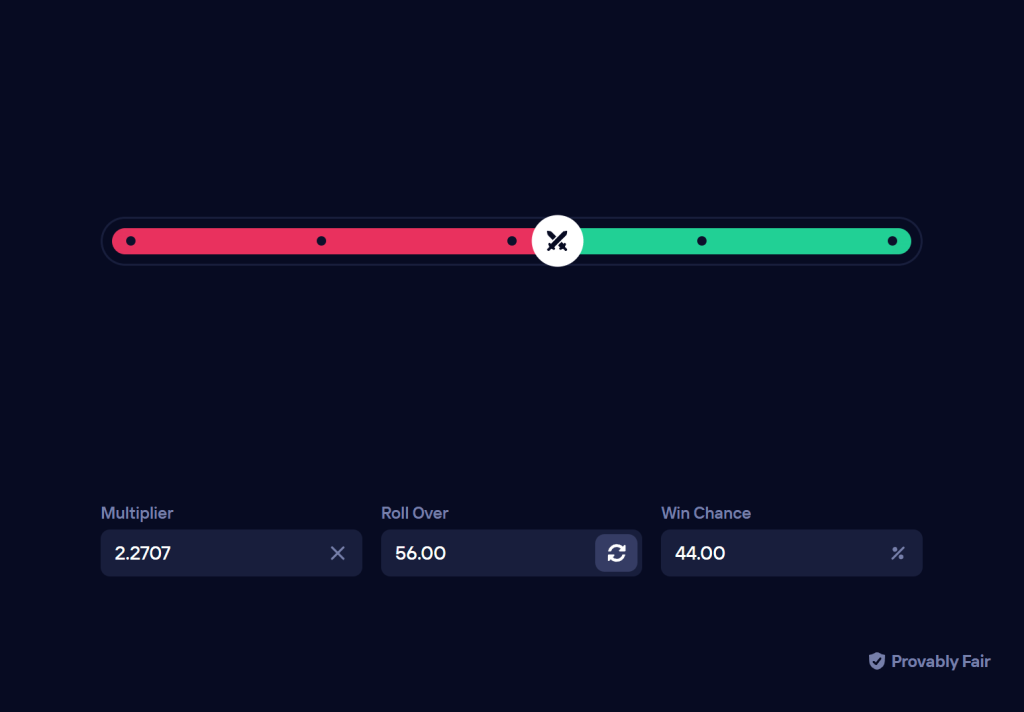
Instead of standard 1.00% to 4.00% casino house margins, compare with mathematically verified 100% RTP Originals (0.00% House Edge) on Duel Casino:

How to Read a Casino Review: The Skeptical Player’s Framework
A casino review is not a product review; it is a set of claims about how an operator handles your money, runs its games, and obeys the law. In 2026, most reviews are published by affiliates who earn commissions on deposits, so the incentives behind the words are worth more scrutiny than the words themselves. A skeptical player needs a framework for separating claims that can be checked against public records from claims that are purely marketing. This guide gives you that framework: you will learn how to verify RTP ranges, hashed game seeds, provably fair algorithms, license-register entries, and on-chain settlement records. The core definition to keep in mind is this: a review is only as valuable as the primary evidence it points to. If a review tells you that a slot “pays well” but does not show you the game-specific RTP from the auditor or the operator’s published configuration, the statement is unverifiable. If a review tells you a casino is “licensed” but gives no regulator name or registration number, the statement is unverifiable. By the end of this page, you will have a repeatable checklist that works regardless of whether the reviewer is an affiliate, a journalist, or a bot. For a real-world starting point, compare our casino reviews against the evidence they cite.
Deep Dive: Verify the Fairness Stack — Seeds, Hashes, and RTP Math
Every game you play in a licensed casino is a piece of software with configurable parameters. A review that calls a game “fair” without specifying which parameter is being tested is doing you no good. There are three independent layers you can check.
1. RTP Math is a Long-Run Parameter, Not a Session Outcome
Return-to-player (RTP) is a statistical expectation over millions of rounds. If a review claims “96.5% RTP,” ask for the game-specific configuration file or the auditor’s certificate. In many regulated markets, the operator must publish the exact RTP set for each game. A skeptical player should check whether that percentage matches the actual game settings, not the average of other casinos’ settings. The same game title can have different RTP versions depending on the jurisdiction or operator. If a review does not mention the game version or the source of the number, treat the claim as a lead, not a fact.
2. Provably Fair Seeds Should Be Checked Before You Bet
For games that advertise provably fair logic, the operator should give you a hashed server seed before the round, and reveal it after the round. That process lets you compute the same result using the seed and the client seed. A review should explain how to access these fields, not just say “provably fair.” In 2026, several leading operators publish seed-verification tools on their own sites; a good review links to those tools or shows the arithmetic. For technical terms, see the glossary entries on server seed, client seed, and nonce.
3. Independent Audits Should Name the Methodology
Audits are useful only if the methodology is public. Check whether the auditor is accredited, whether the test used the actual game build, and whether the report covers a version that is still live. If the reviewer cites “certified by an independent lab” without naming the lab or showing a report number, that sentence is a placeholder, not evidence.
| Claim Type | What to Ask For | Where to Verify |
|---|---|---|
| RTP “96.5%” | Game-specific RTP value, game version, audit date | Operator game info page, auditor report, regulator site |
| Provably fair | Hashed seed, client seed, nonce, verification formula | Operator verification page or open-source script |
| Independent audit | Accreditation name, report number, test date | Auditor’s registry or regulator database |
Use this table as a lens. Every time a review makes a fairness claim, place it in one of the three columns. If the review does not provide the specific evidence required by the row, you have not found a verified fact; you have found an advertising sentence.
Deep Dive: Licensing, Payment Records, and On-Chain Proof
Fairness is only half of the equation. A casino can offer a provably fair game and still steal your winnings through withdrawal policies. Reviews rarely cover this with enough specificity, so you need to apply the same evidence standard to payment and licensing claims.
Licensing: Read the Register, Not the Footer
A license claim should include the regulatory body, the license number, and the jurisdiction. Do not assume the regulator’s website is the first result on a search engine; go directly to the official register. For operators holding licenses from the Malta Gaming Authority or the UK Gambling Commission, the registers are public. You can search by company name and confirm the license status. If the review only says “fully licensed,” ask yourself: licensed where? Some offshore regulators do not publish an accessible register, which is a risk signal rather than a neutral fact.
Withdrawal Records and Payment Speed: What Is Provable?
Withdrawal speed is often based on user reports, which cannot be independently checked if the user vanishes. A better approach is to look at the operator’s terms: maximum withdrawal, processing time, and verification requirements. For tournament payouts or crypto withdrawals, blockchain explorers provide an immutable record. If the review refers to “instant withdrawals,” you should be able to confirm the on-chain transaction hash or at least the operator’s stated withdrawal policy. Without a hash or a policy link, the claim is anecdotal. For advice on sizing your deposits around whale fees and slow periods, see the bankroll management guide.
Responsible Gambling and Player Protection: Licensing, Not Labels
Responsible gambling tools (deposit limits, self-exclusion) should be mentioned in licensing terms. A review that praises “responsible gambling” without mentioning which tools are actually available is incomplete. Verify the tool list against the operator’s help page, and confirm that the regulator requires them.
- Check the official license register, not the casino’s “About Us” page.
- Search the license number and cross-check the legal entity name.
- Review the withdrawal policy and maximum payout table in the terms.
- For crypto winnings, ask for a transaction hash to verify on-chain payment.
- Confirm that self-exclusion and deposit limits are listed in the operator’s help center.
Each of these checks maps to a public source: the license register, the terms page, or the blockchain. When a review omits the source, reclassify the claim as marketing.
Your Pre-Deposit Checklist and Frequently Asked Questions
Run this checklist before you trust a review or a casino. Each item is designed to be verified in under ten minutes.
- Open the operator’s terms and copy the exact legal entity name and license number.
- Visit the regulator’s official register and confirm the license is not suspended or expired.
- Open a provably fair game and generate a random seed; copy the hashed server seed before betting.
- Check the game-specific RTP in the audit report or the game information page, and compare it to the review.
- Search the operator’s site for a verification tool that lets you replay past rounds.
- For crypto deposits, note the deposit transaction hash and confirm confirmations on a block explorer.
- Set a deposit limit from the operator’s responsible gambling page before your first deposit.
- Review the withdrawal policy for any hidden wagering or processing fee language.
Q1: How do I know a provably fair game is actually hashing the seed correctly?
You do not have to trust the operator. After the round, the operator reveals the server seed. You can take the seed and client seed, combine them with the nonce using the documented hash function, and recalculate the result. If the recalculated result matches the outcome shown, the game was deterministic. The review should show you this formula or link to a tool that does it for you. If no tool or formula exists, the claim “provably fair” is not verifiable.
Q2: Is a casino review ever a reliable source for RTP numbers?
Yes, but only when the review links to the same primary source you would check yourself: the operator’s game configuration page, the auditor’s report, or the regulator’s published data. If the review reports a number without a source, verify it independently before treating it as fact. RTP percentages are not universal; the same slot title can be offered at a higher or lower setting depending on the operator and jurisdiction.
Q3: What is the strongest on-chain evidence that a casino paid a withdrawal?
The strongest evidence is a public transaction hash on the relevant blockchain, visible in a block explorer, sent from the casino’s withdrawal address to your address. A review that says “we tested the payout” should include the hash or at least address details. Without that, a tested-payout claim is just a screenshot, which can be edited. Always verify the hash independently and confirm the amount and receiving address before you consider the claim proven.