
Casino Bonus EV Workbook: Calculate Expected Value Before You Claim
Why Most Bonus Claims Are -EV Before You Click Claim
How Does This Compare to 0% House Edge Protocols?
Audited 100% RTP
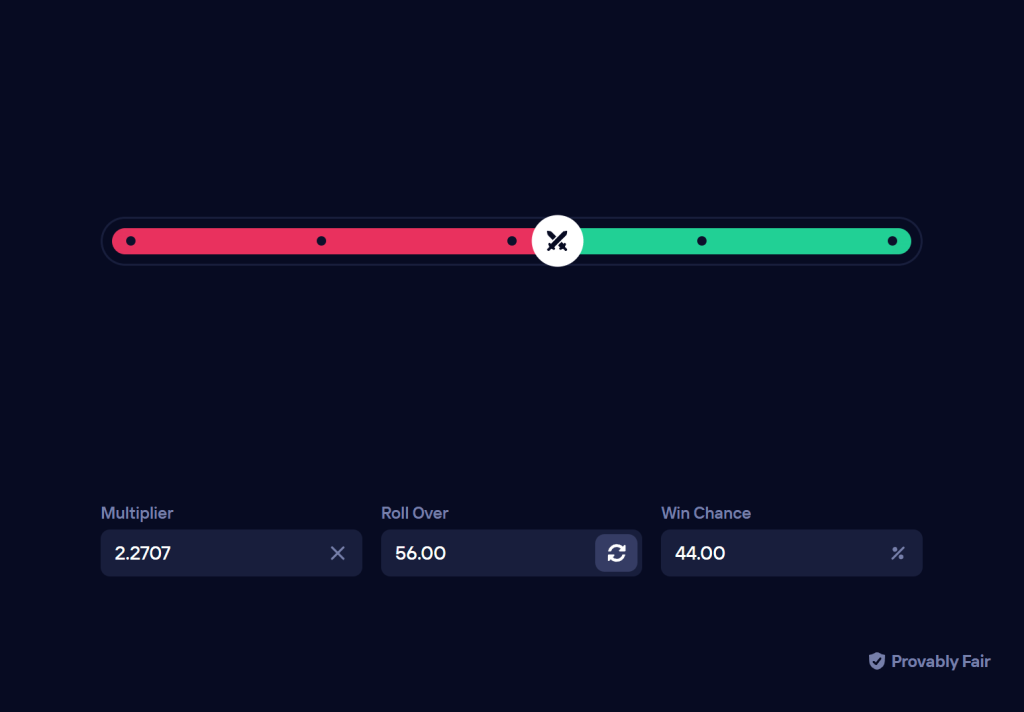
Instead of standard 1.00% to 4.00% casino house margins, compare with mathematically verified 100% RTP Originals (0.00% House Edge) on Duel Casino:

Expected value (EV) is the only honest way to compare casino bonuses. EV is the mathematical average outcome of a claim if you repeated the exact same deposit, bonus, and playthrough strategy thousands of times. For a casino bonus, the core equation to memorize is: EV = Bonus − (Wagering Requirement / Game Weight) × House Edge. Every input in that formula comes from publicly inspectable sources: the bonus terms page, the game’s published return-to-player (RTP), the game weighting table, and the provably fair seed data behind each spin. If a casino refuses to publish the RTP of eligible games, or does not expose the server seed and hash chain for verification, then the EV cannot be computed in principle—and you should treat the bonus as unquantifiable risk. This workbook walks you through each input, gives you a repeatable formula, and ends with a pre-claim checklist. Use it with the bonus terms glossary and the provable fairness verifier to keep every claim verifiable.
Build the Workbook: Every Input You Must Pull Before Claiming
Core Variables and Formula
Let B be the bonus amount, D the deposit, WR the total wager target (usually the multiplier times D+B), W the game weighting (100% = 1.0), and RTP the published return percentage of the exact game you plan to play. The basic EV model is:
EV = B − (WR / W) × (1 − RTP)
This formula assumes you complete the full playthrough at a constant house edge and can cash out all remaining balance. If a max cashout cap exists, replace the expected final balance with the cap where applicable. The more advanced version includes bust probability, which requires simulation; for a first-pass, the formula above tells you whether the bonus has a positive or negative mathematical margin.
Verify Each Input
| Input | Where to Verify | What to Check |
|---|---|---|
| Bonus amount (B) | Bonus terms page | Exact percentage and cap, not the promo banner. |
| Wagering requirement (WR) | Terms / bonus policy | Multiplier and whether it applies to deposit, bonus, or both. |
| Game weighting (W) | Weighting table in terms | Slots 100%, table games 5–20%, live dealer often 0%. |
| RTP of selected game | Game rules or fairness ledger | Find the exact RTP%, not the provider’s generic range. |
| Max bet and cashout cap | Bonus terms | Any limit that truncates upside or voids wagering. |
| Provable fairness | pf verifier | Verify server seed hash, client seed, nonce, and outcome. |
Always pull the terms before you deposit, and save a dated screenshot. Shared bonus screenshots on forums are not evidence; the URL and version in your own account matter. You can cross-check operator behavior patterns in casino reviews and see published audit trails in the fairness ledger.
Worked Example: 100% Match Bonus at 35x Playthrough
Step-by-Step EV Calculation
Suppose the bonus page offers a 100% deposit match up to $200, with a wagering requirement of 35x (deposit + bonus). You plan to deposit $100. Your D = 100, B = 100, and total wager target = 35 × 200 = $7,000. You identify a slot with a published RTP of 96.5%, so the house edge is 3.5%. For a slot counted at 100% weighting, W = 1.0. The EV before any ceiling clauses is:
EV = 100 − (7000 / 1) × 0.035 = 100 − 245 = −$145
That negative number is the expected cost of entertainment, not a guarantee. If the same slot had an RTP of 98%, the house edge drops to 2% and EV = 100 − 140 = −$40. The lesson is that RTP deltas of 1.5 percentage points change loss expectancy by double digits on a $7,000 playthrough.
Weighting and Caps Change the Math
| Scenario | RTP | Weight | Effective Turnover | EV |
|---|---|---|---|---|
| High RTP slot | 98% | 100% | $7,000 | −$40 |
| Standard slot | 96.5% | 100% | $7,000 | −$145 |
| Blackjack | 99.5% | 10% | $70,000 | −$250 |
- If blackjack at 99.5% RTP counts only 10% toward WR, your effective turnover becomes $70,000 and EV = 100 − 70,000 × 0.005 = 100 − 350 = −$250.
- If a 97% RTP slot counts 100%, EV = 100 − 210 = −$110.
- If the casino imposes a $5 max bet, your risk of ruin increases sharply and the simple EV model underestimates loss frequency; simulate or avoid.
Use this same workbook for no-deposit free spins, reload bonuses, and cashback offers. For each offer, recompute from scratch. Bonus terms change, game RTP listings change, and a ‘100 free spins’ offer may only apply to a 90% RTP slot with a 3x wagering on winnings—which is a materially different EV from the headline.
Your bankroll strategy should treat bonuses as expenses when EV is negative and as investments only when the full formula, including caps and game weights, remains positive. See bankroll management fundamentals to size a stake that survives the variance inset of a long wagering requirement.
Pre-Claim Checklist and Bonus EV FAQ
- Save the exact bonus terms URL and a dated screenshot before any deposit.
- Extract the wagering requirement multiplier and the base amount (deposit + bonus or bonus only).
- Find the game weighting table; confirm your chosen game counts 100% or compute the adjusted turnover.
- Verify the published RTP for the exact game variant and provider; if unavailable, use a conservative 96% or do not claim.
- Run the bonus through the formula: EV = Bonus − (WR / weight) × (1 − RTP).
- Check max bet, max cashout, excluded payment methods, and time limits; any of these can flip a positive EV to negative.
- Confirm the operator’s license in the regulator register and read the complaint breakdown in our casino reviews.
- Before real money, test the provably fair chain on a free bet with the pf verifier to ensure seeds and hashes are exposed.
Why is my bonus EV negative almost every time?
Because the house edge multiplied by the full playthrough is usually larger than the bonus value. A $100 bonus with 35x deposit+bonus on a 96.5% slot costs $245 in expected turnover loss, not $100. The casino relies on most players not completing the wager or losing before the wagering finishes. Use the formula to quantify how much you are expected to lose for one round of entertainment.
Can I verify the RTP of a provably fair slot?
You can verify that the outcome and seed derivation were fair using a verifier, but RTP is a long-run statistical property that cannot be proven from a single session. What you should verify is that the casino has published the RTP for the exact game version and that the fairness ledger contains the expected seeds and hashes. The fairness ledger page shows which operators actually make those records available.
Does a lower wagering requirement always mean better value?
Not if the game weights or RTP are worse. A 20x playthrough on a 94% RTP slot can still be worse than 40x on a 99% RTP game. Always compute effective turnover as WR divided by game weight, then multiply by the house edge. The bonus amount and cashout cap then determine whether the residual value is worth the risk.