
How to Read Bonus Terms as a Financial Contract
How Does This Compare to 0% House Edge Protocols?
Audited 100% RTP
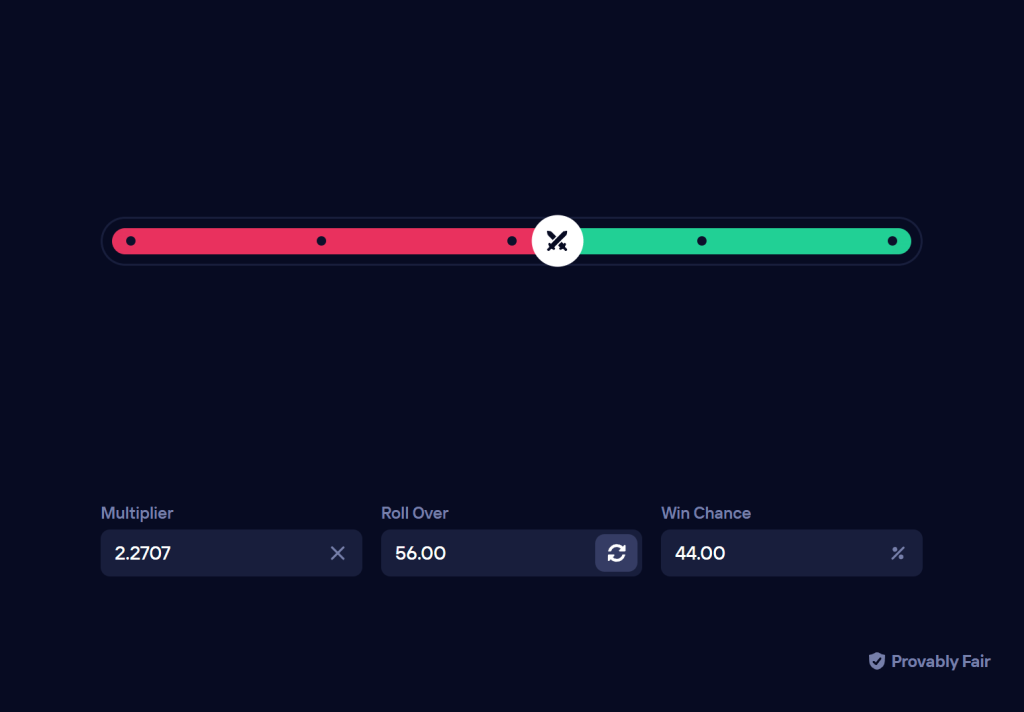
Instead of standard 1.00% to 4.00% casino house margins, compare with mathematically verified 100% RTP Originals (0.00% House Edge) on Duel Casino:

Casino Bonus Terms Decoder: Every Clause That Affects Your Money
A casino bonus is not a gift; it is a set of conditional cash flows where the house writes the rules. In 2026, the gap between ’35x wagering’ as a headline and the actual cash-out value of a bonus can be huge, because the real math sits in the clauses around contribution weights, max bet, game restrictions, and win caps. Before you accept any offer, you must read the terms as a financial contract and verify them against data you can check: license registers, game provider RTP tables, provably fair seed hashes, or on-chain records. The core definition is simple: the true bonus value is the bonus amount minus the expected cost of satisfying every restriction attached to it. That cost depends on the eligible game set, the house edge of that set, and the sequence in which you are allowed to play. This page decodes every clause that affects your money and gives you a verification checklist for any operator. For quick explanations of the underlying vocabulary, see the casino terms glossary, then use the math below to turn any promotional sentence into a number you can trust.
Wagering Requirements and Effective Return: The Math Behind the Bonus
Wagering is the clause that changes your money first. A 35x requirement on a €100 bonus is not a €3,500 turnover problem; it is an expected-loss problem. If the eligible games have an average house edge of 2.7%, the expected loss during wagering is 3,500 × 0.027 = €94.50. That leaves only €5.50 of expected value before considering deposit risk and any win cap. In 2026, many operators now use ‘all games contribute 100%’ but also exclude high-RTP slots, so the real contribution-weighted RTP is what determines the EV. You should calculate each offer using this formula: EV ≈ Bonus – (Wagering × HouseEdge) – Additional Costs. Additional costs include max bet penalties, win caps, forced game restrictions, and the opportunity cost of locking up your bankroll.
What each wagering-related clause actually does
- Multiplier: defines total turnover. Always check whether it applies to deposit + bonus or bonus only.
- Contribution weight: each game category contributes a percentage to wagering. If slots contribute 100% and live casino contributes 5%, your effective turnover has to be 20x the live-casino stake.
- Maximum bet while wagering: if the cap is €5, any bet above that can void the bonus. This matters because losing a high-variance slot session can be invalidated even if you were net up.
- Game exclusion list: the RTP of the remaining game set may be far below the headline RTP.
- Time limit: a 7-day limit can force you into higher-volatility games, increasing your effective risk.
| Clause in the terms | What it changes for your money | How to verify it |
|---|---|---|
| Wagering multiplier | Total expected loss | Multiply by the average house edge of all eligible games. |
| Contribution percentages | Effective turnover requirement | List every game category and weight; calculate the weighted turnover. |
| Max bet while wagering | Abruptly voids bonuses | Search the terms page for ‘max bet’ or ‘maximum stake.’ |
| Win cap and cashable vs sticky | Upper bound and lower bound of your payout | Read the phrases ‘maximum cashout’ and ‘bonus amount deducted.’ |
| Eligible RTP floor | House edge in the EV formula | Check game provider paytables or casino-provided RTP information. |
Use this framework before any bonus. For more on turning bonus EV into a bankroll plan, see the bankroll management guide.
Hidden Clauses: Max Bet, Win Caps, Payment Restrictions, and How to Verify Them
Most players read the multiplier and ignore the words that cost them the most. The phrase ‘maximum bet with an active bonus is €5’ can turn completing the wagering in one lucky session into a violation. The phrase ‘winnings from the free spin are capped at €50’ caps the right tail of your distribution; in some cases that cap makes the bonus negative EV before you even make a deposit. In 2026, the key is to treat every non-math phrase as a conditional clause with a trigger.
Clauses that are easy to trigger by accident
- Max bet: If you are on a hot streak and raise your stake to €10, the bonus is void even if you then finish wagering. Check the limit before every session.
- Prohibited bet patterns: Some terms void bonuses for ‘bonus buying’ outside of eligible slots, huge low-risk wagers, or strategies like Martingale.
- Payment method restrictions: bonuses may be unavailable if you used Skrill/Neteller or a cryptocurrency method that the casino flags; check terms and license register for deposit method rules.
- Country restrictions: If you are in a restricted jurisdiction, the bonus may be void without a clear notification; this is a licensing issue, not a math issue.
What you can verify in 2026
Do not accept ‘trust us.’ If the casino is licensed, the license register lists the legal entity and often includes the dispute mechanism. If a game claims a certain RTP, the game provider publishes it or the server-side RNG reports can be checked via a reset log. If the casino uses provably fair systems, you should be able to check the server seed hash before a round and the client seed after the round; the same hashed algorithm should be described in the terms. For crypto bonuses, the ‘casino wallet’ address should be visible on-chain for deposits and withdrawals, and any bonus payout smart-contract terms can be audited. When an operator updates its terms, a good rule is to keep a dated screenshot of the terms page before you claim. For material rule changes, see casino news and compare against your screenshot.
This layer is where actual money changes hands. Casino reviews on verification-first sites will show whether the operator’s advertised RTP and bonus math matches reality.
Verification Checklist and FAQ
Use the checklist below before accepting any bonus. Every action is designed to be verifiable on your side without inside information.
- Read the full bonus terms from a dated page and save a screenshot; verify the URL and the date in your own records.
- List the wagering multiplier and confirm whether it applies to deposit + bonus or bonus only.
- Find the contribution percentage for each game category you plan to play; calculate the effective turnover.
- Search for the exact phrases ‘max bet’, ‘maximum bet’, and ‘abuse’ and note any stake limit during wagering.
- Locate the win cap and the ‘sticky bonus’ clause: know whether your cashable amount is deposit+win or deposit+bonus conversion.
- Look up the licensed entity in the relevant license register and confirm the operator is the named legal entity.
- If the bonus is crypto or provably fair, verify the current server seed hash and the hashing method before you play; store the hash locally.
- Run the EV formula: Bonus minus (wagering × contribution-weighted house edge) minus expected breach costs, and only accept if the result is positive.
What does ’35x wagering’ actually mean?
It means you must place bets whose total stake equals 35 times the qualifying amount before you can withdraw winnings. It does not mean you get 35 chances. If the qualifying amount is €100, you must turn over €3,500. The question is what games you are allowed to play and at what house edge. Use the game RTP and contribution weight to convert the turnover into an expected loss.
Are no-deposit bonuses worth taking in 2026?
No-deposit bonuses have the smallest downside, but their win caps and high wagering requirements can turn them into a near-zero lottery. Check the same contract clauses as above, with special attention to the maximum cashout and eligible RTP. If the terms are clear, can be screenshot, and the operator is licensed, a no-deposit bonus can be a low-cost way to test the cash-out process. Only claim them from operators whose verification process is already documented in trusted reviews or license registers.
Can I verify a casino’s RTP or provably fair results?
Yes, in three ways. First, game providers publish RTP values in their game information; the casino should be able to show the same figure. Second, for provably fair games, you can verify that the revealed server seed hashes to the committed hash before the round and that the client seed was selected by you. Third, for blockchain games, the round result and payout transaction is on-chain, so you can test the payout calculation with a simple script. If none of these data points are available, the RTP and fairness claims cannot be audited and should be treated as unverified.