VPN Gambling and Geo-Restrictions: The Enforcement Reality in 2026

the author
ProvablySmart Research Desk
date post
Aug 28, 2026

Share


Geo-restrictions remain a standard feature of licensed online gambling, but the practical enforcement landscape changed significantly by 2026. Players who use VPNs to bypass regional blocks face a more sophisticated detection stack than simple IP lookups. This article reviews the current enforcement mechanisms, the consequences of detection, and the specific checks a player can perform to verify a casino’s actual policy—rather than relying on marketing language.
How geo-blocking is implemented and verified
Modern casino platforms do not rely on a single geolocation signal. The 2026 enforcement baseline combines several independent layers. Each layer produces data that a player or auditor can, in principle, inspect.
IP address and VPN detection
IP addresses are the first filter. Public databases flag known VPN, proxy, and hosting ranges. However, IP-only checks are weak because many residential proxies and VPN providers rent IP space from ISPs that also serve regular consumers. Detection vendors supplement IP lists with:
- Reverse DNS and routing anomalies (e.g., a connection claiming to be in London but arriving from a data center in Frankfurt).
- RTT (round-trip time) profiling against expected latency from the claimed location.
- BGP route consistency checks using upstream ASN data.
Device fingerprinting and browser telemetry
Device fingerprints collect browser properties, installed fonts, screen resolution, time zone, and WebRTC local IP candidates. A mismatch between the VPN egress IP and the device time zone or language is a strong signal. In 2026, WebRTC local-IP leaks are largely patched in modern browsers, but canvas and audio fingerprinting remain active. These fingerprints are not definitive proof of VPN use, but they create a risk score that prompts manual review.
KYC document and payment mismatches
The most decisive enforcement layer is a player’s verified profile. When a casino completes KYC, it collects an official ID, proof of address, and often a selfie. That address is tied to a specific jurisdiction. If a player deposits from a VPN IP but later submits identity documents from a restricted country, the mismatch is visible to compliance staff. This is not a technical bypass problem; it is a records problem. The player has voluntarily supplied a contradiction.
What happens when a VPN is detected
How Does This Compare to 0% House Edge Protocols?
Audited 100% RTP
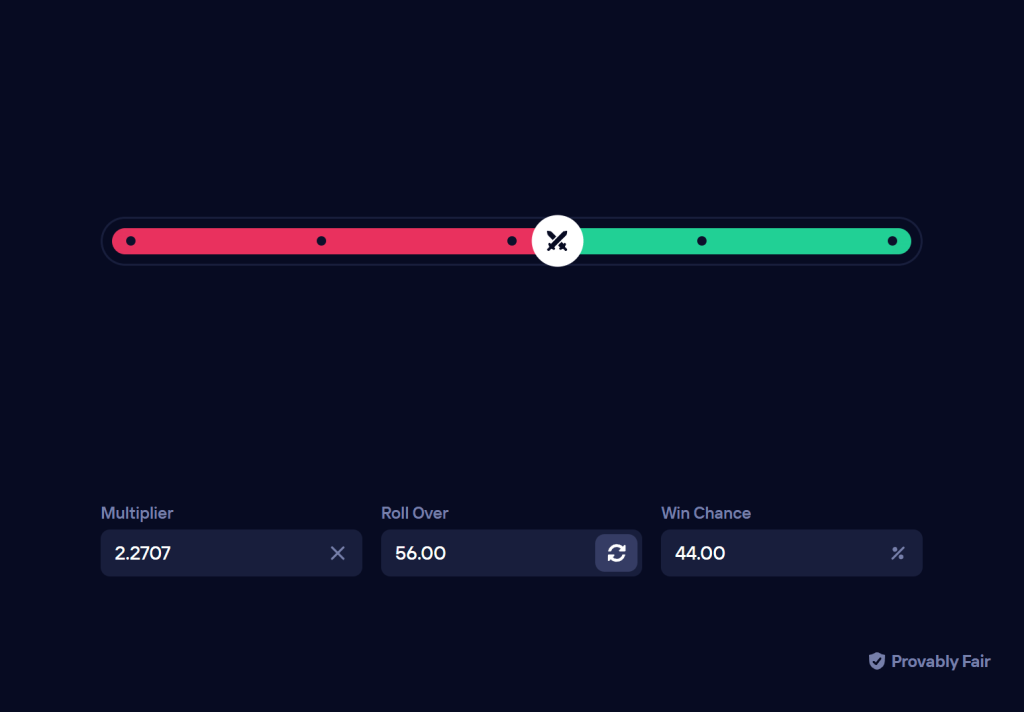
Instead of standard 1.00% to 4.00% casino house margins, compare with mathematically verified 100% RTP Originals (0.00% House Edge) on Duel Casino:

Casino terms typically classify VPN use as a breach of the geo-restriction clause, not as fraud per se. Enforcement outcomes vary by operator and license type. The realistic outcomes in 2026 are:
- Session termination – the player is logged out and prohibited from gaming from that IP.
- Account freeze pending KYC – the casino asks for proof of physical location (utility bill, bank statement, live selfie with GPS metadata).
- Winnings forfeiture – if the terms explicitly state that wins from a non-permitted jurisdiction are void, the operator may reverse bonuses and withdraw funds.
- Reporting to licensing authority – for repeated abuse, some licenses require the operator to file a suspicious activity report (SAR).
The key issue is predictability. A player cannot know in advance whether a specific operator will enforce at the first detection or after a withdrawal request. That is why reading the casino’s terms, specifically the ‘Restricted Jurisdictions’ and ‘Bonus Abuse’ sections, is a mandatory step. Our casino reviews include summaries of those clauses, but players should verify the full text on the operator’s own site before depositing.
Legal and financial exposure for players
Enforcement is not limited to the casino. The legal risk sits with the player’s home jurisdiction. In 2026, the pattern is consistent: countries that ban online gambling also ban payment processing to and from gambling sites. A VPN may hide the IP, but it does not hide the bank transfer or crypto withdrawal.
For crypto-friendly casinos, the transaction is on a public ledger. If the player’s crypto address is associated with a gambling operator’s deposit address, the link is visible to anyone with a block explorer. This is a verifiable fact: you can trace your own transaction and see which deposit address you used. The casino’s terms will state whether they share deposit addresses with sanctions agencies or licensing bodies. In practice, that is rare, but it is not impossible.
Additionally, some national regulators require players to self-certify that they are located in a permitted jurisdiction. Logging in from a VPN while submitting that certification constitutes a false declaration, which can trigger asset forfeiture laws in certain jurisdictions. This is a sober legal point, not a moral one.
What to verify before using a VPN at a casino
If you are evaluating a casino’s geo-restriction enforcement, you can perform several checks without depositing money. The following table summarizes the verification methods and what to look for.
| Verification check | How to perform | What indicates enforcement risk |
|---|---|---|
| Read the restricted jurisdiction list | Open the casino’s terms and find the jurisdiction list | Your country is named; the clause says ‘void bets’ or ‘forfeit winnings’ |
| Inspect the VPN policy statement | Search for ‘VPN’ or ‘proxy’ in the casino’s help center | Explicit ban on VPN use, not just geo-location circumvention |
| Check KYC document requirements | Review the verification steps before deposit | Proof of address is required; a VPN ID mismatch will be flagged |
| Trace a test transaction (crypto) | Send a tiny withdrawal to your wallet and observe confirmations | No issue by itself, but the address is now linked to the casino on-chain |
| Test the casino’s customer support response | Ask ‘What happens if I connect from a different country?’ | Vague or contradictory response; no policy document referenced |
These checks are not bulletproof, but they give you a basis for a risk assessment. If an operator is unwilling to state its VPN policy in writing, that is a negative signal.
The fairness angle: RTP math does not change, but term risk does
A common misconception is that using a VPN changes the house edge or the fairness of a game. It does not. The RTP (return to player) is a mathematical property of the game’s random number generator and paytable. A VPN only changes the network path between your device and the server. It does not affect the seed generation or outcome computation. If a casino uses provably fair hashes, you can verify each result yourself using the published seeds and client seed. That verification process is identical regardless of your IP address.
What changes is the contractual status of your activity. If a player is in a restricted jurisdiction and uses a VPN, the casino may declare the session void, which means the RTP of a game becomes irrelevant because bets are returned (or not) according to the bonus policy, not the game’s mathematical return. This is where the real risk resides: not in the algorithm, but in the terms of participation.
For players who want to understand the math side, our guides cover provably fair verification and RTP calculation. But for geo-restriction questions, reference the operator’s license and the terms you accepted at registration. A licence from a given regulator does not automatically protect players from other countries; it simply tells you which authority supervises the operator’s conduct.
Practical conclusions
In 2026, enforcement of geo-restrictions is best understood as a compliance process, not just a technical wall. The casino’s core objective is to avoid regulatory penalties and maintain its license. That means the enforcement is strictest at the point of withdrawal or KYC review, not at the point of login.
If you choose to use a VPN, you are accepting a specific, documentable risk. You can mitigate that risk only by:
- Using an operator that explicitly permits VPNs (if one exists in your jurisdiction — verify the terms)
- Keeping your KYC documents aligned with the VPN-claimed location (which implies using a true residential address there, not a fake one)
- Depositing only what you can afford to lose if the account is voided — see our bankroll management guidelines
Operators change their VPN policies without public announcements. The only reliable way to stay current is to check the casino’s terms page at the moment you plan to play. General advice from years ago about ‘VPN-friendly casinos’ is almost certainly outdated. Treat all secondhand claims as noise and verify directly.
FAQ
Can a casino detect a VPN if I use a residential proxy?
Detection is not binary. A residential proxy may pass IP-based checks, but the casino will see a mismatch between the proxy IP’s geolocation and your KYC address, payment method, or device time zone. The enforcement event is more likely to happen during withdrawal verification than during gameplay.
Will a casino confiscate my winnings if I used a VPN?
It depends on the casino’s terms. Some operators void winnings and refund only the deposit; others close the account entirely. The enforceable clause is the ‘Restricted Jurisdictions’ section. You should read it before playing and save a copy of the page, because terms can be updated after your registration.
Does using a VPN affect provably fair results?
No. Provably fair games generate outcomes on the server using a seed that is hashed before play. The result is transmitted over your network connection, but the VPN does not alter the seed or the random number generator. You can independently verify each result using the published hash and nonce, regardless of the IP address you use.