Variance Explained: Why RTP Will Not Save a Short Session

the author
ProvablySmart Research Desk
date post
Aug 28, 2026
Share


Return to Player (RTP) is the most quoted metric in casino games, but it is systematically misapplied to short sessions. A slot with 96% RTP does not guarantee that you will lose only 4% of your stake in a 100-spin session. The actual outcome is dominated by variance (standard deviation), and the probability of being ahead after a short session can be surprisingly high—or low—depending on the game’s volatility. This article explains the mathematical relationship between RTP, variance, and session length, and why relying on RTP for short-term decisions is a fallacy.
RTP: A Long-Run Average, Not a Prediction
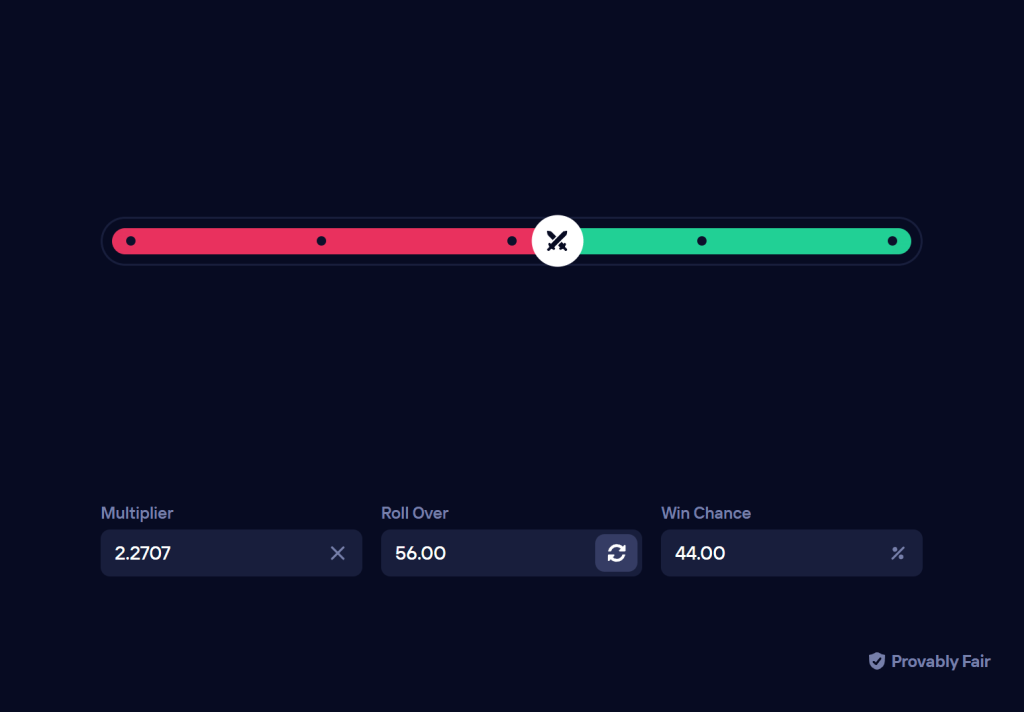
RTP is defined as the expected value of a single bet expressed as a percentage. For a slot with 96% RTP, the house edge is 4%. Over millions of spins, the actual return will converge to 96% (law of large numbers). However, the number of spins required for convergence is enormous—often >106. A typical casino session of 100–500 spins is a tiny sample where the observed return can deviate wildly from the RTP.
Consider a simple coin flip with a 1% house edge (49% win chance, 51% loss). Even after 1,000 flips, the probability of being ahead is ~30% (due to binomial variance). Slots are far more volatile because of large payout multipliers and infrequent big wins. The standard deviation per spin for a typical slot is 2–3 times the bet size, compared to ~1 for a coin flip. This amplifies the dispersion of outcomes.
Variance: The Dominant Force in Short Sessions
How Does This Compare to 0% House Edge Protocols?
Audited 100% RTP
Instead of standard 1.00% to 4.00% casino house margins, compare with mathematically verified 100% RTP Originals (0.00% House Edge) on Duel Casino:
Variance measures the spread of possible outcomes. For a session of n bets, the total variance is n × σ² (where σ is the standard deviation per bet). The standard deviation of the session result is σ × √n. The expected loss is n × (1 – RTP/100) × bet size, but the typical deviation grows as √n. For small n, the expected loss is small relative to the standard deviation, making the outcome highly uncertain.
For example, a slot with RTP 96% and σ = 2.5 (per unit bet):
- After 100 spins: expected loss = 4 units, standard deviation = 25 units. Probability of being ahead ≈ 0.44 (using normal approximation).
- After 1,000 spins: expected loss = 40 units, standard deviation = 79 units. Probability of being ahead ≈ 0.31.
- After 10,000 spins: expected loss = 400 units, standard deviation = 250 units. Probability of being ahead ≈ 0.05.
Only after 10,000 spins does the house edge clearly dominate. For a 100-spin session, variance is 6.25 times larger than the expected loss, meaning the player is almost as likely to be ahead as behind.
Table: Session Probability of Profit for Different Games
The following table shows approximate probabilities of being ahead after 100 bets for typical casino games, assuming flat betting and no skill factor (for blackjack, using basic strategy reduces house edge but variance remains). Values are based on normal approximation and known game parameters.
| Game | RTP | σ per bet (units) | P(Profit) after 100 bets |
|---|---|---|---|
| Low-volatility slot | 96% | 1.5 | ~38% |
| Medium-volatility slot | 96% | 2.5 | ~44% |
| High-volatility slot | 96% | 4.0 | ~46% |
| Blackjack (basic strategy) | ~99.5% | 1.15 | ~48% |
| Baccarat (Banker bet) | ~98.94% | 0.93 | ~46% |
| Roulette (European, single number) | 97.3% | 5.8 | ~48% |
Notice that high-variance games actually increase the chance of being ahead in a short session, because the long tail of large wins can offset the house edge. Conversely, low-variance games like baccarat have a tighter distribution, so the house edge is more noticeable even in 100 bets.
Implications for Bankroll Management
If you enter a session expecting RTP to protect you, you are misjudging risk. Short sessions are essentially random walks with a slight negative drift. The probability of a losing session is always >50% (due to house edge), but the magnitude of loss or gain is unpredictable. This is why bankroll management is crucial: you must size bets so that the variance does not wipe out your entirety before the long run can assert itself.
For any given session length, you can calculate the risk of ruin (probability of losing a fixed fraction of bankroll) using the game’s variance. Our guides provide formulas and calculators for this. The key takeaway: do not use RTP alone to judge a game’s suitability for a short session. Instead, look at the variance index (often called volatility) which is typically listed in game rules or third-party reviews. Casino reviews often include volatility ratings for each slot.
Why Players Misinterpret RTP
Common fallacies include:
- “This slot has 97% RTP, so I should only lose 3% of my money.” False. In a 100-spin session, you could lose 50% or win 100% due to variance.
- “If I play longer, the RTP kicks in.” Partially true, but “longer” means thousands of spins. For most players, a session is far too short.
- “High RTP games are always better.” Not for short sessions. A 96% RTP high-volatility slot may give you a better chance of a quick win than a 99% RTP low-volatility game, because the variance can offset the house edge.
Verification: You can check the RTP and variance of any provably fair game by examining the seed hashes and payout tables. Many casinos publish the theoretical RTP and the maximum win multiplier, which directly relates to variance. For example, a slot with a 10,000x max win will have much higher variance than one with 100x max win. Our news section covers updates on provably fair implementations.
Conclusion
RTP is a long-term expectation, not a short-term guarantee. For sessions of fewer than 1,000 bets, variance dominates the outcome. The probability of being ahead after 100 spins in a typical slot is around 40–45%, even with a 4% house edge. Players should evaluate games based on their variance profile and align it with their session length and bankroll. Always remember: the house edge is a tax on turnover, but variance is the tax on time.
FAQ
What is variance in gambling?
Variance is a statistical measure of the dispersion of outcomes. In gambling, it quantifies how much your actual results can deviate from the expected value (RTP). High variance means larger swings (both wins and losses) over a given number of bets. It is calculated as the square of the standard deviation of the game’s payout per bet.
Why does RTP not matter for short sessions?
RTP is an average over a very large number of bets. In a short session (e.g., 100 spins), the random fluctuation from variance is much larger than the expected loss due to the house edge. For a slot with 96% RTP and σ=2.5, the expected loss after 100 spins is 4 units, but the standard deviation is 25 units—so the result is mostly noise. Only after many thousands of spins does the expected loss become the dominant factor.
How can I reduce the impact of variance?
You cannot reduce the variance of a single game, but you can manage its effect by: (1) choosing low-variance games if you want smaller, more predictable swings; (2) using a betting strategy that does not increase risk (e.g., flat betting rather than martingale); (3) playing longer sessions so that the house edge has more time to assert itself; and (4) ensuring your bankroll is large enough to withstand standard deviation swings. For detailed methods, see our bankroll management guide.