Open-Source Provably Fair Verifiers: What to Look For

the author
ProvablySmart Research Desk
date post
Aug 28, 2026
Share


An open-source provably fair verifier is useful only if the code itself can be trusted, if it reproduces the operator’s results with the same seeds, and if the operator cannot silently change the algorithm after the fact. In 2026, many casino sites publish verifier code on public repositories, but publishing code is not the same as establishing proof. This article outlines the technical requirements that separate a genuinely auditable verifier from a cosmetic feature. The checks below are based on publicly available specifications and standard cryptography; the actual server-side behavior of any operator must still be verified through live seed records and transaction data, as discussed in our provably fair verification guides.
What a verifier must contain to be meaningful
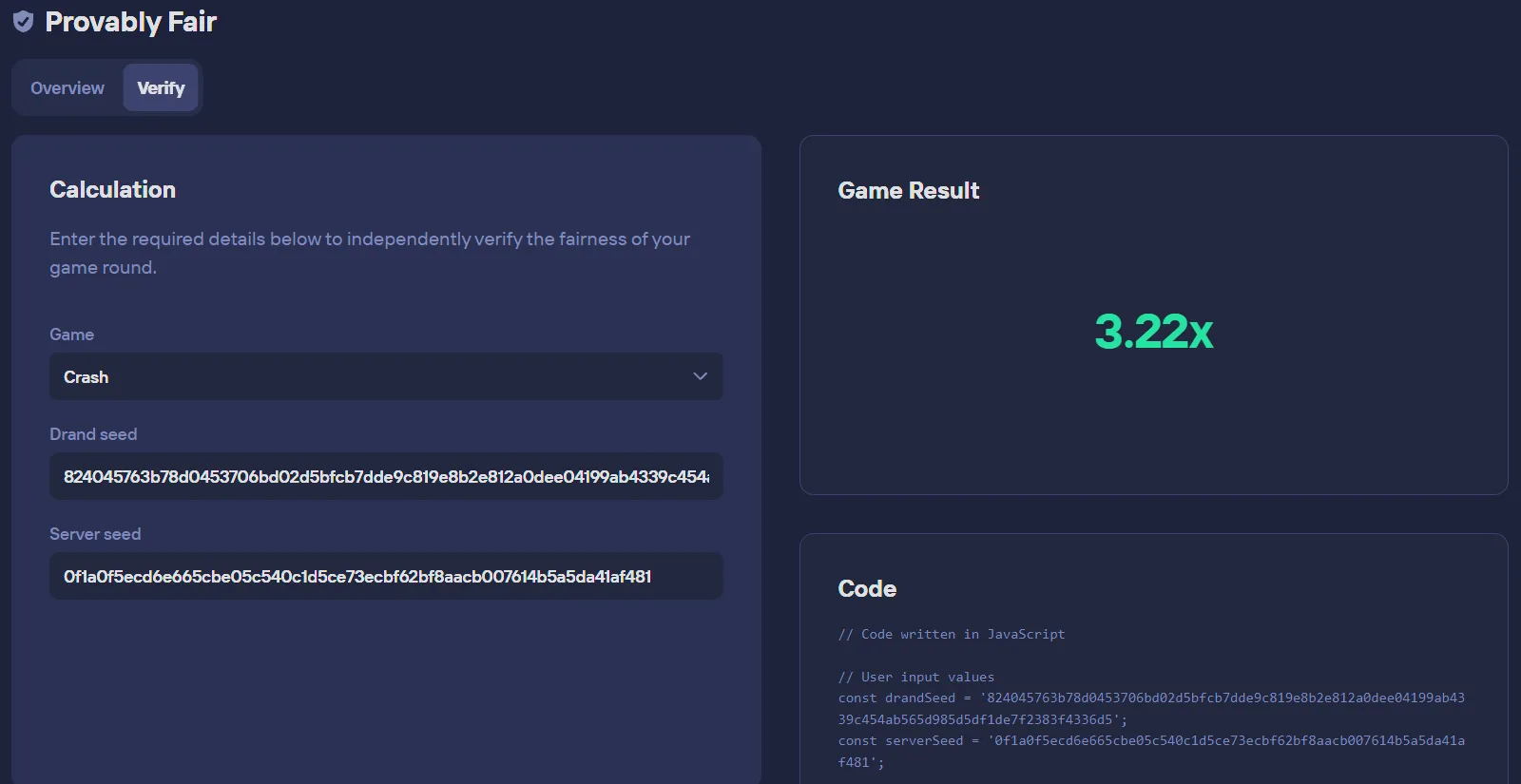
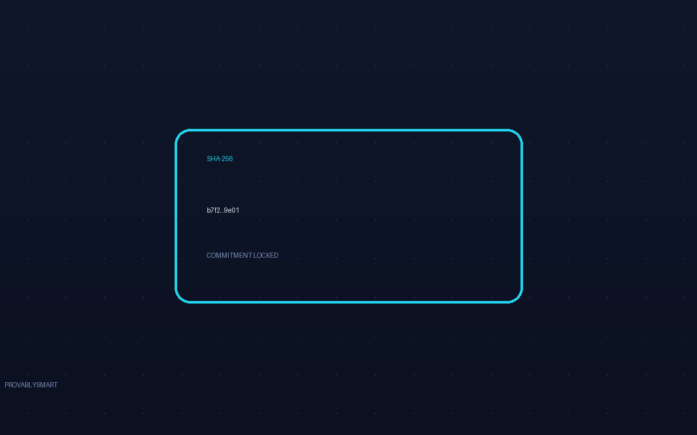
A provably fair system assigns a client seed, a server seed, and a nonce to each bet. The client seed is generated by the player or browser. The server seed is generated by the casino and must be committed to before the player submits and changes their client seed. The commitment is usually a SHA-256 hash of the server seed. The nonce is a counter that increments per bet, preventing two identical bets from producing the same outcome. The verifier must take these three inputs and compute the final result using the same algorithm the casino uses server-side.
At a minimum, a meaningful verifier should expose:
- A seed entry form that accepts the exact client seed, server seed, and nonce in the format displayed by the casino, including any padding or separators.
- A hash commitment display that shows the SHA-256 (or specified hash) of the server seed, so the player can verify the operator’s promised seed matches the one committed to before the bet.
- A deterministic outcome function implemented according to a published specification, such as a SHA-256 based fisher-yates shuffle for cards or a float conversion for crash games.
- A round number or bet ID that unambiguously ties the computed outcome to the bet record in the casino’s database.
If any of these elements are missing, the verifier cannot fully reproduce the bet. For example, a verifier that asks for the server seed without showing its pre-commit hash proves nothing about whether that seed was actually used at bet time. A minimal checklist of input-output verifiability is covered in our bankroll management and fairness tracking guide.
Audit the code before running it
How Does This Compare to 0% House Edge Protocols?
Audited 100% RTP
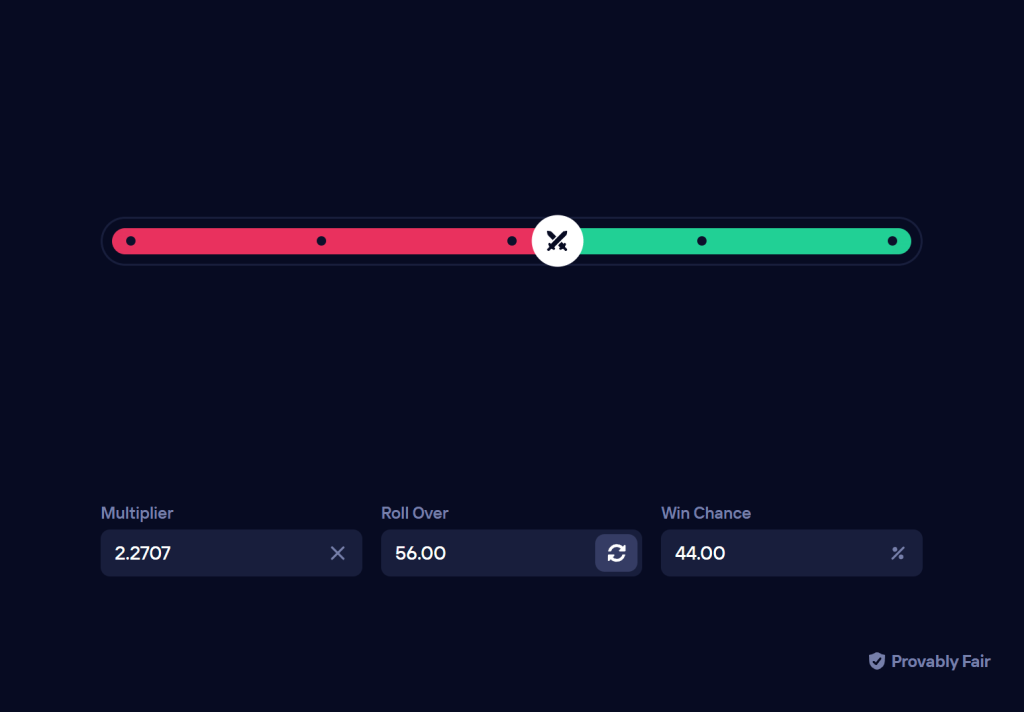
Instead of standard 1.00% to 4.00% casino house margins, compare with mathematically verified 100% RTP Originals (0.00% House Edge) on Duel Casino:
Open-source code must be inspected for four common failure modes: hidden use of a private seed, insecure random number generation, hash truncation, and extra parameters that are not shown to the player.
Hidden seed access. A verifier that runs entirely in the browser cannot access the casino’s server seed unless the player pastes it. However, a malicious verifier could include a callback to a remote server, sending the seed to an attacker who could then predict future outcomes. Check the JavaScript for any XMLHttpRequest or fetch calls, and only run verifiers from a local file if the code is simple enough to audit by hand. For a quick test, open the verifier’s page in a browser, disable network requests using the developer tools, and confirm that the verifier still computes a result.
Randomness source. The verifier does not need to generate randomness, but if it does (for example, when generating a new client seed), it must use a cryptographically secure random source such as window.crypto.getRandomValues(), not the built-in Math.random(). A reproducible verifier should, in most cases, not generate randomness at all; it should only consume the supplied seeds and nonce.
Hash truncation. Many older algorithms hash a server seed plus client seed plus nonce, then convert part of the hash to a number. The verifier must use the same byte ordering, the same number of bytes, and the same decimal conversion function as the server. A change from big-endian to little-endian, or from a 53-bit integer to a 52-bit integer, will produce different results. Compare the verifier’s output to a known reference implementation for several seeds. On a Unix-like system, you can create your own reference in a shell by running printf "%s:%d" "$server_seed" "$nonce" | sha256sum and then applying the documented conversion. If the verifier’s output differs, flag it as broken.
Reproducibility from first principles
The most rigorous test for an open-source verifier is to reproduce its output in an independent environment. Suppose the casino publishes a crash game algorithm: take the SHA-256 hash of the server seed, client seed, and nonce, interpret the first 8 bytes as a 64-bit little-endian integer, then compute the crash multiplier as floor(100000000000000 / (X+1)) / 100, with a capped house edge. To verify a specific bet, you would:
- Combine the three inputs in the exact order the casino documents (server seed + ‘:’ + client seed + ‘:’ + nonce).
- Take the hexadecimal SHA-256 digest of the combined string.
- Read the first 8 bytes of the digest as a little-endian unsigned integer, then divide by 2^52 to get a number from 0 to 1.
- Apply the game-specific conversion and compare the result to the recorded multiplier.
This procedure requires no third-party code. Write a 20-line script in Python, Go, or even a spreadsheet, and run it on a few historical bets. If the verifier uses a different derivation path, such as HMAC-SHA256 or a separate key commitment, the same principle applies: every transformation must be documented in the operator’s fairness statement. Many operators publish their full algorithm in their casino reviews on this site, allowing direct cross-checks between the verifier and the stated specification.
What a verifier cannot prove
Even a perfectly recreated verifier does not prove that the casino played honestly. Open-source code runs client-side and verifies one bet at a time. It cannot prove that the server seed stored in the casino’s database was generated before the player chose the client seed. The pre-commit hash must have been visible to the player before the first bet. In practice, that requires the casino to display the current server seed hash and the server seed itself for future rounds. If a casino allows seed changes without any delay or without showing the old server seed, the verification window may be meaningless.
Another limit is the bet outcome attribution. A verifier can compute the outcome from a given seed and nonce, but it cannot confirm that the casino applied that nonce to the bet in question. The player must record the exact nonce and the displayed result at the moment of the bet. Screenshots and local logs serve as evidence, but they are not cryptographic proof. In case of a dispute, a casino with full server logs can reconstruct the sequence of bets; a player without those logs cannot independently time-stamp that the nonce was used. This asymmetry is inherent to the model.
Finally, the verifier proves the algorithm, not the probability. If the house edge is changed by adjusting the conversion function, a verifier will faithfully compute the new but less favorable outcomes. You still need to read the operator’s published house edge and compare a long run of actual results against the expected RTP distribution. This is why we recommend running a separate statistical check on several thousand past bets using the method described in our news coverage of fairness audits.
Checking operator claims
Before using any verifier, inspect the operator’s own repository for the seed change history. A legitimate operator should make it possible to check the following:
- The exact server seed that was active for each day, revealed after the day ends.
- The SHA-256 hash of that seed, published before the day starts.
- The algorithm specification, with sample inputs and expected outputs.
- The repository’s last commit date and whether it matches the version currently linked to the casino.
If the repository is a mirror of a previous version, or if the casino page links to a different build than the one in the repository, that is a red flag. In our casino review process, we click through the verifier, generate a test bet using a fake seed, and compare the output against a reference implementation. Many operators eventually fix subtle bugs; the ones that do not are best avoided. For bettors who want to maintain a rigorous record, we recommend storing a copy of the verifier code locally and keeping a time-stamped log of each seed change, as outlined in our provably fair auditing workflow.
No verifier is self-authenticating. The code, the seed records, and the algorithm specification form a three-part chain. A player should be able to break all three links only by trusting the operator’s server logs. With an open-source verifier, you can independently reproduce the arithmetic, but you cannot independently reproduce the casino’s internal state. This limitation, and not the code quality, is the real ceiling on what provably fairness can deliver in 2026.
FAQ
Can an open-source verifier be used to prove a casino is honest?
It proves that a single bet’s outcome matches a publicly documented algorithm, given the seeds and nonce. It does not prove that the casino’s seed selection, seed rotation, or house edge were honest. Those require continuous record-keeping and independent statistical analysis.
What is the most common flaw in provably fair verifier code?
The most common flaw is an input formatting mismatch. The verifier may concatenate seeds in a different order or use a different byte encoding than the server. This usually leads to an occasional mismatch for a small number of bets, which is easy to miss if the player verifies only one or two rounds. Always check that the verifier’s output matches a locally reproduced calculation for a sample of at least ten bets, including bets where the nonce changes and where the client seed is reset.
Should I only use verifiers that run locally without network calls?
Yes, if your threat model includes malicious or compromised hosting. Copy the verifier to your local machine, open the HTML file directly, and turn off internet access before running it. If the verifier attempts to contact a server, it will fail; the computation should still work with the provided seeds. Avoid any verifier that requires you to log in or that sends the server seed to a third party.