Multi-Currency Casino Wallets: The Hidden Conversion Fee Tax

the author
ProvablySmart Research Desk
date post
Aug 28, 2026
Share


Multi-currency wallets have become a standard feature in crypto casinos, allowing players to deposit, wager, and withdraw in multiple cryptocurrencies or fiat currencies. The convenience is real, but so is the hidden cost: conversion fees that act as a silent tax on every transaction that crosses a currency boundary. In 2026, with dozens of tokens and stablecoins available, understanding these fees is essential for maintaining expected value. This article breaks down where the fees hide, how to calculate them, and how to avoid paying more than necessary.
How Multi-Currency Wallets Work in Casinos

BTC

ETH

SOL

XRP

USDT

LTC
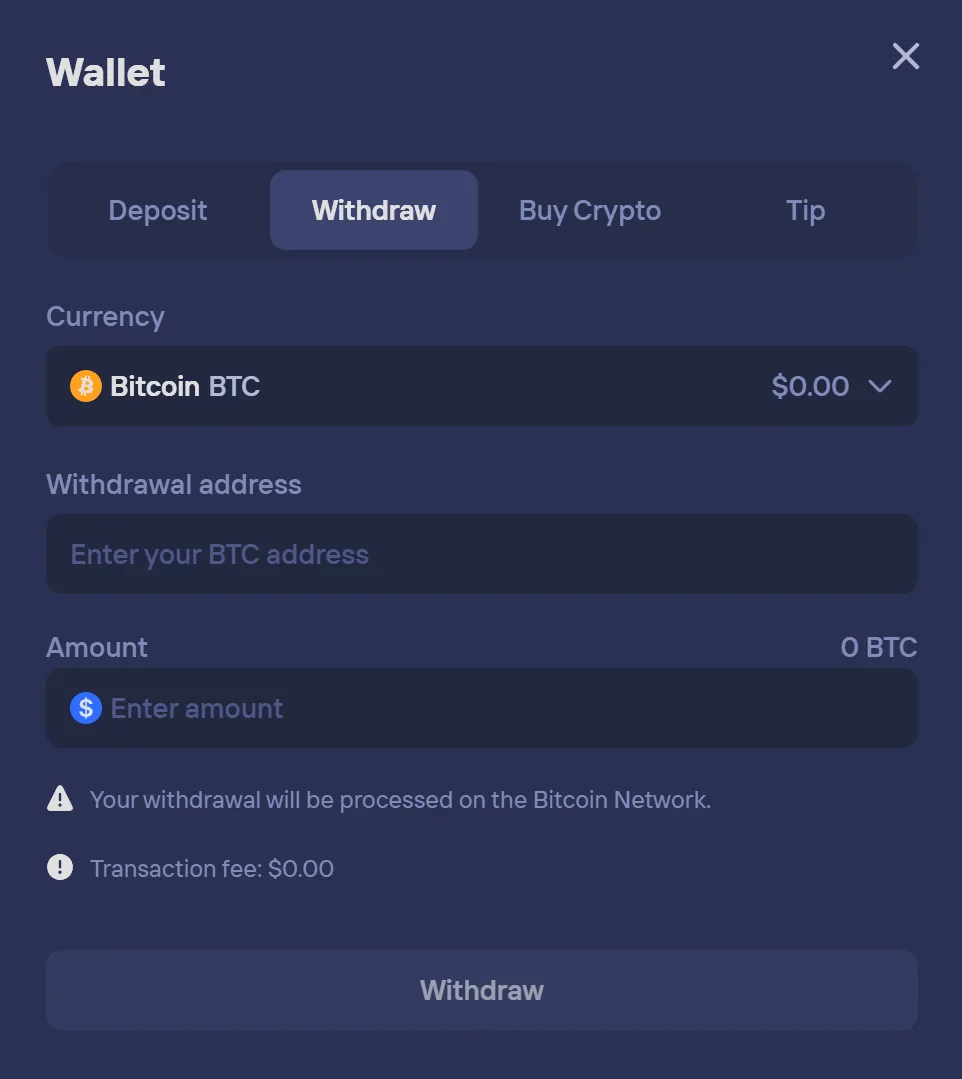
A multi-currency casino wallet is a pooled account that holds balances in different currencies. When you deposit BTC, it is credited as BTC. When you bet on a game that pays in USDT, the casino must convert your BTC to USDT at the moment of placing the bet. Similarly, when you withdraw in a different currency than you deposited, a conversion occurs. This conversion is the source of the hidden tax.
Most casinos do not show the conversion as a separate line item. Instead, they embed the fee into the exchange rate they offer. The advertised “zero fee” on deposits often refers to the blockchain network fee, not the conversion spread. The difference between the market rate and the rate the casino applies is the true cost.
Components of the Hidden Conversion Fee
How Does This Compare to 0% House Edge Protocols?
Audited 100% RTP
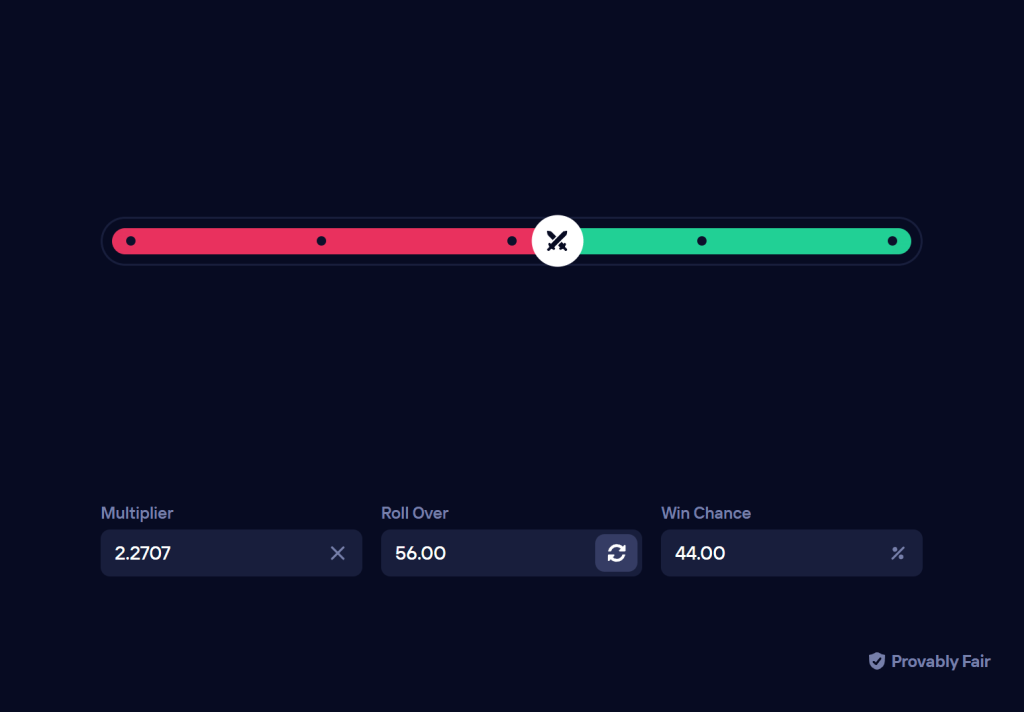
Instead of standard 1.00% to 4.00% casino house margins, compare with mathematically verified 100% RTP Originals (0.00% House Edge) on Duel Casino:
To evaluate the real cost, you must consider three components:
- Exchange rate spread: The difference between the mid-market rate and the rate the casino uses. This can be 0.5% to 3% or more, depending on the currency pair and the operator.
- Network fees: The blockchain transaction fee for moving the asset. These are visible but often misattributed to the casino; they are paid to miners/validators. However, if the casino uses a third-party exchange to convert, you may also pay that exchange’s withdrawal fee.
- Spread on withdrawals: When you withdraw in a different currency, the conversion spread is applied again. Some casinos also charge a flat withdrawal fee (e.g., 0.0005 BTC) which is separate from the conversion.
To verify the spread, you can check the casino’s rate at the time of a transaction against a reliable price oracle like CoinGecko or Binance mid-price. The difference is the fee. For example, if the mid-market rate for BTC/USD is $50,000 and the casino gives you $49,500 for 1 BTC, the spread is 1%.
| Currency Pair | Typical Market Spread (mid) | Common Casino Spread (2026) | Hidden Fee % |
|---|---|---|---|
| BTC → USDT | 0.05% – 0.1% | 0.5% – 2.0% | 0.45% – 1.9% |
| ETH → BTC | 0.1% – 0.2% | 1.0% – 3.0% | 0.9% – 2.8% |
| USDT → USDC | 0.01% – 0.05% | 0.2% – 0.5% | 0.15% – 0.49% |
| LTC → USD | 0.1% – 0.3% | 1.0% – 2.5% | 0.9% – 2.2% |
Note: Actual spreads depend on the operator. Check the casino’s terms or use a test transaction to measure.
Why This Matters: Bankroll Erosion Over Time
For a casual player who deposits $100 and plays one session, a 1% conversion fee is a minor annoyance. But for regular players who deposit, withdraw, and switch between currencies multiple times, the cumulative effect can be significant. If you deposit BTC, play a game that settles in USDT, then later withdraw in ETH, you have paid a conversion fee twice (BTC→USDT, USDT→ETH). Combined with network fees, the total cost can exceed 5% of your bankroll per session.
This hidden tax directly reduces your expected value. In a game with a 99% RTP, a 1% fee on every transaction means your effective RTP drops to 98% — and that’s before considering the game’s house edge. Over many bets, the impact is measurable. For a detailed breakdown of how fees affect long-term outcomes, see our guide on bankroll management.
Comparison with Single-Currency Wallets
An alternative is to use a casino that supports only one currency (e.g., a BTC-only casino). In such a case, no conversion ever occurs — you deposit, play, and withdraw in the same asset. The only fees are network fees. The trade-off: you are limited to games that accept that currency, and you may have to convert your own funds externally (e.g., on an exchange) if you want to switch currencies. That external conversion has its own costs, but it is often lower than the casino’s spread if you use a reputable exchange with low fees (0.1% taker fee).
For players who want to use multiple currencies, a multi-currency wallet might still be convenient, but you must factor in the conversion cost. The best approach is to treat the casino’s rate as a cost of doing business and compare it to the cost of doing the conversion yourself. For example, if you plan to deposit USDT and withdraw in USDT, there is no conversion fee — only network fees. That is the most efficient strategy.
To see which operators offer the best rates, you can check our casino reviews section, where we compare exchange spreads for common pairs.
How to Detect and Calculate the Hidden Fee
- Before depositing, note the mid-market rate for the currency pair you will use.
- Deposit a small amount (e.g., $10 equivalent) and record the amount credited to your wallet.
- Subtract the network fee from the amount you sent. The remainder is what the casino received. Compare the credited amount to the market rate value of that remainder.
- The difference is the conversion fee. Repeat for withdrawals.
This method is verifiable: you can check the blockchain transaction to see the sent amount, and the casino’s wallet history to see the credited amount. Any discrepancy beyond market fluctuations is a fee.
Strategies to Minimize the Conversion Tax
- Use a single currency: Deposit, play, and withdraw in the same currency. Avoid conversions entirely.
- Prefer stablecoins: USDT, USDC, or DAI are pegged to USD. If you deposit USDT, most games can be settled in USDT without conversion. Check the casino’s supported games.
- Convert externally: Use a low-fee exchange to convert your currency before depositing. Then deposit in the target currency. This often costs less than the casino’s spread.
- Check the casino’s terms: Some operators publish their exchange rates or commit to using a specific oracle (e.g., Kraken’s rate). If they use a transparent oracle, the spread is predictable.
- Monitor network fees: Choose a time when network fees are low to deposit/withdraw. High fees compound the conversion cost.
For a deeper dive into bankroll preservation, read our bankroll management guide.
Regulatory and On-Chain Verification
As of 2026, some jurisdictions require casinos to disclose all fees, including conversion spreads. However, enforcement varies. On-chain data can help: you can see the exact amounts sent and received. If a casino claims zero conversion fee, but the credited amount is less than the market value of what you sent, you have proof of the hidden fee. Share this data in public forums to hold operators accountable.
Recent news in the industry shows that several major casinos have been forced to adjust their fee structures after player audits. See our news section for updates on fee transparency regulations.
FAQ
How do I know if a casino is charging a hidden conversion fee?
You can verify by comparing the casino’s exchange rate to a trusted market price at the time of the transaction. Send a small test deposit, record the amount credited, and subtract the blockchain fee. Then compare the credited value to the market rate. Any difference is a fee. Check the casino’s terms for their stated conversion policy.
Is it better to use a single-currency wallet to avoid conversion fees?
Yes, if you only play in that currency. Single-currency wallets eliminate conversion fees entirely. However, if you need to switch currencies, you must convert externally, which may have its own costs. Compare the total cost of external conversion + network fees versus the casino’s internal conversion spread. Often, external conversion is cheaper if you use a low-fee exchange.
Can I avoid conversion fees by using stablecoins exclusively?
If the casino accepts stablecoins and settles all games in that stablecoin, then no conversion is needed. Many casinos now support USDT, USDC, or DAI for both deposits and gameplay. Check the casino’s list of supported currencies and game settlement rules. If you deposit and withdraw in the same stablecoin, the only fees are network fees.