Lightning Network Payouts: What Real Withdrawal Speed Data Shows

the author
ProvablySmart Research Desk
date post
Aug 28, 2026
Share


The term “instant Lightning withdrawal” is used so often that it has become a selling point rather than a technical claim. In 2026, the Lightning Network can settle a Bitcoin payment in under a second when a route is available, but a casino withdrawal is not a single network payment. It is a multi-stage process that starts in an operator’s database, passes through their Lightning node, crosses the public network, and ends in your wallet. Each stage contributes to the total latency, and only part of that latency is visible in network data. This article separates what you can measure from what you cannot, and shows why most published “withdrawal speed” figures are incomplete.
The Claim vs. The System

BTC

ETH

SOL

XRP

USDT

LTC
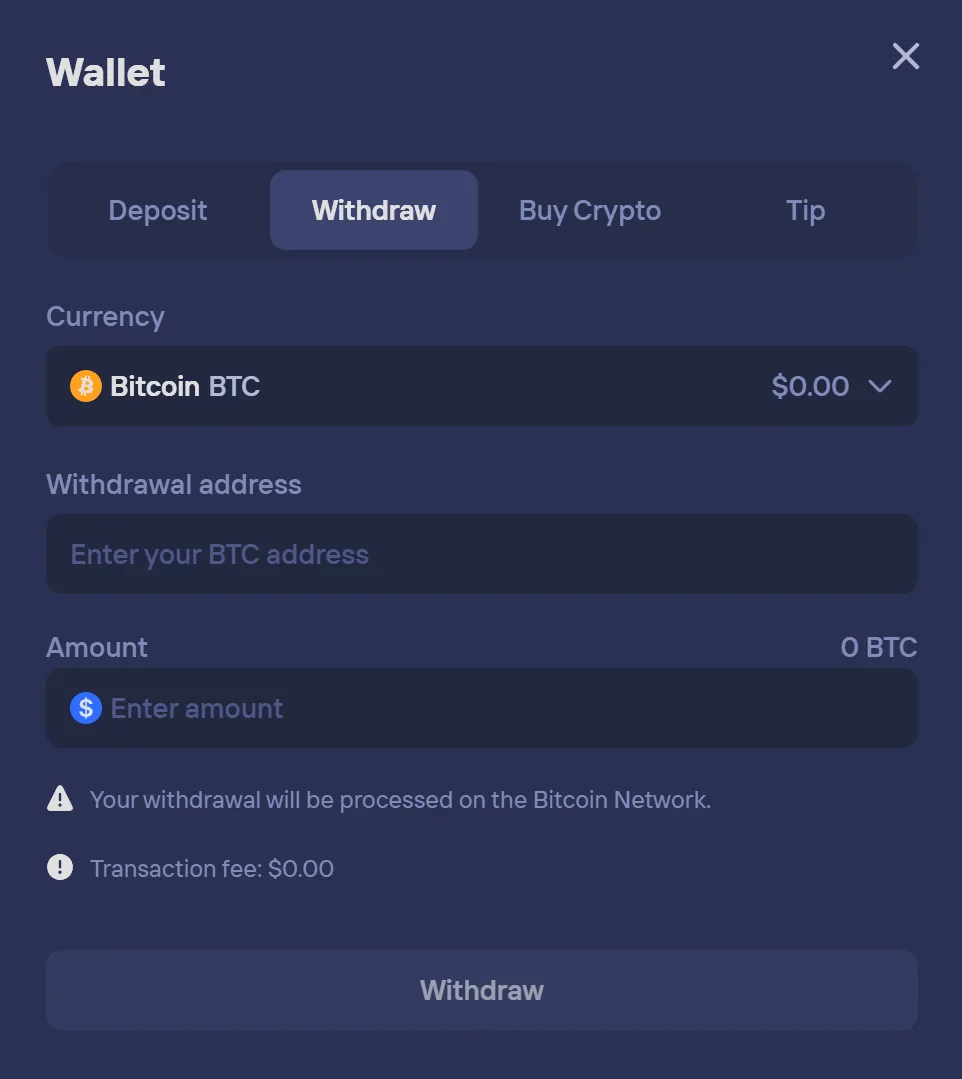
Lightning is a cryptographically enforced payment protocol on top of Bitcoin. It uses a network of payment channels, and money moves via signed state updates. When a casino says it offers Lightning withdrawals, it means the payout is transmitted over this network rather than broadcast to Bitcoin’s blockchain. That distinction matters because the observable speed of a Lightning payment is a function of routing, not custody settlement.
A typical Lightning withdrawal path looks like this:
- Step 1: The user requests a withdrawal in the casino interface. The operator marks it as pending.
- Step 2: The operator’s accounting system approves the request, possibly after manual review or a risk check.
- Step 3: The operator’s Lightning node constructs a payment to the user’s invoice and sends it through the network.
- Step 4: The user’s wallet receives the preimage, claims the payment, and updates its balance.
Step 3 is the only part that is globally measurable. Step 1 and Step 2 are internal to the casino. Step 4 depends on the user’s wallet software and device. Any “withdrawal speed” statistic that does not separate those intervals is mixing two different systems.
Where Delays Actually Accumulate
How Does This Compare to 0% House Edge Protocols?
Audited 100% RTP
Instead of standard 1.00% to 4.00% casino house margins, compare with mathematically verified 100% RTP Originals (0.00% House Edge) on Duel Casino:

Network-level Lightning payments are fast because they do not require block confirmation. The payment is atomic: the sender reveals the preimage only when the receiver can prove the correct hash. That cryptographic dance typically takes tens to hundreds of milliseconds per hop. Even a path with five intermediate nodes will route in under three seconds.
Still, there are several realistic causes of delay:
Operator-side processing
The largest source of variance is the casino’s internal workflow. Some operators process withdrawals instantly; others batch at fixed intervals or require manual approval above a threshold. This is not visible on the Lightning network, so you cannot infer it from your wallet’s settlement time. The only way to assess it is to request a small test withdrawal and measure the interval between the withdrawal request and the invoice being paid.
Routing liquidity
Lightning payments can only travel through channels that have sufficient capacity in the right direction. A channel may exist but be unbalanced, meaning there is no outbound liquidity for the sender or inbound liquidity for the receiver. When this happens, the sender’s node may try multiple routes. In most cases a route is found with no user-visible delay, but in a narrow or congested part of the network the payment can fail entirely and need to be retried. Public channel graph data from mid-2026 shows that the median successful route uses fewer than three hops, but failure rates on first attempts are non-trivial and vary by region and time of day.
Invoice expiry and wallet offline
Lightning invoices carry an expiry timestamp, typically 1 hour but often set to 10 minutes by wallets. If your wallet is offline when the casino processes the withdrawal, the payment attempt fails and the operator must regenerate the invoice. Some casino systems do this automatically; others require manual intervention. This can turn a two-second network transfer into a 24-hour support ticket.
Channel opening
If the casino’s node has no path to you, and you do not have a publicly announced channel with sufficient inbound liquidity, the payment cannot be delivered. One workaround is to open a new channel to you, but that requires an on-chain Bitcoin transaction and at least one block confirmation. In 2026, with standard mempool conditions, a channel open can take between 10 minutes and several hours, depending on fee pressure. This is not a Lightning failure; it is an onboarding constraint.
What Real Withdrawal Speed Data Shows
The following table summarizes the typical latency contributors, using data that is either timelocked in the protocol or observable in the public Lightning channel graph. The precise numbers fluctuate, but the order of magnitude does not.
| Component | Typical measured delay | How to verify it yourself |
|---|---|---|
| Payment routing (end-to-end network) | 0.1 to 3 seconds | Time from the first HTLC attempt to receipt of preimage in your wallet’s debug log |
| Payment preimage verification | < 1 second | Not needed; it is part of routing |
| Operator internal approval | 0 minutes to 48 hours | Compare the timestamp on your withdrawal request confirmation to the timestamp on the invoice |
| Failed route retries | 1 to 60 seconds of cumulative retry time | Watch your node’s pathfinding logs; count failed attempts before a success |
| Channel opening (worst case) | 10 minutes to a few hours | If the operator opens a new channel, an on-chain transaction with your address will appear in a block explorer |
What this table makes clear is that the network layer is not the bottleneck. The variance in Lightning payouts is overwhelmingly caused by operator policy and user-side topology. If a casino advertises “instant Lightning withdrawals,” the accurate statement is “instant after approval,” but approval is not measured on network graphs.
Verifiable Checks for the Skeptical User
You can build your own dataset for any casino that accepts Lightning. The method is simple and does not require trust in the casino’s marketing:
- Record the request timestamp. Save the exact time you press the withdrawal button.
- Record the invoice timestamp. Some casinos generate the invoice immediately; others after an approval step. The gap between the two is the operator’s processing latency.
- Record the settlement time. In a self-custodial wallet, the payment is settled when you see the preimage or when the wallet confirms the HTLC. This is the network latency.
- Check channel balance data. Public explorers show the public channel graph. If you have a public channel, you can see whether its outbound/inbound liquidity would plausibly support a larger payout. If your wallet only has small/private channels, expect more retries.
- Test at different hours. Network congestion and casino staffing both vary. A single test tells you almost nothing; a sample of ten withdrawals across different days gives you a median.
If you want a broader picture, independent casino reviews often include measured withdrawal times, but the methodology matters. Look for reviews that state whether the measurement window was from request to settlement or only from invoice creation to settlement. Our own casino reviews explicitly note this distinction for every Lightning-capable operator.
Why This Matters for Bankroll Management
Fast payouts are not just a convenience; they reduce your counterparty exposure to the casino. Coins left in an operator-controlled wallet are not in your custody, regardless of the underlying network. Lightning’s speed lowers the practical cost of cashing out frequently, which means you can run a tighter cycle of deposits and withdrawals. That is useful if you follow a strict bankroll management plan, because it reduces the time your capital sits in a third-party system.
However, the same speed can become a behavioral risk. If your bankroll strategy relies on friction, then instant payouts may work against you. A prudent approach is to set a fixed withdrawal threshold and keep the majority of your bankroll in a wallet you control, not on the casino balance. If you find yourself re-depositing the same session winnings immediately, the withdrawal speed has no protective effect.
Conclusion
The Lightning Network is a significant improvement over on-chain Bitcoin for casino payouts, but “withdrawal speed” is a compound metric. The network component is genuinely fast: once a route is found, the payment is cryptographically settled in a few seconds. The operator component is unrelated to the Lightning protocol and cannot be inferred from public data. As of 2026, the real bottleneck is not technology; it is the gap between marketing language and custody workflow.
The best way to know a casino’s true Lightning withdrawal speed is to measure it. The tools are free, the wallet logs are available, and the methodology is straightforward. Any operator that refuses to let you test with a small withdrawal is revealing more than their speed. For guidance on setting up a verification-first wallet and reading node logs, see our guides section.
FAQ
Are Lightning Network withdrawals truly instant?
Only the network segment is instant, typically under three seconds. The complete withdrawal path includes the casino’s internal approval process, which can take minutes or hours depending on their manual review policies. No single “withdrawal speed” can describe the entire user experience without breaking out these separate intervals.
Can I verify how long a Lightning withdrawal took?
Yes, in part. You can log the time you receive the withdrawal confirmation from the casino and the time your wallet settles the invoice. If you control your own node, you can also inspect HTLC logs to measure exact routing times. The unobservable part is the time between the casino’s internal approval queue and invoice generation; that interval is only known to the operator.
What is the safest way to receive Lightning payouts from a casino?
Use a self-custodial Lightning wallet that automatically accepts payments, and keep a backup of your channel state. If you do not have a public channel, consider opening one with a node that has sufficient inbound capacity, or use a Lightning address that does not require online operation. Then test the casino’s payout flow with a small amount before committing a larger bankroll. Operator-specific handling of offline invoices is one of the factors we assess in our casino reviews.