Hardware Wallets for Gambling Funds: A Practical Setup

the author
ProvablySmart Research Desk
date post
Aug 28, 2026
Share


For anyone who moves gambling bankrolls in cryptocurrency, a hardware wallet is often presented as a mandatory security tool. In practice, it is only useful if the transaction flow is designed correctly. Plugging a hardware wallet directly into a casino site is inconvenient, exposes your signing device to browser extensions, and creates an audit trail that is difficult to reconstruct. This guide describes a practical setup where the hardware wallet acts as a cold vault, not as a hot-play wallet, and explains what you can verify yourself at each step.
Why a Hardware Wallet Belongs in the Gambling Workflow

BTC

ETH

SOL

XRP

USDT

LTC
The primary failure mode for gambling funds is not a single large theft from a casino. It is accumulated leakage: funds left on a weak hot wallet, keys reused across services, or a browser extension with excessive permissions. A hardware wallet reduces that leakage by keeping private keys offline, but only when you enforce a strict role separation. The hardware wallet should be the intermediate vault between an exchange and the casino-facing hot wallet.
That intermediate role matters because most casinos do not accept hardware wallet transactions directly through a clean interface. You will still need a hot wallet to deposit and withdraw quickly. The hardware wallet exists to reduce the amount of time funds spend in that hot wallet. The practical rule: the hot wallet holds only what you expect to wager in one session; the hardware wallet holds the bankroll.
What You Can Verify Before Trusting the Tool
How Does This Compare to 0% House Edge Protocols?
Audited 100% RTP
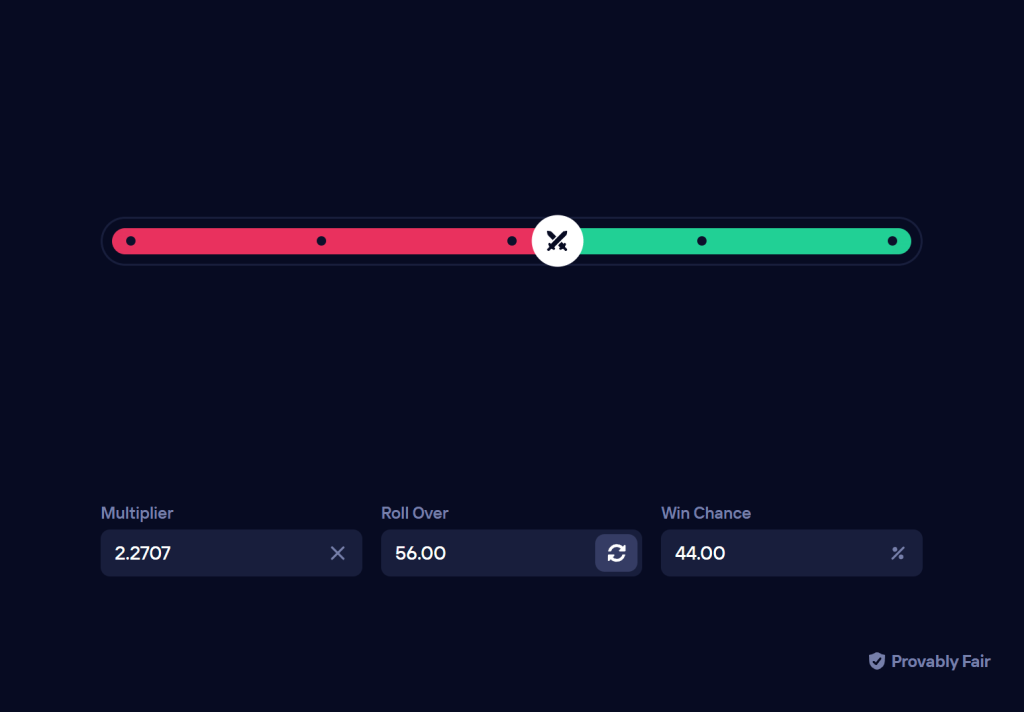
Instead of standard 1.00% to 4.00% casino house margins, compare with mathematically verified 100% RTP Originals (0.00% House Edge) on Duel Casino:
Any setup guide that names specific hardware wallet vendors is using assumptions that may be obsolete by the time you read it. As of 2026, the safer approach is to describe what to check yourself, because the hardware wallet market has consolidated and also fragmented. Verify at least these four things before moving real funds:
- Signed firmware releases: The vendor must publish hashes and signatures for each firmware version. Compare the hash shown by the device during update against the independently published hash. If the device does not display a hash, treat it as closed-box software.
- Reproducible board images or open-source core: For security-critical operations, open source matters less than reproducible builds. You may not have the ability to rebuild the full stack, but you can check whether the vendor publishes build instructions and a commit history that matches the release.
- Seed generation offline: The device must generate the seed phrase from its own entropy source and display the words on the device screen. Never use a seed phrase created on a computer or phone.
- Passphrase support: A BIP-39 passphrase creates a separate wallet from the same seed. This is essential if you want a decoy wallet or a way to isolate gambling funds from other assets.
These checks are not a marketing exercise. They are technically observable. If a vendor cannot provide the files, or the hashes do not match, the correct response is to choose a different product.
Practical Setup: Cold Vault, Hot Wallet, Casino
The recommended architecture uses three layers. Do not skip the hot wallet layer even if your hardware wallet has a bridge browser extension. The purpose of the hot wallet is to limit the hardware wallet’s exposure to browser-initiated transactions.
| Layer | Role | Transaction frequency | Security posture |
|---|---|---|---|
| Hardware wallet | Cold vault for the session bankroll | Once per session, or less | Private keys never leave the device |
| Hot wallet | Short-term play wallet | Deposits/withdrawals to casino | Hot keys on phone/desktop; holds only a small amount |
| Casino address | Play balance | Frequent bets within the casino | Controlled by the casino; trust limited to provably fair results |
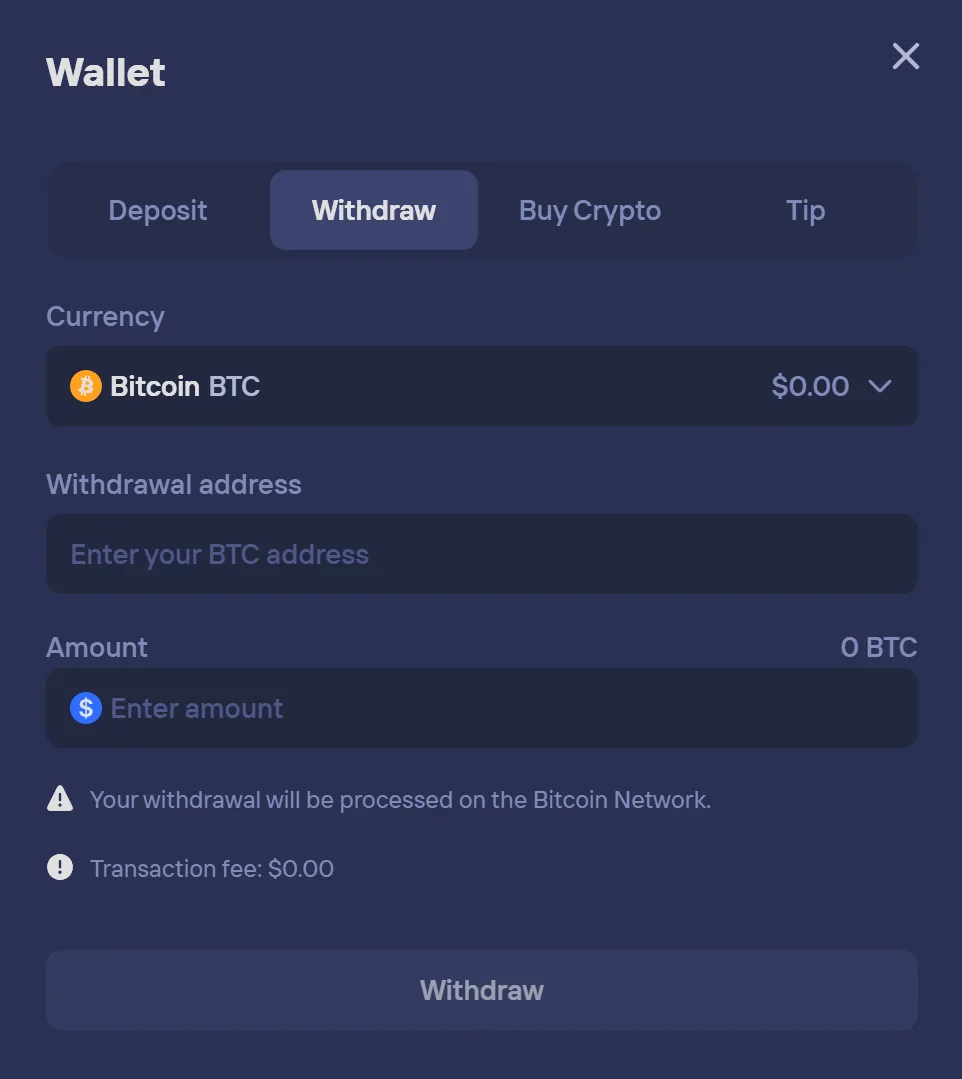
The full flow for a single session: exchange → hardware wallet → hot wallet → casino. After the session, reverse the flow: casino → hot wallet → hardware wallet. If you are using a casino with an in-house wallet, this can mean waiting for a withdrawal review before the reverse flow begins. That is fine. The hardware wallet is not for speed.
Before executing the first transfer, do the verification steps from the previous section, then send a small test transaction to the hardware wallet address and confirm the device shows the correct address. Then send the same small amount to the hot wallet and from the hot wallet to the casino deposit address. This three-step test costs network fees but establishes the exact addresses you will rely on. Our transaction verification guides explain how to check each hop on-chain.
UTXO Management and Fee Control
If you use Bitcoin, the largest practical cost of this setup is not security. It is transaction fees caused by poor UTXO management. A hardware wallet that receives 20 small deposits will create 20 UTXOs. When you later send a large amount to the hot wallet, the transaction must spend all those UTXOs, making the fee high and broadcasting a fingerprint of your accumulation behavior.
The solution is to consolidate UTXOs on the hardware wallet during a low-fee period. Once a week or once a month, send all UTXOs from the hardware wallet to a fresh address of the same hardware wallet. That creates a single UTXO and resets the fee cost of future transfers. This is not a privacy-enhancing move; it visibly shows that one entity controlled all those inputs. But for bankroll management, the fee savings usually outweigh that privacy loss.
For networks with smart contracts, such as Ethereum or Solana, UTXO thinking is replaced by account balance and gas. The equivalent discipline is to use a dedicated account on the hardware wallet that is used only for gambling, so the nonce sequence is easy to audit. Also, native tokens for gas should be kept on the hot wallet, not in a separate exchange, so you do not sign transactions that allocate gas from an unrelated account.
Security Operations You Must Do Consistently
The hardware wallet is not a security amulet. It is a signing device. Its security properties are only meaningful if you practice the following operations:
- Initialize the device in a room with no cameras or people behind you, and verify no USB hub or adaptor with non-standard behavior is in the chain.
- Write the seed phrase on metal or paper that will survive water and fire. Do not store it in a password manager, in a photo, or on an internet-connected device.
- Use a BIP-39 passphrase that is long and unrelated to your identity. The passphrase can be memorized if necessary, but consider a second metal plate stored separately from the seed.
- Set a strong PIN and enable a shutdown timer so the device locks automatically.
- Never enter the seed phrase into any software, including recovery tools offered by the vendor.
For the hot wallet, use a wallet that gives you control of the private keys, and create a separate account for the casino. That makes it easier to issue one report per month of all hot wallet addresses and balances. You can then reconcile those balances against the hardware wallet’s transaction history. Bankroll management becomes more transparent when the cold vault is the single source of truth for session capital.
What to Check for a Specific Casino
No hardware wallet setup removes the need to evaluate the casino itself. Some casinos are custodial: they require deposits to an address they control. Others use smart contracts. The verification details differ, but the principle remains the same: verify that the casino’s address or smart contract is exactly the one you intend to use. Check the casino’s published deposit address against its official domain, and verify the withdrawal address after the first transaction. A hardware wallet only protects your keys; it cannot stop a transaction to an attacker-controlled address if the address is wrong.
For a casino with provable fair games, the hardware wallet does not participate in the betting logic. The seed that matters for game fairness is the casino’s server seed and your client seed. Casino reviews that include provable fairness details will tell you whether a site supports client seed rotation and server seed hashes before betting. That is separate from hardware wallet security but equally important for your bankroll.
Rebalancing and Accounting
Set a schedule for moving funds from the hardware wallet to the hot wallet. This can be once per week at a fixed time, or immediately after the hot wallet drops below a threshold. A predictable schedule reduces the temptation to keep large balances on the hot wallet for convenience.
Keep a simple spreadsheet with columns for date, network, amount, fee, casino name, and purpose. You do not need specialized accounting software if the volume is below a few hundred transactions a month. But you do need a record of every deposit and withdrawal to calculate whether the gambling operation is profitable after transaction fees. Many players ignore fees because they are denominated in native tokens, not in fiat. Convert all costs to a common currency at the time of the transaction.
FAQ
Can I use a hardware wallet directly to deposit into a casino?
Technically possible if the casino supports the relevant chain and your hardware wallet’s companion app can broadcast the transaction. But doing so exposes your signing device to the browser’s bridge, which enlarges the attack surface. The recommended flow is hardware wallet to hot wallet to casino. The small extra fee is worth the isolation of your private keys from browser-based transaction requests.
Should I store the gambling seed phrase separately from my main seed phrase?
Yes, if the gambling bankroll is a meaningful fraction of your total crypto assets. Use a separate hardware wallet device or a separate BIP-39 passphrase. A single seed phrase for both personal savings and gambling funds means one leaked seed phrase forfeits your entire portfolio. An independent passphrase creates a separate wallet without using a second device.
How often should I move funds from the hardware wallet to the hot wallet?
Define a ceiling for hot wallet balance, for example 0.05 BTC or 5 ETH, and move funds only when the balance falls below one betting session’s average. For most users, weekly rebalancing is enough. Do not move funds preemptively on a daily basis because each transfer accrues network fees. Monitor network fee conditions and schedule consolidation transactions during low-fee windows.