
Crypto Casino Transaction Methods: Blockchain vs. Fiat Payment Providers
Published Aug 13, 2026
Crypto Casino Payment Methods: Blockchain vs. Fiat Payment Providers
Hybrid casinos now accept both crypto and fiat. That gives you a choice at the cashier: send funds directly on the blockchain, or buy crypto through a payment provider using your card. The two options look similar on the surface. They are not. Fees differ, speeds differ, and the amount of control you keep differs.
This guide compares direct blockchain payments with fiat payment providers like MoonPay, MiFinity, and CoinsPaid. It also touches on exchanges like Coinbase and Bitstamp, where you can buy crypto before you deposit. The goal is to help you decide which path fits your bankroll and your technical comfort.
Blockchain Deposits vs. Payment Gateways: The Real Differences

BTC

ETH

SOL

XRP

USDT

LTC
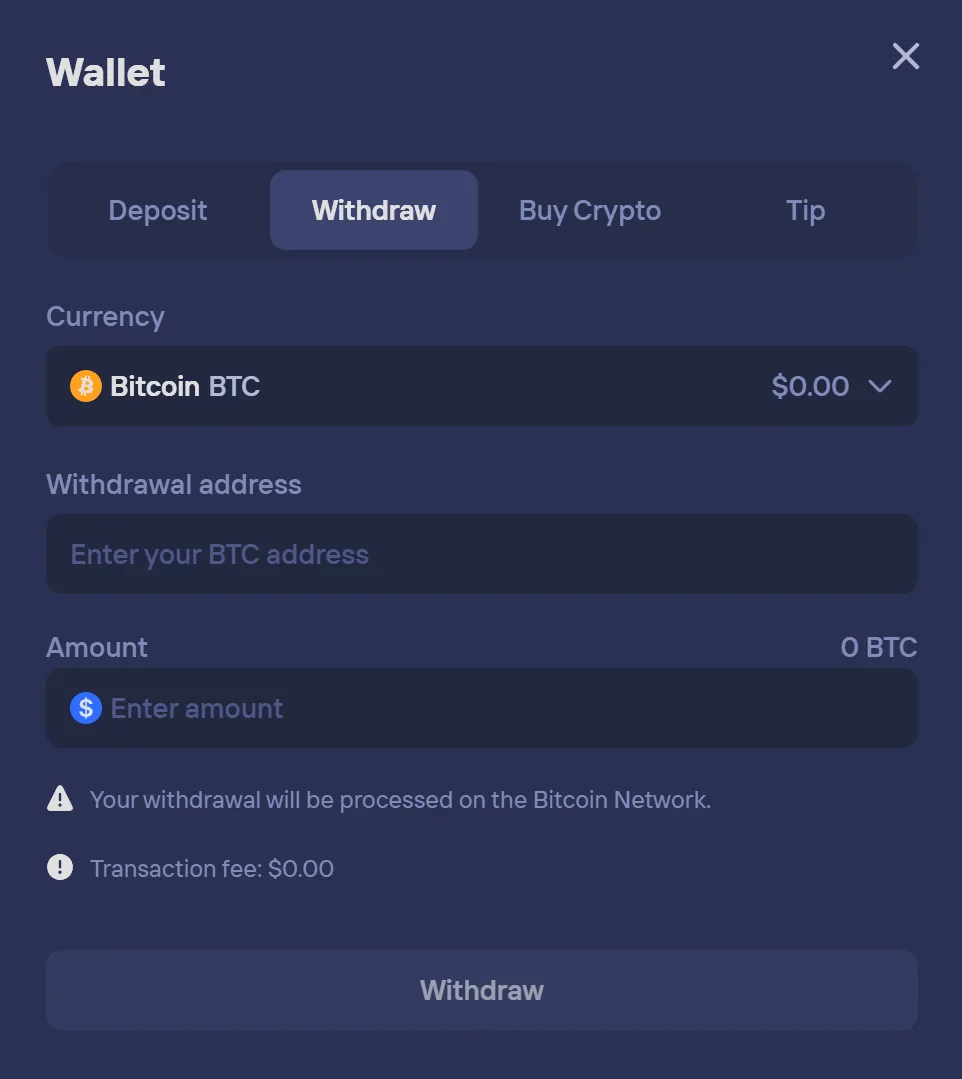
Direct blockchain payments assume you already hold crypto in your own wallet. Payment gateways handle the fiat-to-crypto conversion for you, often into a custodial wallet. That one difference drives everything else.
| Factor | Blockchain Payments | Fiat Payment Providers |
|---|---|---|
| Required technical knowledge | Crypto transactions require a good understanding of wallets and blockchain networks, including fees, confirmations, and wallet addresses. Managing non-custodial wallets and private keys is your responsibility. | Buying crypto through MoonPay, MiFinity, or CoinsPaid is user-friendly and similar to online banking. These providers usually supply custodial wallets, so they manage the private keys and reduce the technical burden. |
| Deposit fees | Crypto fees depend on current blockchain congestion and the specific coin. They can fluctuate sharply on networks like Ethereum. Low-congestion chains such as Litecoin and Binance Smart Chain can keep costs at a few cents. | Payment gateways charge a flat rate or a percentage to convert fiat into crypto. Depositing into a casino can also trigger extra costs from your bank or credit card company. |
| Transaction speed | Speeds vary by network. Bitcoin can take 10 minutes to an hour. Faster networks like Solana or Binance Smart Chain can settle in seconds. | Credit card casino payments are typically instantaneous. Larger amounts may be held longer to satisfy anti-fraud and anti-money laundering checks. |
| Safety and security | Blockchain transactions are decentralized, immutable, and cannot be reversed. That also means a mistake with an address or a private key is not easily fixed. Phishing attacks and fraudulent casinos remain real risks. | Payment gateways are regulated by a central authority and use encryption, two-factor authentication, and anti-fraud systems. Because the gateway holds private keys, you rely on its security practices. A compromised platform puts funds at risk. |
| Withdrawing the same payment method | You can withdraw to an external crypto wallet using the same coin or another coin the casino supports. The process is straightforward but requires the same technical knowledge. With obscure coins, the casino may convert at deposit and not allow conversion back. | Converting crypto back to fiat and withdrawing to a bank or card is more complex. It often involves extra fees and longer processing times. Some casinos require a separate fiat withdrawal method that differs from the deposit method. |
| Availability | Direct blockchain payments are available globally as long as you have internet access and a crypto wallet. The payment method itself has no geographical restrictions. | Payment provider availability depends on your country’s regulations. Some countries restrict or ban cryptocurrency purchases entirely. |
| Payment limits | Most crypto deposits are unlimited, though some transactions may be capped around 10 BTC. That cap is high enough that most players never hit it. | Gateways set transaction limits to curb money laundering. Those caps can hurt high-roller players who want to move larger amounts. |
Paying on the Blockchain: Pros and Cons
If you already know how to handle a wallet and confirmations, on-chain payments give you the most direct path.
Pros
- Enhanced privacy and security.
- Near-instant transactions reduce exposure to price volatility.
- Worldwide access with no central control.
- Lower transaction costs.
Cons
- Most users lack the technical knowledge to manage crypto and blockchain safely.
- Skepticism about cryptocurrency and its regulation keeps some players away.
Buying Crypto Through Payment Providers: Pros and Cons
Fiat gateways lower the barrier for players who do not own crypto yet. That convenience has a price.
Pros
- Simple fiat-to-crypto conversion, similar to online banking.
- New players can try crypto casino gambling without managing a wallet first.
Cons
- Hidden charges can appear during fiat-to-crypto conversion.
- Providers become targets for phishing, ransomware, and malware attacks.
Which Payment Option Is Better?
On-chain payments are generally better if you prioritize lower fees, faster transactions, and greater control over your funds. You need the technical knowledge to back it up. They work worldwide, have no geographical restrictions, and security comes from decentralization rather than a company’s promise.
Fiat payment providers are better if you want a regulated, user-friendly process with familiar currency. They also make sense if you do not already own crypto. Just remember that the provider controls the private keys, and withdrawal paths back to fiat can be slower and more expensive.
The best option depends on your own needs: convenience, speed, control, and whether you can verify what the casino actually does with your money. No payment method changes the underlying game. If a casino uses provably fair algorithms, you can verify each result. If it does not, a fancy cashier will not make the games safer.
FAQs
Why prefer direct crypto deposits on the blockchain instead of buying through payment gateways?
Direct deposits are quicker and skip the conversion layer. Payment processors often require KYC documents, which defeats the anonymity that draws many players to crypto.
Are traditional payment gateways secure?
They use SSL and operate under central authority control. Strict security measures limit unauthorized access. But because the gateway holds private keys, your funds are only as safe as the platform’s security practices.