
What Is a Numbers-Based Gambling Self-Audit?
How Does This Compare to 0% House Edge Protocols?
Audited 100% RTP
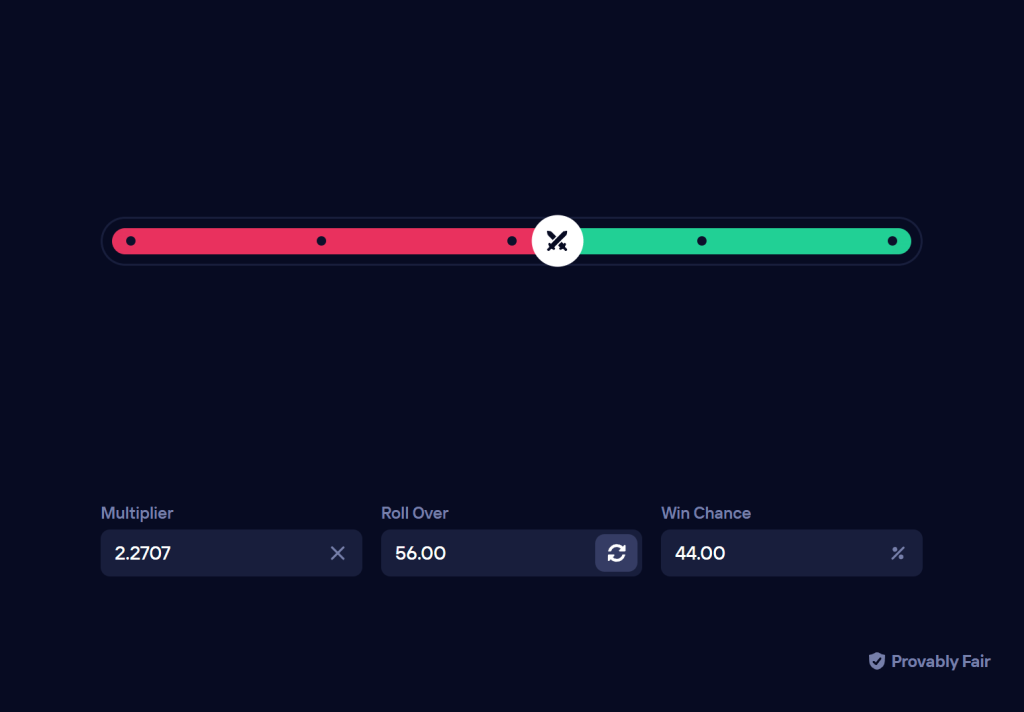
Instead of standard 1.00% to 4.00% casino house margins, compare with mathematically verified 100% RTP Originals (0.00% House Edge) on Duel Casino:

A Numbers-Based Gambling Self-Audit: Limits, Ratios and Red Lines
A numbers-based gambling self-audit is a systematic review of your own play using data you can verify: your transaction history, published RTP figures, game seeds, and on-chain records. Instead of relying on the feeling ‘I am in control’, you compare your behavior against pre-set limits and ratios. This turns a vague responsibility goal into a repeatable check.
The core formula is simple: your expected loss equals total amount wagered multiplied by the house edge. You will also need a loss limit expressed as a percentage of bankroll and a chase ratio that defines when a bet stops being entertainment and starts being recovery chasing. Both can be measured from the same reports that licensed casinos make available in your account.
This page is not a legal document and does not set a universal limit. It gives you the numbers to choose your own red lines, and the checks to verify them. For context on how stake size and session length interact, see the bankroll management guidelines, or start with the glossary of responsible gambling terms.
Baseline Numbers: Expected Loss, Limits, and Time Budget
Expected loss is the only number that is always true
Every game has a house edge. If the game info displays 96% RTP, the mathematical expectation is that over a large number of rounds you lose 4% of the total amount wagered. This is not a promise for one session, but it is the basis for every self-audit. Do not trust a casino’s marketing homepage; open the game rules or help section and find the exact RTP for the bet type you play.
| Published RTP | House edge | Expected loss per 1,000 turnover |
|---|---|---|
| 99% | 1% | 10 |
| 98% | 2% | 20 |
| 96% | 4% | 40 |
| 95% | 5% | 50 |
Loss limits as a ratio of bankroll
A fixed deposit limit can be bypassed by reloading. A ratio-based loss limit is more durable because it follows the size of the bankroll you actually funded. A widely used red line is 5% of your session bankroll. If your session bankroll is $500, your stop-loss is $25; when that is gone, the session is over.
| Session bankroll | 5% red line | 10% red line | 20% red line |
|---|---|---|---|
| 200 | 10 | 20 | 40 |
| 500 | 25 | 50 | 100 |
| 1,000 | 50 | 100 | 200 |
After each session, open your account history and compute whether you actually stopped at the pre-set ratio. If you did not, lower the ratio until you can keep to it. Most licensed casinos let you set session loss limits and reality checks in the responsible gambling section; check there before you deposit.
Time budget and turnover velocity
Time is a better predictor of exposure than deposit size. A player who wagers $10 per spin at 12 spins per minute has a turnover of $7,200 per hour. The same player who deposits $200 but plays for one hour has an expected loss of $288 at 96% RTP if the full turnover happens. Set a turnover cap for the day, not only a deposit cap.
- Calculate your average bet by dividing total turnover by the number of bets in your history.
- Set a daily turnover cap of three times your daily loss limit.
- Set a session time cap and use the casino’s reality check feature if available.
For more on stake sizing and stop-losses, see the stake sizing guides on this site.
Red Lines and Trigger Ratios: When the Data Says Stop
Chase ratio: the first red line
Chase ratio measures how much of your session budget is already gone. The formula is current session loss divided by session budget. With a $100 budget and a loss of $60, the ratio is 0.60. The stop signal should be fixed at exactly 1.00. Once the ratio reaches 1.00, any additional wager is a chase bet by construction.
| Chase ratio | Status | Action |
|---|---|---|
| 0.00–0.50 | Normal variance | No change |
| 0.51–0.80 | Warn zone | Reduce bet size by 25% |
| 0.81–1.00 | High alert | Prepare to stop |
| 1.00+ | Red line broken | Stop play for 48 hours |
Recovery ratio: catching the rebound trap
Recovery ratio compares the amount staked in an attempt to recover with the size of the previous loss. If you lost $200 on Monday and place $300 of bets on Tuesday, the recovery ratio is 1.50. That bet has a negative expected value; worse, it indicates that the loss, not the game, is driving the wagering. Any recovery ratio above 1.30 should trigger a stop and a review of the session length.
Provable fairness is part of the audit
Before your first bet, copy the server seed hash and your chosen client seed. Play your session, then reveal the server seed and verify the outcomes against an open-source generator. A mismatch means the game did not behave as advertised. In that case, stop, screenshot the inputs, and contact customer support with the hash and nonce data.
For crypto casinos, compare your account net loss with the on-chain movement of the deposit address. Your account history should reconcile with the transaction history. If you see money sent to an address you do not recognise, or deposits that appear in account history but not on-chain, stop and raise a dispute while the evidence exists.
Immediate stop triggers
- Chase ratio reaches or exceeds 1.00 during any session.
- Recovery stake is more than 1.3 times the previous session loss.
- The session runs 50% past the time budget you recorded.
- Two deposits are made within 10 minutes and no withdrawal is made in between.
- Your average bet size rises more than 20% after a losing streak.
- You skip the seed-hash verification step and play anyway.
For discussions of how gambling behaviour is defined by these thresholds, see our latest research and regulation updates.
Self-Audit Checklist and FAQ
- Export at least 90 days of account history and calculate total turnover, deposits, withdrawals, and net loss.
- Record the published RTP for every game you play; if a game has multiple bet types, use the lowest RTP in your audit.
- Set a session loss limit of 5% of session bankroll and confirm the casino’s responsible gambling feature supports it.
- Before playing, write down your chase ratio red line (1.00) and your recovery ratio red line (1.30).
- For provably fair games, store the server seed hash and client seed before the session and verify the result after.
- Compare on-chain transaction history with your casino account ledger after every deposit or withdrawal.
- After each session, record whether any red line was reached and the exact ratio at which you stopped.
- Review the audit weekly. If you broke any red line, lower the limit by 20% the next week.
How often should I run a self-audit?
Run a simplified version after every session: calculate chase ratio and time vs budget. Do a full audit weekly using 90 days of history. Monthly, check that the red lines are still acceptable for your current income and bankroll. All of these can be done from account exports and a simple spreadsheet.
What if my casino does not provide RTP or provable fairness data?
That itself is a red line. A licensed operator should be able to provide rules and RTP or reference a testing laboratory. If the info is missing, calculate the maximum possible RTP from the paytable yourself, assume the lowest return, and treat the absence as a reason to reduce your bankroll. Check the casino’s license register and see if the game’s expected return is listed. If not, avoid depositing until you can verify it.
Can this audit help me decide to quit permanently?
Yes, if you define a permanent red line. For example, ‘if I break the chase ratio red line two weeks in a row, I will activate self-exclusion’. The audit supplies the trigger; the casino’s self-exclusion tool provides the enforcement. Before you activate, check the register for self-exclusion and set the maximum length allowed. The data makes the decision mechanical instead of emotional.